Organizations today have to deal with a lot of risk, a lot of technology and a lot of rules they have to follow. The rules for keeping information safe on computers are changing. People have to be more careful about keeping information private computers are learning to think for themselves which is raising new questions and organizations are working with a lot of other companies.
The problem is not that organizations do not have rules or ways to follow those rules. The real problem is that these rules and ways are all over the place.
The team that manages risk is separate from the team that makes sure the organization is following the rules. The team that keeps information safe on computers is also separate. The legal team keeps track of all the rules and the internal audit team finds problems after they have already happened.
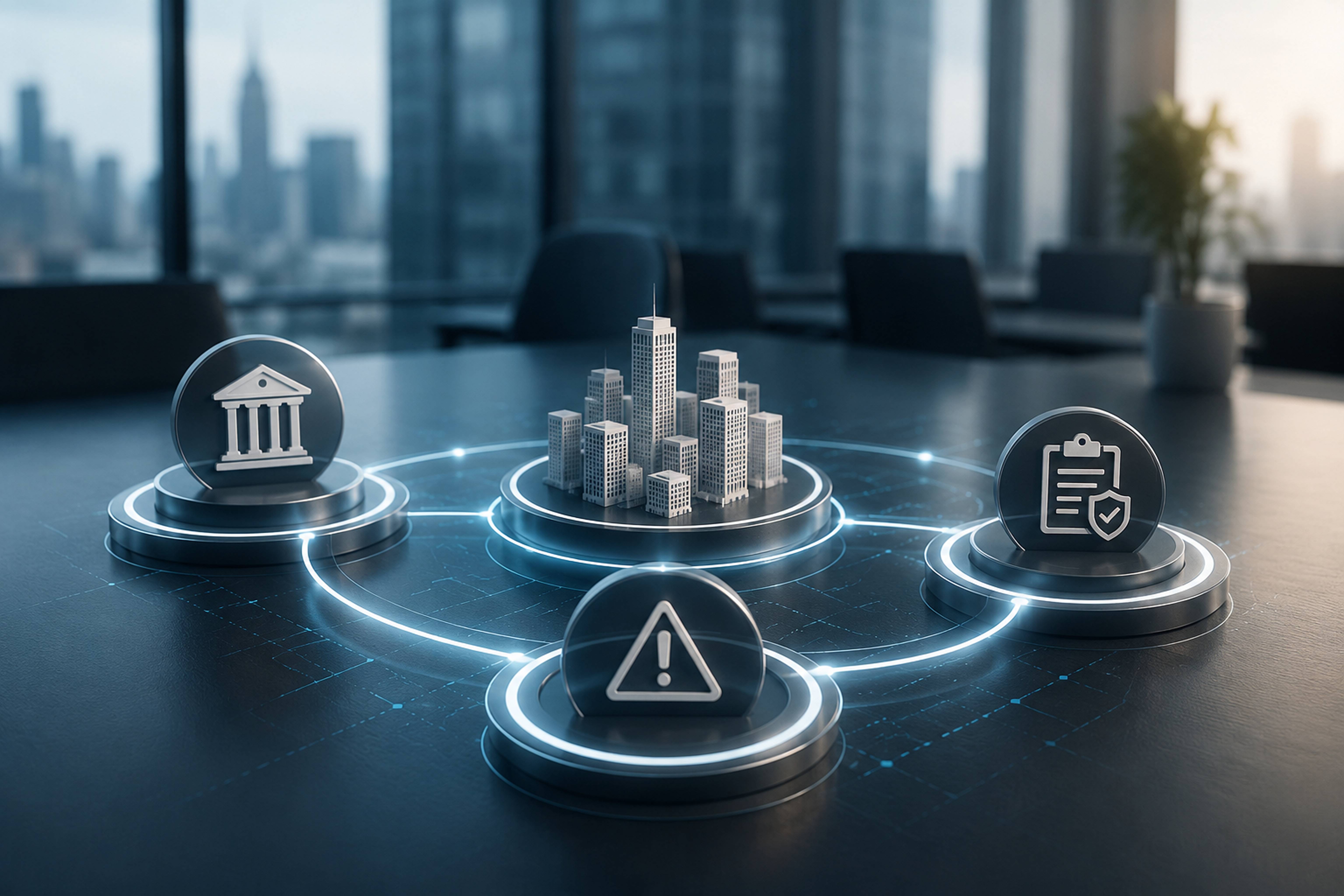
A Governance, Risk and Compliance program brings all these activities together.
A designed program helps the people in charge understand what could go wrong, make sure someone is responsible, manage all the rules they have to follow and make good decisions for the organization without making too many unnecessary rules.
In this guide we will talk about how organizations can build a Governance, Risk and Compliance program, what problems they might have and the steps they need to take to go from just following rules to really managing risk and governance.
What Is an Enterprise GRC Program?
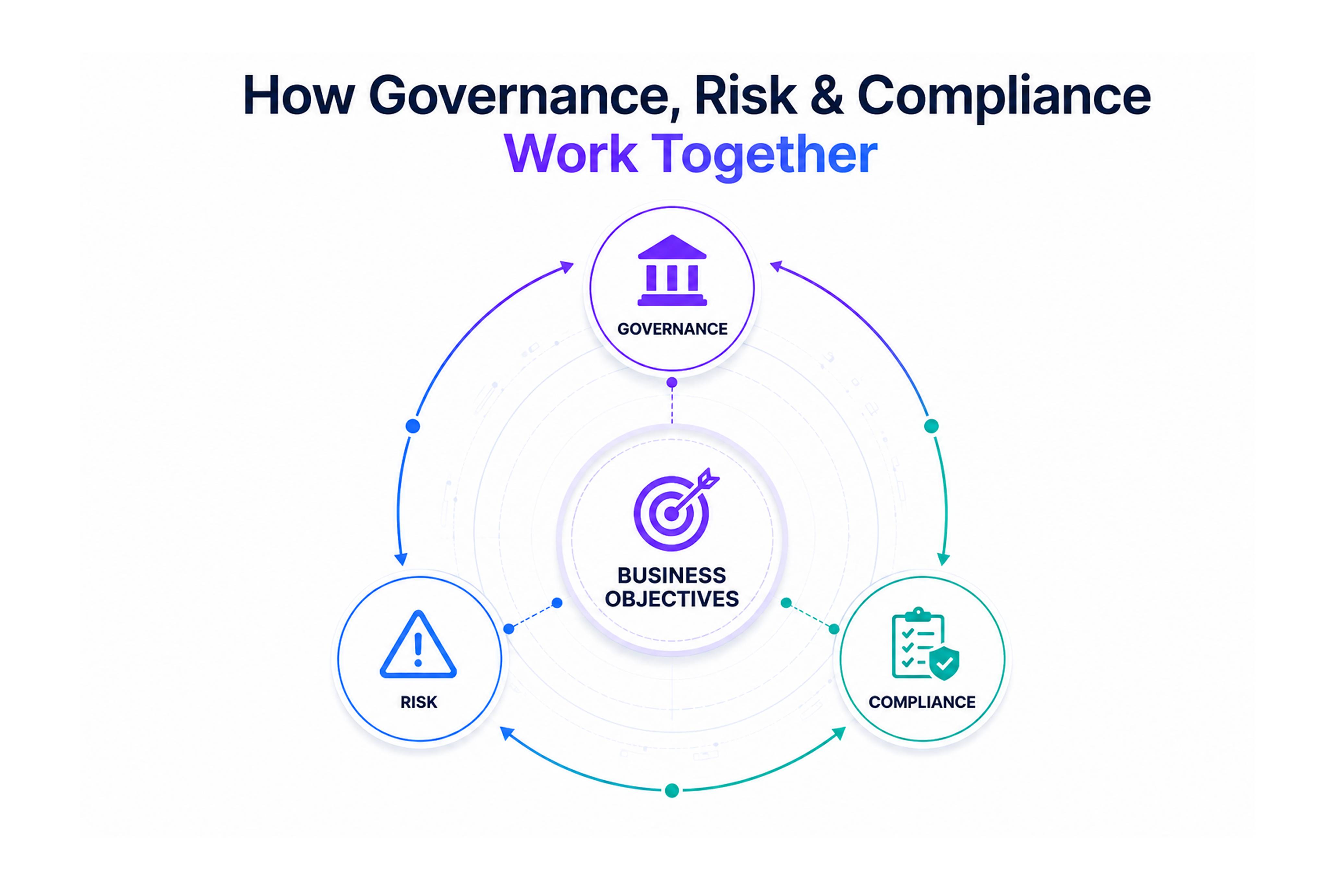 An Enterprise GRC Program is about making sure a company does what it is supposed to do. This means the company has to follow rules and make good decisions. Governance, Risk and Compliance or GRC for short is a way to make sure all these things happen.
GRC is not a name that combines three things. It is a plan to help companies do things right.
Governance is about how a company makes decisions. It is about who's in charge and how they make sure everything is done correctly.
Risk management is about finding out what might go wrong. It is about understanding what could happen to the company and what the company should do about it.
Compliance is about following the rules. It is about making sure the company does what it is supposed to do according to the law and other rules.
An Enterprise GRC Program brings all these things together. This means the people in charge have an idea of what is going on and everyone works towards the same goals.
The goal of an Enterprise GRC Program is not to get rid of every risk. The goal of an Enterprise GRC Program is to understand risks, make decisions and keep an eye on things. This way the company can do what it is supposed to do. Everything goes smoothly.
Why Do Organizations Need an Enterprise GRC Program?
Governance, Risk and Compliance which people usually call GRC is a way to make sure business goals are in line with the things that Governance, Risk and Compliance're responsible for.
Governance, Risk and Compliance is more than just putting three things together.
Governance, Risk and Compliance is about how a company makes decisions, who's responsible for those decisions and how the leaders of the company make sure everything is done correctly.
Governance, Risk and Compliance is also about how a company manages risk.
Risk management helps a company figure out what might go wrong, understand how it could affect the business and decide what to do about it.
Compliance, which is a part of Governance, Risk and Compliance makes sure a company knows about and follows all the rules and laws that apply to it.
A Governance, Risk and Compliance program helps connect all these areas so that the leaders of a company have a better understanding of the risks the company faces and all the teams work together to achieve the same goals.
The main goal of Governance, Risk and Compliance is not to get rid of every risk.
The main goal of Governance, Risk and Compliance is to understand risk, make decisions and keep a close eye on things.
Common GRC Challenges Organizations Face
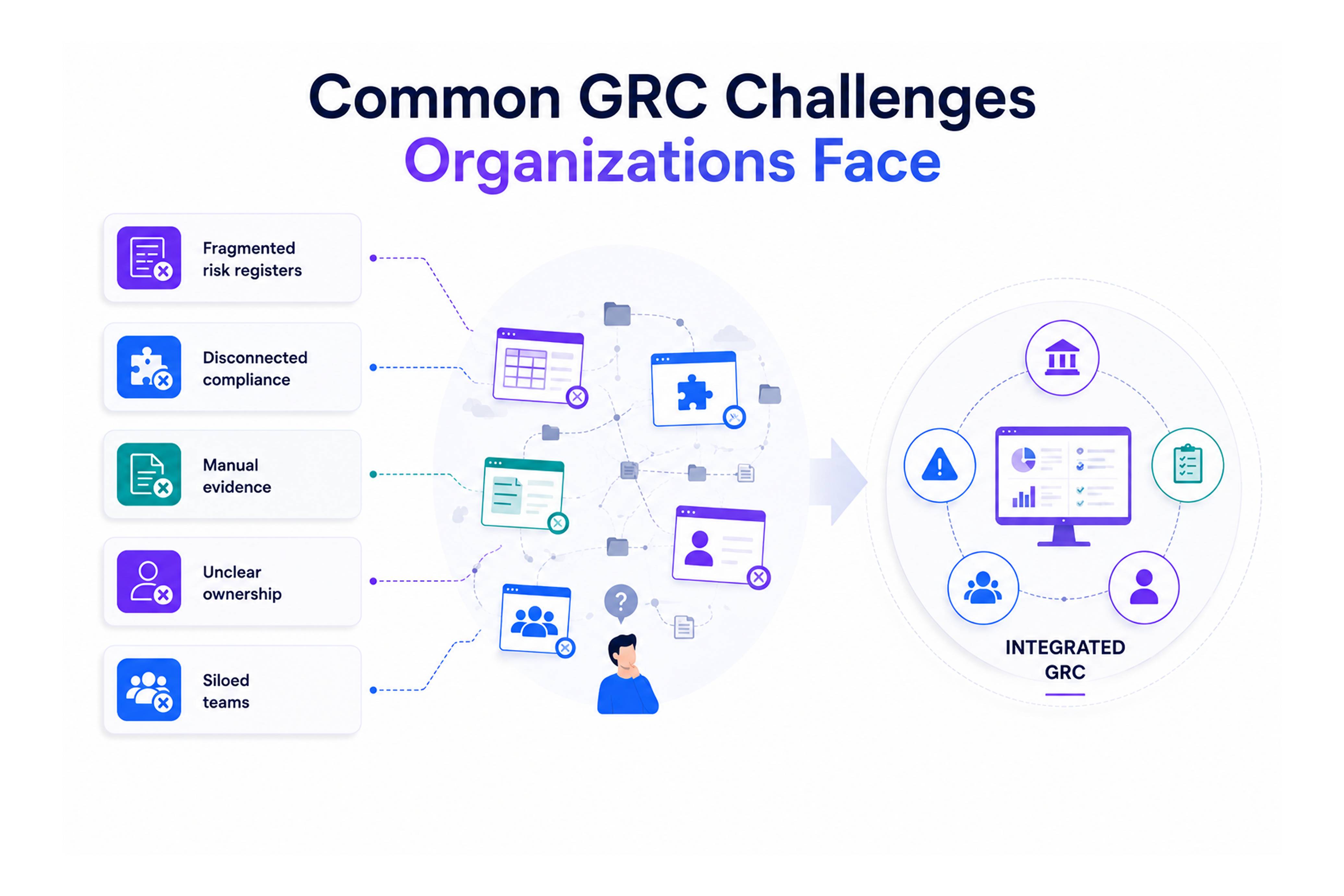 Many companies already do governance, risk and compliance tasks. The problem is that these tasks are often not connected.
“Risk” lists may. Are rarely checked.
Companies have policies that are approved but not linked to controls.
Compliance rules may be tracked in spreadsheets owned by teams.
Audit issues may stay open because its unclear who is responsible.
Companies also struggle with many frameworks and requirements.
A business that manages ISO/IEC 27001 privacy rules, customer security needs, cybersecurity controls and AI governance may find itself testing controls many times.
Other common issues include:
1. No clear owner for GRC
2. Visibility, for management
3. Different risk assessment methods
4. Weak oversight of parties
5. Manual evidence collection
6. Reactive compliance practices
These are not just paperwork problems.
They are signs that the company may need a governance model that ties everything together with governance, risk and compliance at its core.
The governance, risk and compliance tasks need to be connected and work together seamlessly.
Not Sure How Mature Your GRC Program Is?
Assess your governance, risk and compliance practices across 10 areas with the Enterprise GRC Readiness Assessment Toolkit.
To do this evaluate your maturity level.
Identify gaps, in your system and prioritize actions to fix them.
Then build a 90-day plan to improve your governance, risk and compliance practices.
You can get started by downloading the Free Enterprise GRC Readiness Assessment Toolkit
Step 1: Understand the Business Before Building GRC
One of the mistakes companies make is that they start with rules and policies before they really understand what their company does.
A company should start by thinking about what's important to them.
What kind of work do they do? What kind of products or services do they sell? Where do they sell these things? What kind of information do they deal with? What technology is really important to their business? Who are the people that they need to make happy?
Companies should also think about what they want to achieve.
A technology company that is growing fast will have different problems than a bank or a government office.
The people in charge of making sure the company is doing things correctly should help the company not just make sure they are following the rules.
Before they make a plan they should think about what the company wants to do, what is really important, to the company, who the important people are, what rules they have to follow, what they have promised to do, what information they need to protect and what technology they really need.
This helps the company make decisions and stay safe.
Step 2: Define the GRC Scope and Objectives
When you try to control everything at once you end up with a program that's too complicated.
Organizations need to figure out what they want their GRC program to do first.
The things they want to cover can include things like risks to the company, cybersecurity, information security, privacy following regulations, risks from other companies, rules for artificial intelligence keeping the business running, internal controls or making sure everything is okay.
The GRC program should focus on the things that're most important to the organization right now.
It is also very important to have goals.
For example a company might want to get an understanding of the risks to the whole company get ready for new regulations, combine different rules they have to follow make sure other companies they work with are doing the right thing or have the top executives get reports, on the GRC program.
If you know what you want to do and you have goals your GRC program will not just be a bunch of separate things you have to do to follow the rules.
The GRC program will actually do what it is supposed to do.
Step 3: Establish GRC Governance and Accountability
GRC will not work if everyone is involved. Nobody is responsible for what happens.
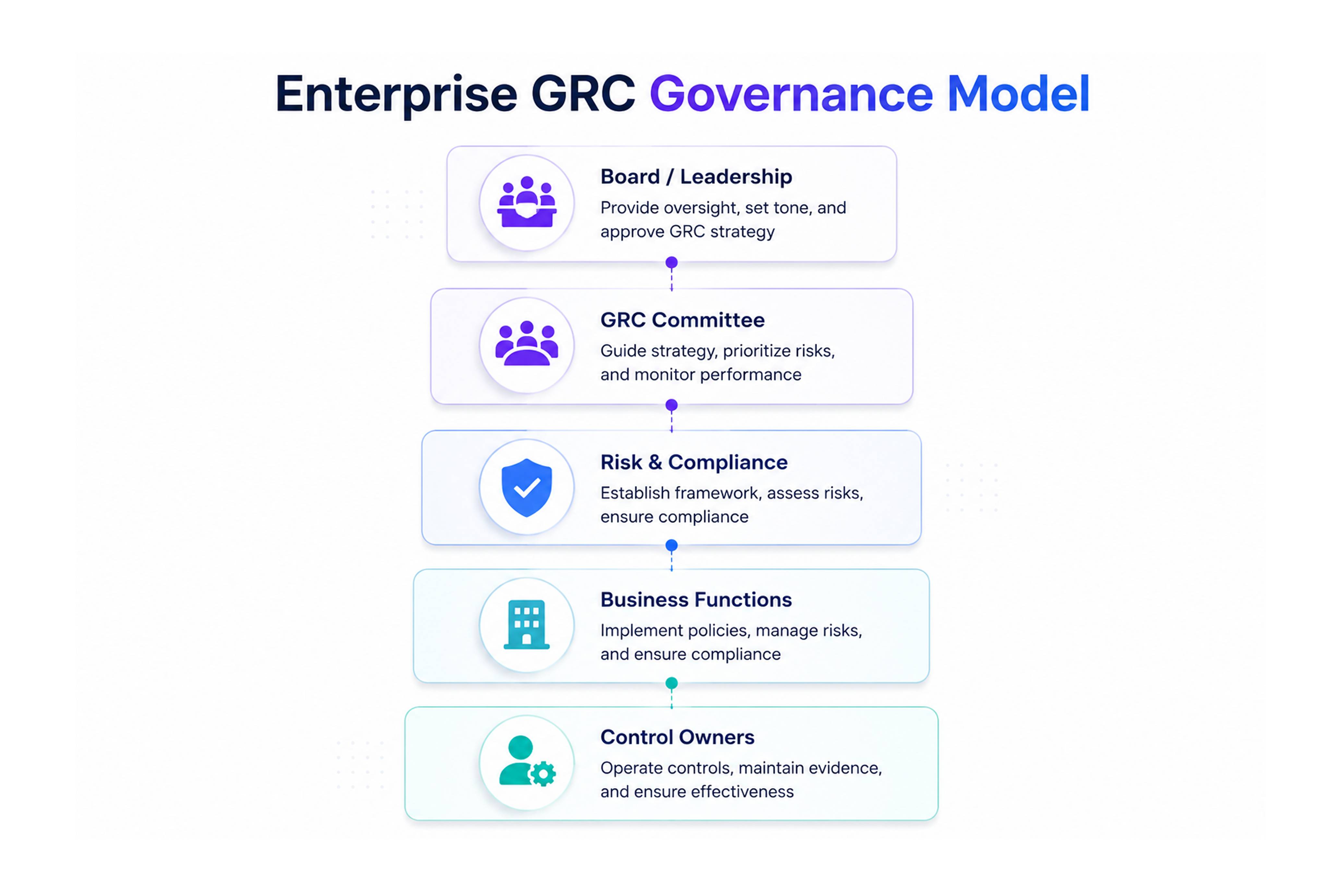
Organizations need to have a plan that says who makes decisions, who owns the risks how problems are handled and who keeps an eye on things.
The senior leaders should give direction. Make sure the GRC program is in line with what the organization wants to achieve.
Depending on how big and complicated the organization's a GRC or Risk Committee might be set up to look at big risks compliance problems, weaknesses in controls and ways to improve.
Each person should know what their job is.
The people who run the business understand the risks that come with running it. The people who own the risks are in charge of managing them. The people who own the controls make sure they are put in place and work properly. The compliance teams keep an eye on what the organization needs to do. The internal auditors make sure everything is okay on their own.
When everyone knows what they are responsible, for GRC becomes a way to manage the organization every day not something you do to follow the rules.
Step 4: Identify Regulatory, Contractual, and Framework Requirements
Most companies have to deal with lots of compliance requirements.
These requirements can come from laws, regulations, contracts and industry standards.
Sometimes companies also have to answer customer security questionnaires and follow their internal governance commitments.
Companies may also want to follow frameworks or standards like ISO/IEC 27001 ISO/IEC 42001 ISO/IEC 27701 NIST frameworks, SOC 2 criteria and other privacy requirements.
They also have to follow rules that're specific to their sector.
The first thing to do is to make a list of all the compliance requirements in a way, which is called an obligations register.
Each compliance requirement should have some information, such as where it comes from if it applies to the company, who is in charge of it what controls are, in place what evidence is needed and how often it should be reviewed.
The goal of doing all this is to make everything clear and easy to see.
If a company cannot clearly identify its compliance requirements it is going to be hard for them to follow the rules.
Step 5: Build an Integrated Enterprise Risk Management Process
Risk management is really important for a GRC program.
Organizations need to have a way to find risks, look at them closely, figure out what they mean deal with them and keep an eye on them.
Different parts of the company should not have different ways to look at the same business risks.
We need a way to manage risk that says what makes something a risk how likely it is to happen how bad it could be, who is in charge of dealing with it what we can do about it who gets to decide what is okay when we need to tell someone else about it and how often we need to check on it.
The list of risks for the company should show us all the big risks we face.
This can include risks, like risk, operational risk, cybersecurity risk, privacy risk, compliance risk, financial risk, third-party risk AI risk and business continuity risk.
The important thing is that we actually use the risk list.
If we only update the risk list a year because we have to it is just something we have to do for the auditors.
If we look at the risk list when we are making business decisions it is a tool that helps us manage the company.
Step 6: Map Requirements to Controls
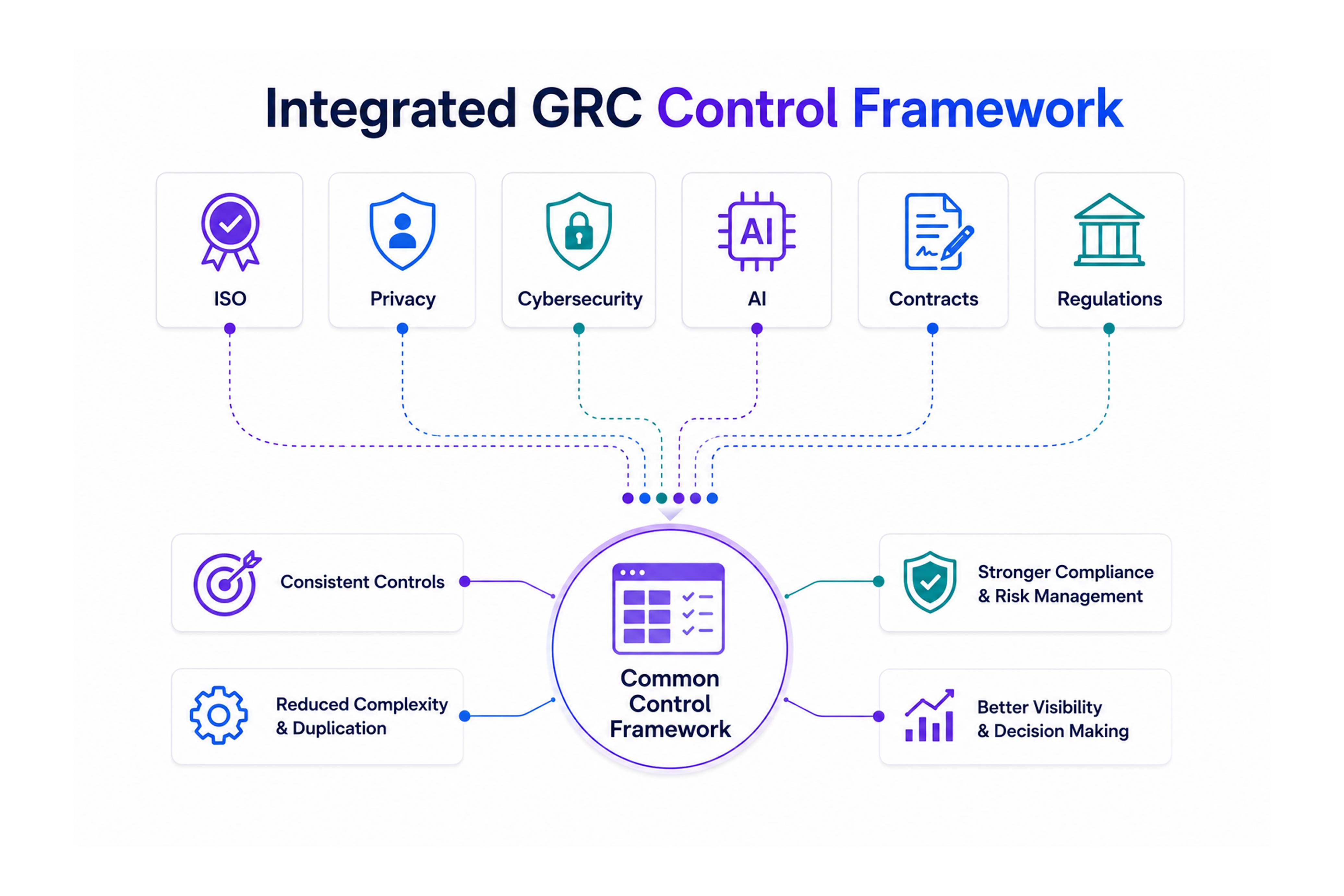 Companies often do the things over and over because they handle each rule separately.
For example they might check who can access things for ISO/IEC 27001 customer security checks, privacy rules and their own cybersecurity rules.
A good plan should make a set of rules that everyone follows.
This way rules from laws, standards and contracts can be connected to the same company rules.
One good process for checking who can access things can support different rules.
This can cut down on work make it easier to keep track of things and help people take care of their part of the rules.
The goal is simple:
“One rule, for things. Many rules can use the rule”. The proof is always the same.
Step 7: Develop Policies That Reflect Actual Business Practices
Policies tell us how an organization runs its operations. They shouldn't just exist because a framework says so.
A lot of policies are just copied from templates. This creates a gap, between whats written down and whats really done.
Before making a policy or updating an old one we need to know how things are done now.
Who does the work?
What tools do they use?
Who makes the decisions?
What proof is needed?
How do we handle exceptions?
Policies and procedures should make sense be easy to read and fit with how the organization works.
A good policy framework also needs to say:
Who owns it
Who approves it
How often its reviewed
How versions are controlled
How its communicated
The best policy isn't the one. It's the one thats easy to understand and follow every day.
Step 8: Strengthen Third-Party Risk Management
Companies are relying more on cloud providers, software vendors, consultants and other outside service providers.
Every single one of these parties can bring some kind of risk to the company like problems with operations, cybersecurity, privacy following the rules or being able to keep going even when things get tough.
So companies should have a plan in place to manage these risks before they even start working with a vendor.
They should look at each vendor. Decide how important they are and what kind of risk they pose.
Then they should do their homework on the vendor. How much they need to check them out depends on how much access the vendor has to important information, systems and personal data.
If a vendor is risk the company may need to take a really close look at their security make sure they are following the rules check their privacy policies and make sure they can keep doing business even if something goes wrong.
Just because a company has signed a contract with a vendor does not mean they can stop paying attention to the risks.
They should keep an eye on things like changes in what the vendor's doing any security problems that come up if the vendor is doing something that could get them in trouble, with the law and how well the vendor is performing, for as long as they are working together with the third-party vendors.
Step 9: Integrate Cybersecurity, Privacy, and AI Governance
Enterprise risk is changing, This means that the way we think about risk in a company has to change
Cybersecurity is a part of this, It can not just be a thing that the tech people deal with.
Privacy is another issue, It is not something that the lawyers have to worry about.
We also have to think about how we govern Artificial Intelligence, We can not wait until an Artificial Intelligence system is ready to use before we think about how to govern it.
All of these things should be connected to the Governance Risk and Compliance program.
Cyber risks should be included in the reports about risk to the company.
This is especially true when these risks could have an impact on the business.
We should make a map of all the things we have to do to protect peoples privacy.
This map should include our business processes and systems and data flows and the other companies we work with.
We should keep track of all our Artificial Intelligence systems.
Each system should have an owner who's responsible for it.
We should think about the risks of each system. Govern them from start to finish.
If we do all of these things we will have an understanding of the risks, to our organization.
This will help the leaders of the company understand how the decisions they make about technology affect the way the company is governed and follows the rules.
Step 10: Establish Monitoring, Audit, and Assurance
Implementing controls is not enough you see. Organizations really need to know if those controls are actually working the way they should.
A good GRC monitoring and assurance program checks if the controls are effective if the organization is complying with rules how well risks are being treated what auditors have. What new risks are coming up.
This can include things like control self-assessments, compliance reviews, internal audits, technical security assessments, management reviews and independent assurance activities to make sure everything is okay.
When issues are found they should be. Fixed through a structured process.
Each issue should have someone in charge of it the reason why it happened should be figured out if necessary a plan to fix it should be made a deadline, to finish should be set and it should be verified that the issue is really closed.
The point of assurance is not to find someone to blame for things going wrong.
The purpose of assurance is to give confidence that the governance processes and controls are working as they should be so everyone can trust that they are doing their job.
Step 11: Build Meaningful GRC Reporting
A 100-page risk report does not automatically mean governance.
Leadership needs information to make good decisions.
GRC reporting should focus on the risks changing risk exposure, compliance status, overdue actions, control weaknesses, critical risks, from third parties and new issues.
Key Risk Indicators and Key Performance Indicators can help organizations spot trends.
However metrics should have a purpose.
Don't measure something just because the data exists.
A good GRC dashboard should help leadership understand three things:
Where are we exposed to risk?
What are we doing about the risks we face?
Where does management need to focus?
Step 12: Move from Periodic Compliance to Continuous GRC
Traditional compliance programs usually start working hard before an audit and then they slow down a lot after everything is certified or assessed.
Modern programs that deal with governance and compliance need to be working all the time.
Things like risks and regulations are always changing. We also get vendors and new technologies and we start using artificial intelligence systems. Employees. Go and they change jobs.
The program that deals with governance and compliance should have a schedule, for reviewing things watching what is going on figuring out when something needs to change and knowing how to handle big problems.
Using computers can really help with collecting evidence watching controls tracking what we have to do and making reports. However companies should not use computers to automate things that are not working well in the place.
First we need to make sure we have governance.
Then we need to make sure everything is done in a way.
Then we can use computers to automate things. Only if it really helps and we can measure how much it helps.
A Practical Enterprise GRC Implementation Roadmap
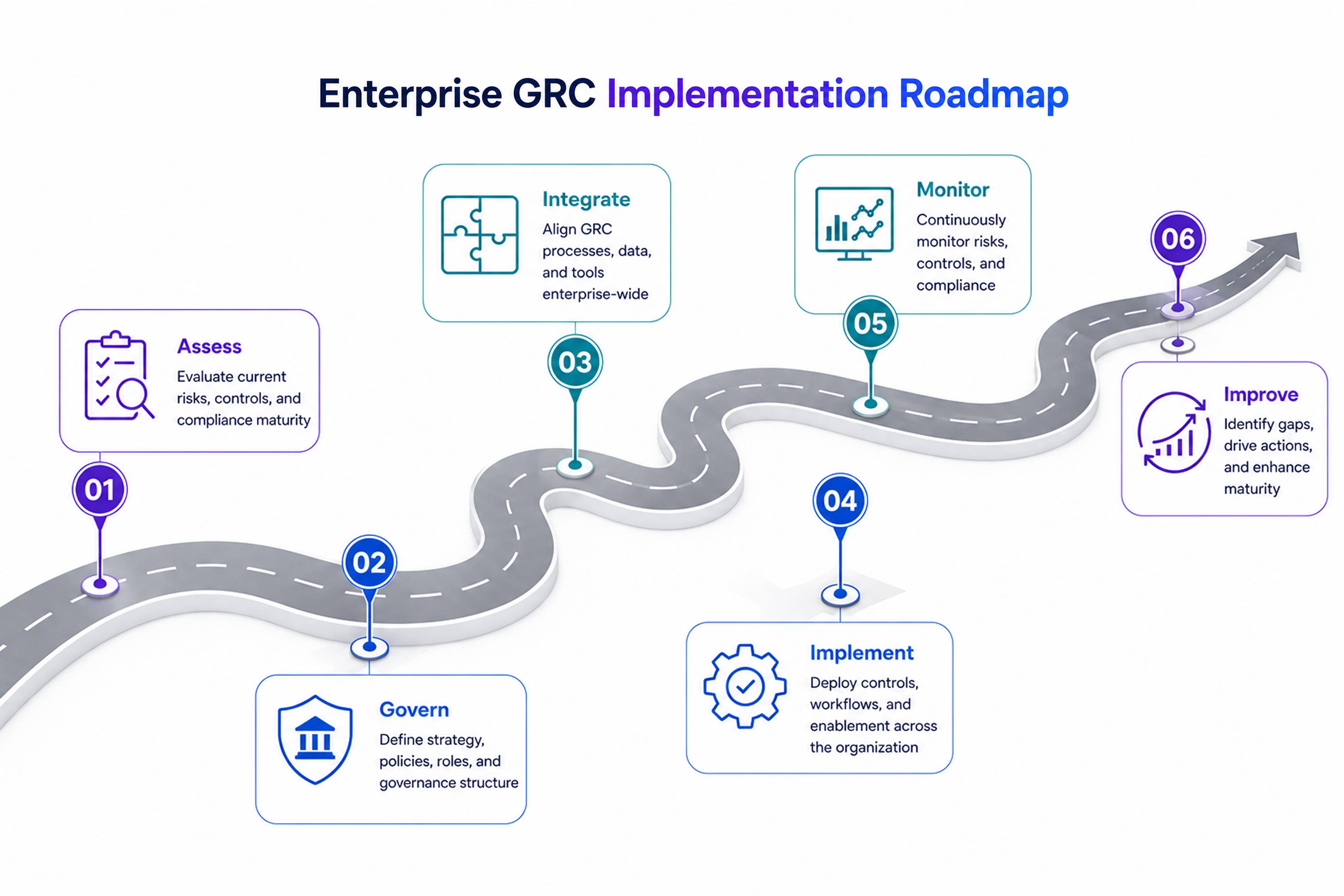 Building a GRC program for a company does not mean you have to change everything at once.
It is better to do it one step at a time.
First the company needs to understand what is going on figure out what GRC means for them find out who the important people are and see how well they are doing now with GRC.
The next step is to set up some rules get all the information about risks in one place find out what the company needs to do to follow the rules and make sure everyone is on the page with how to control things.
Once the basics are in place the company can then work on dealing with risks from companies they work with make sure cybersecurity and privacy are taken care of create reports and make sure everything is working correctly.
The main goal is to get better.
GRC should change as the company changes.
When the company starts services uses new technologies goes into new markets has to deal with new regulations or faces new risks they should take a closer look, at how they are doing things with GRC.
GRC programs should keep getting better and better over time.
Common Mistakes When Building a GRC Program
Organizations usually make things too complicated when it comes to GRC before they even get the basics right.
A lot of the time they buy a GRC platform before they figure out how they want to handle governance.
Using technology can make things more efficient. It cannot fix the problem of nobody being really sure who is in charge or if they are handling risk in a consistent way.
Another thing that does not work is thinking that only the compliance team is responsible for GRC.
The people who run the business are the ones who deal with a lot of the risks that the organization faces.
If they are not involved then the lists of risks and controls that the organization has will not really match what is going on in the business.
Organizations should not try to use every framework and create a lot of extra paperwork or only collect evidence when they are getting audited or give a lot of data, to management without really explaining what it means.
A good GRC program should make things clearer not more confusing.
GRC is supposed to help organizations so they should focus on making it simple and useful. That is why GRC is important for organizations to get right.
SecNinjaz Insight
GRC should not become another layer of bureaucracy.
We should not let GRC become another level of management that slows things down.
A good GRC program helps leaders see how business decisions and risks are connected and what rules we have to follow so they know what is going on and can make choices.
The GRC program is successful when it helps us see risks clearly and makes sure people are responsible for what they do and that we have good controls in place and make better business decisions.
We should not say GRC is working just because we have a lot of rules or keep track of a lot of information, in spreadsheets.
How SecNinjaz Helps Organizations Build Enterprise GRC Programs
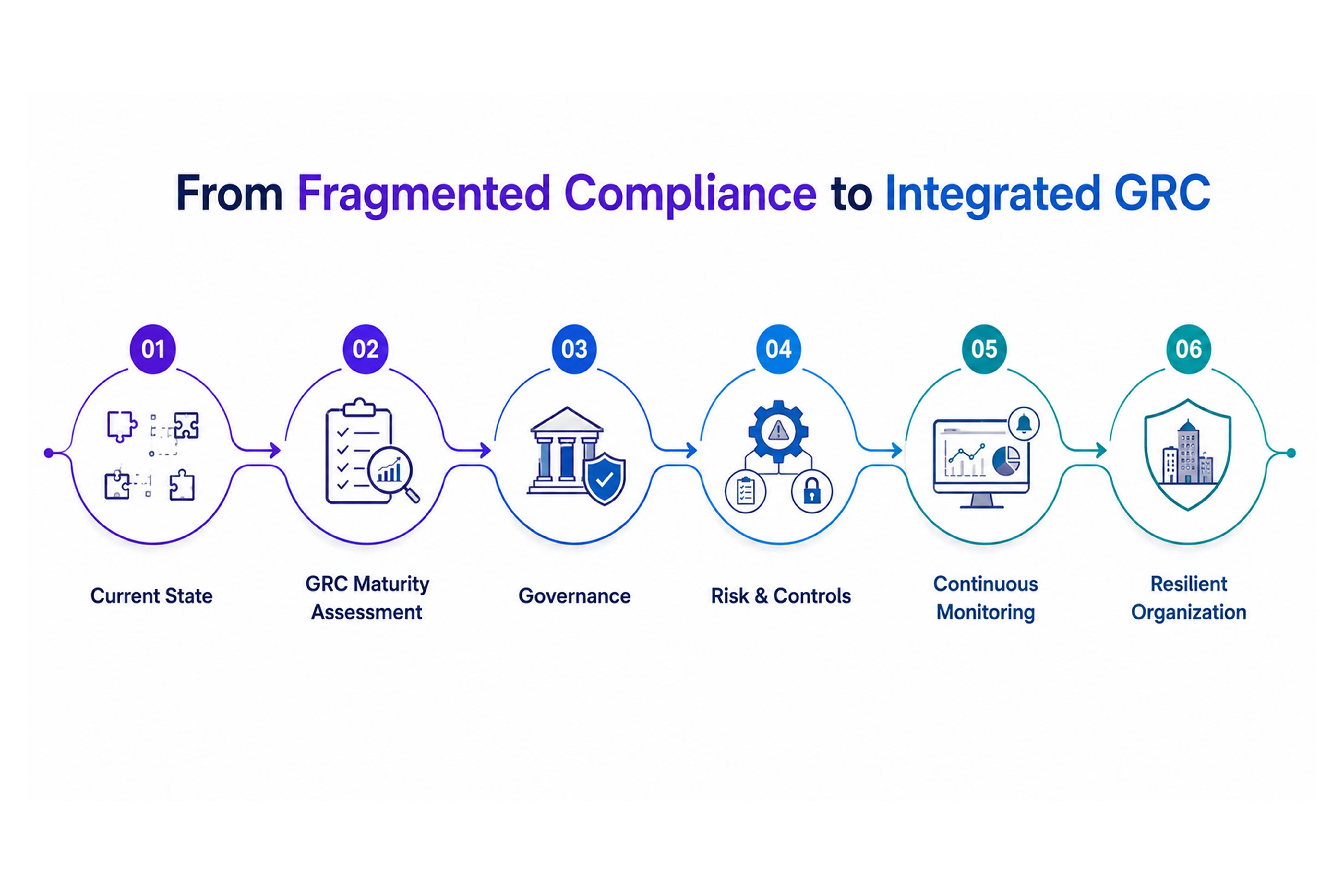 Every organization starts their GRC journey at a place.
Some organizations already have compliance programs in place. They have a hard time managing risk in a consistent way.
Others are getting ready for rules or customer demands.
Companies that are growing and using a lot of technology may need to set up a system of governance without slowing down the process of coming up with ideas.
SecNinjaz helps organizations figure out how mature their GRC is now find gaps in governance and compliance and come up with a plan to implement changes that fit with what the business needs.
We can help with things like checking GRC maturity developing a framework for governance managing risk across the company mapping out compliance requirements integrating control frameworks governing policies managing third-party risk governing cybersecurity governing privacy governing artificial intelligence doing internal audits and making continuous improvements.
The goal is not to add rules that are not needed.
The goal of GRC is to help organizations build a GRC program that is structured and scalable and based on risk which will help the business stay strong in the run.
SecNinjaz wants to help organizations, with their GRC journey and make sure GRC supports the business.
Frequently Asked Questions
What is an enterprise GRC program?
An enterprise Governance, Risk, and Compliance (GRC) program integrates governance, risk management, and compliance activities across an organization. It helps establish accountability, manage enterprise risks, track regulatory obligations, and provide leadership with the information needed to make informed business decisions.
Does every organization need a GRC program?
The complexity of a GRC program depends on an organization's size, industry, regulatory requirements, and risk profile. Smaller organizations may need a lightweight governance framework, while larger or highly regulated organizations typically require a formal enterprise GRC program.
Where should an organization start with GRC?
Organizations should begin by understanding their business objectives, identifying key risks and compliance obligations, and assessing their current GRC maturity. Governance processes should be established before investing in software or creating extensive documentation.
What is a GRC maturity assessment?
A GRC maturity assessment evaluates how effectively an organization manages governance, risk, compliance, controls, oversight, and reporting. It identifies capability gaps and helps prioritize improvements for building a more mature GRC program.
What is the difference between GRC and compliance?
Compliance focuses on meeting legal, regulatory, contractual, and industry requirements. GRC is a broader business framework that combines governance, enterprise risk management, and compliance to support better decision-making and organizational resilience.
Can GRC integrate ISO standards and other frameworks?
Yes. A well-designed GRC program can map requirements from ISO standards, regulatory requirements, contractual obligations, and industry frameworks to a common set of organizational controls, reducing duplication and simplifying evidence management.
How long does it take to build an enterprise GRC program?
The timeline depends on the organization's size, regulatory landscape, existing governance maturity, and implementation scope. Most organizations achieve better results by implementing GRC in phases, starting with governance and risk management before expanding into broader compliance capabilities.
Do we need GRC software?
Not necessarily. Organizations should first establish effective governance, risk management, compliance, and control processes. GRC software becomes valuable when it supports automation, centralized evidence management, reporting, and workflow management.
Who should own the GRC program?
Ownership varies by organization. A dedicated GRC, risk, compliance, or governance function typically coordinates the program, while business leaders and risk owners remain accountable for managing risks and controls within their respective areas.
How does SecNinjaz support GRC implementation?
SecNinjaz helps organizations assess GRC maturity, design governance frameworks, implement enterprise risk management processes, map compliance obligations, integrate control frameworks, strengthen third-party risk management, establish cybersecurity, privacy, and AI governance, prepare for audits, and drive continual improvement.