

Web and mobile applications now handle payments, customer data, business workflows, internal approvals, APIs, and sensitive records. That makes them a direct target for attackers.
A single insecure API, weak authentication flow, exposed token, injection flaw, or misconfigured backend can lead to data loss, downtime, regulatory issues, and reputational damage. For businesses in India and across global markets, application security testing is no longer a one-time checklist. It has to be part of the software development lifecycle.
SecNinjaz helps organisations identify and fix application security risks through a practical mix of SAST, DAST, IAST, manual application security testing, and penetration testing. This approach gives development and security teams visibility into vulnerabilities at different stages, from source code to live application behaviour.
Key Takeaways
SAST helps identify insecure code early in the development lifecycle.
DAST tests running applications from an attacker’s point of view.
IAST provides runtime visibility with more application context.
Combining SAST, DAST, IAST and penetration testing gives better coverage than using one method alone.
Explore Our Application Security Testing Services
Understanding Application Security Testing
 Application security testing is the process of finding security weaknesses in software before attackers can exploit them. It covers web applications, mobile applications, APIs, backend services, authentication systems, business logic, third party integrations, and cloud connected components.
The goal is simple: identify vulnerabilities, understand their impact, and fix them before they become real incidents.
Common issues found during application security testing include:
SQL injection
Cross-site scripting
Broken authentication
Insecure direct object references
Sensitive data exposure
Weak session management
API authorization flaws
Insecure file uploads
Business logic abuse
Mobile app reverse engineering risks
Hardcoded secrets
Misconfigured services
A strong application security programme does not depend on one tool or one test. It uses multiple methods at the right stages of development and deployment.
Sum-up Application Security Testing
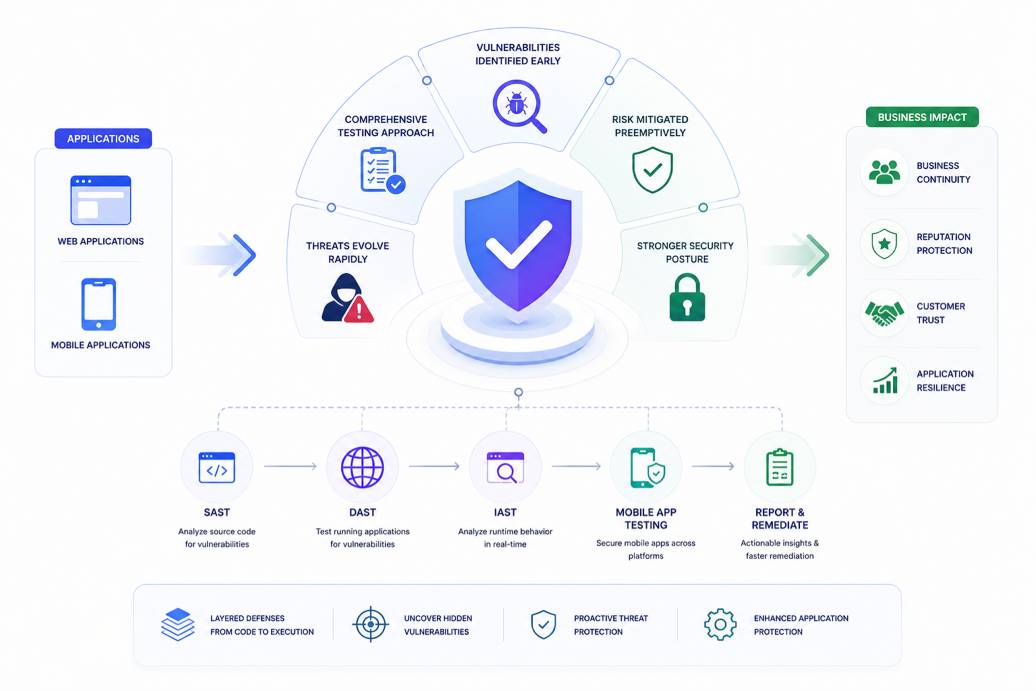 Application security testing India landscape is no yearner a luxury only necessity, ensuring vulnerabilities in web and mobile applications are identified, mitigated preemptively. Mobile app security testing is integral to application security, primarily because threats evolve rapidly, vulnerabilities can conceal themselves chameleons.
Comprehensive examination security testing not only highlights vulnerabilities simply enhances your organisation's general security posture. Combining aggregate testing techniques paints a broader canvas, allowing security engineers to uncover various potholes. This atomistic approach stands as the groin against expected threats, specially critical for business continuity and safeguarding an organisation's reputation.
How do we reach this harmonization security testing? By implementing wide-ranging security testing services , organisations in India can layer their defences, ensuring they fortify their application from code to execution. This retroactive stance empowers businesses to illuminate dim corners where security vulnerabilities hide, offering increased application protection.
Static Application Security Testing (SAST)
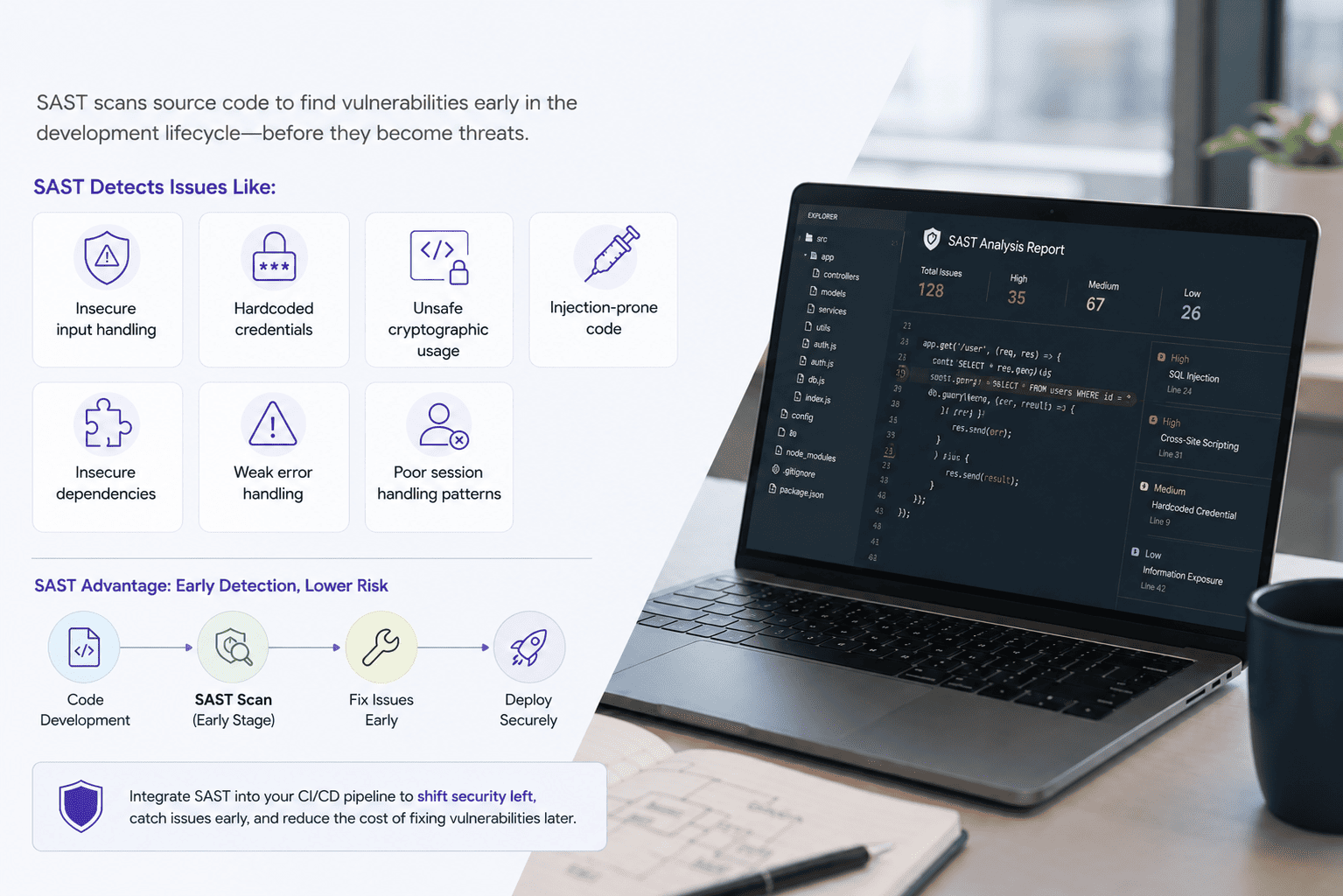 Static Application Security Testing , or SAST, represents an in-depth scan an application’s source code, probing for vulnerabilities in your software's development lifecycle. Like devoted security guard stationed at coder's desk, it scrutinises apiece line for security flaws and vulnerabilities, contractable issues earlier they mature into threats.
SAST is useful for detecting issues such as:
Insecure input handling
Hardcoded credentials
Unsafe cryptographic usage
Injection-prone code
Insecure dependencies
Weak error handling
Poor session handling patterns
The biggest advantage of SAST is timing. It can be introduced early in the software development lifecycle, even before the application is deployed. When integrated into CI/CD pipelines, it helps developers fix issues before they reach staging or production.
SAST is especially useful for teams that want to shift security left and reduce the cost of fixing vulnerabilities later.
Dynamic Application Security Testing (DAST)
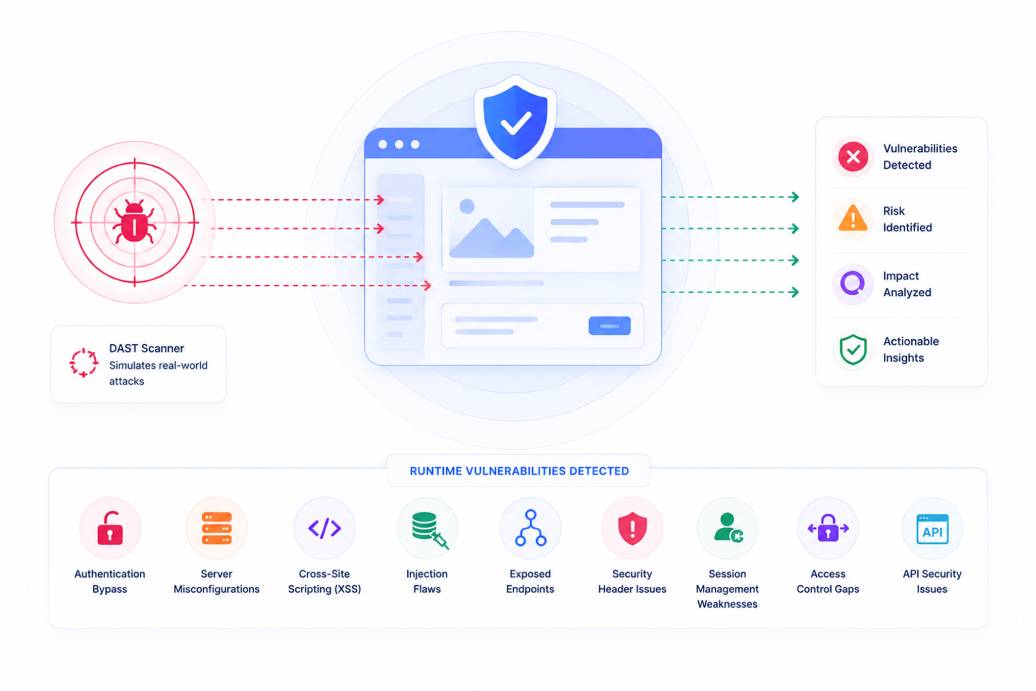 Dynamic Application Security Testing, or DAST, tests a running application. It does not need access to source code. Instead, it interacts with the application the way an attacker might.
DAST is useful for identifying runtime vulnerabilities such as:
Authentication bypass
Server misconfigurations
Cross-site scripting
Injection flaws
Exposed endpoints
Security header issues
Session management weaknesses
Access control gaps
API security issues
The beauty of DAST rests in its power to assume real-world attack scenarios. This active approach assesses how your app fares low-level the cyber gun, evaluating responses to cyber threats . An effective DAST implementation shines spotlight on vulnerabilities obscure to static scanning, providing another layer brainwave into your app’s security posture.
You might think of DAST as pragmatic twin to SAST – it hones in on runtime issues, unearthing out of sight vulnerabilities as application unfolds its processes. For businesses in India determined to stay nimble in the face of always evolving cyberthreats, regularly running DAST assessments is an unmissable step in the mobile application security measure mix.
Interactive Application Security Testing (IAST)
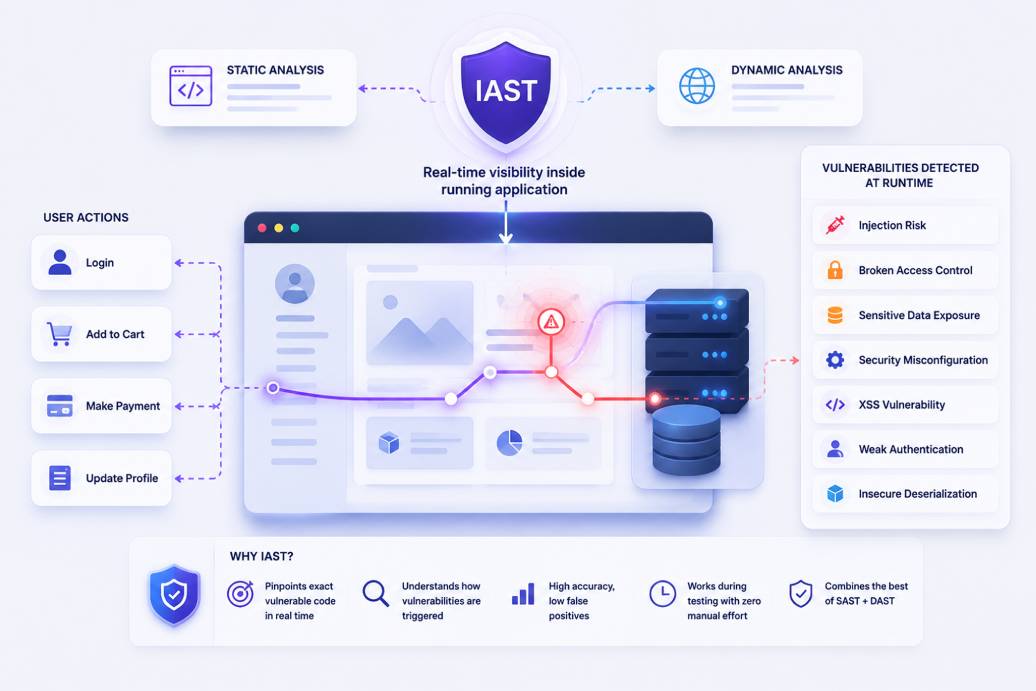 If SAST, DAST are the bookends of security testing, Interactive Application Security Testing (IAST) the novel cohesiveness weaving between them. It combines static, dynamic insights, capturing data patch application is executed. This real-time analysis ably balances code looking and runtime behaviour, offering a high-accuracy check with decreased false positives .
IAST is useful for identifying:
Vulnerable code paths
Runtime injection risks
Insecure data flow
Authentication and authorization issues
Input validation gaps
Risky library usage
Configuration-related weaknesses
IAST works while the application is being tested, it can help developers understand not only that a vulnerability exists, but where it exists and how it is triggered.
AppSec Critical for Web and Mobile Applications
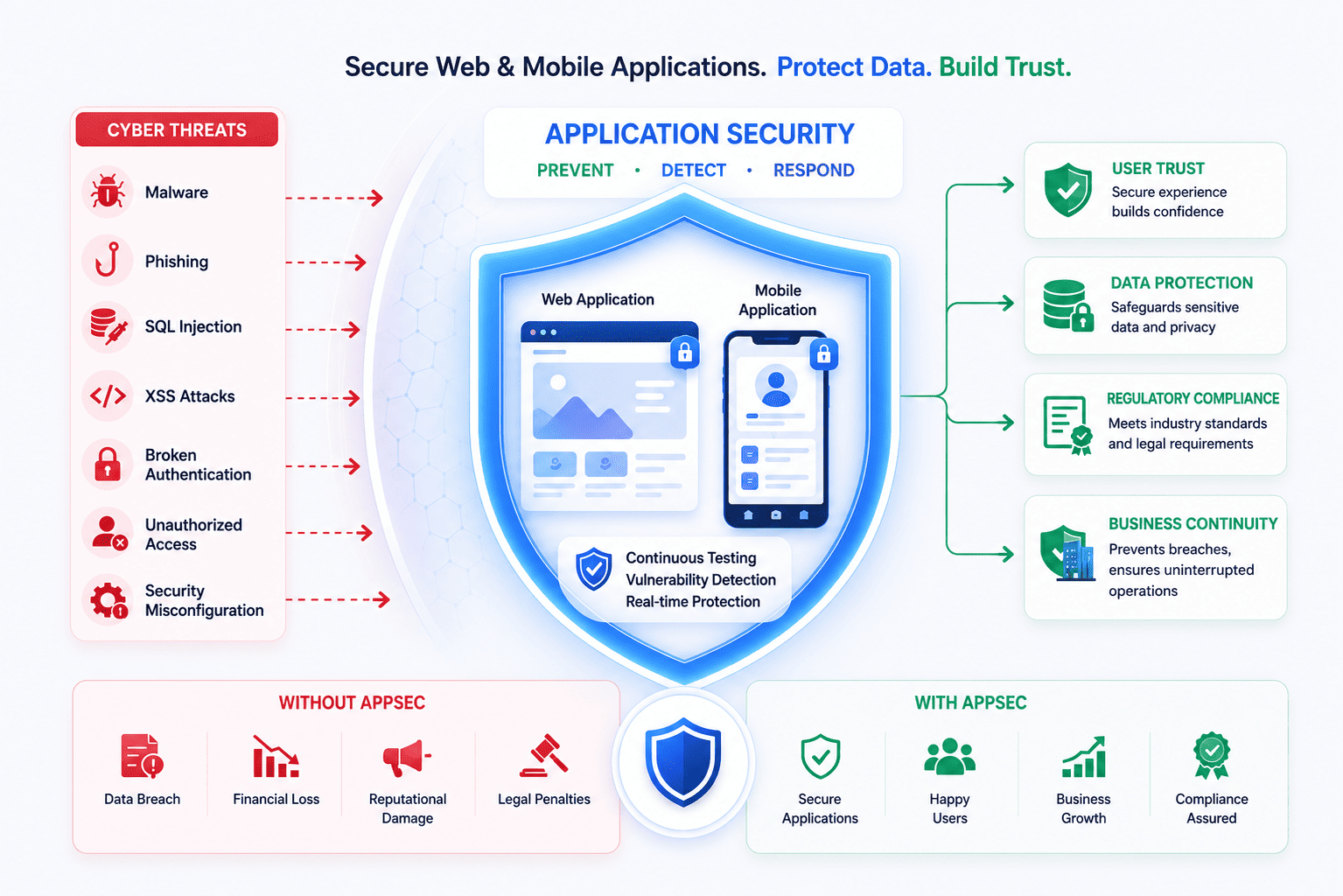 Securing web and mobile applications isn't merely about plugging holes; it's about safeguarding sensitive data, preventing breaches and adhering to regulatory compliance. This particularly in application security testing across India where robust solutions translate into trust.
To protect against cyber threats , stringent security practices must spike your application’s defence. Establishing security measures builds trust and reliability with your users, clients, underscoring your company’s commitment to safeguarding user information. With seclusion the growing concern, restrictive compliance mandates thorough application security testing to adhere to market standards ensuring your security protocols check all necessary boxes.
Protective security measures aren’t just nicety - they're foundation of trust upon which clients, users rely. Did you know that security superintendence could lead to financial, reputational harm? Best non to wait for breach to highlight your vulnerabilities.
The Rising Threat Landscape
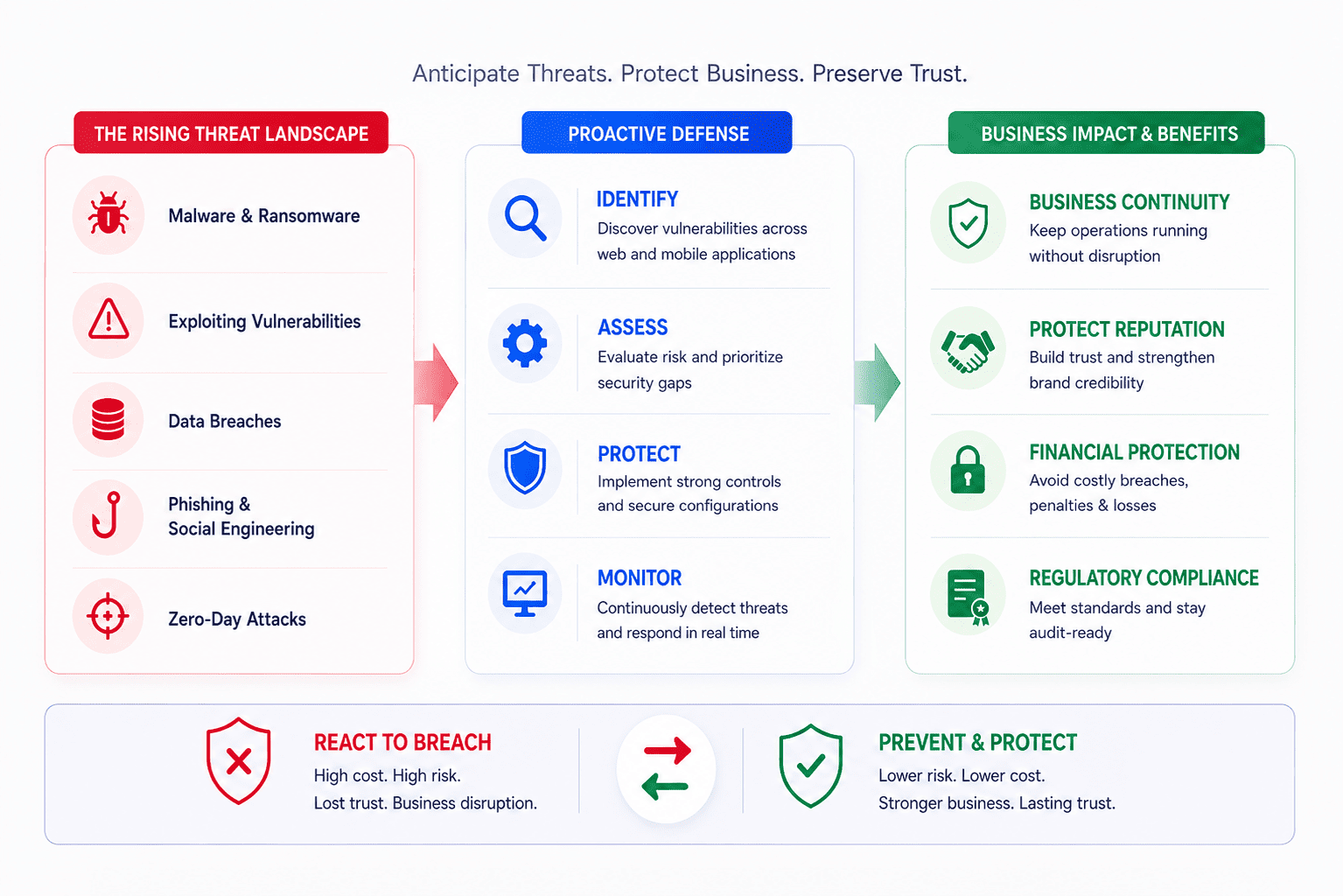 Every day, new vulnerabilities are ascertained lurking taciturnly within applications, posing a pronounced risk to application security. Keeping abreast of these security challenges is imperative mood as these threats acquire from simple exploits to attacks.
Consider the cyber attacks making headlines today—malware, ransomware, data breaches are just tip-of-the-iceberg concerns. More sophisticated approaches involve exploiting unnoticed vulnerabilities, prompting revaluation of your scourge response strategy. To tackle these challenges, organisations are turning to cybersecurity measures and leverage strategies Multi-factor security-mark (MFA), Zero Trust protocols.
Understanding warning situation creates defence strategy, one that prepares your organisation for security issues before they escalate. Only so can you devise a unrefined strategy able to account for vulnerabilities and palliate potential threats.
Impact on Business Continuity, Reputation
Security breaches have potential to turn day upside down. Suppose glitches bally servers, jeopardising business continuity, dragging productiveness into mud. The impact of security breaches often extends into reputational damage, where user trust wanes, trueness erodes. What's more, potentiality fallout includes high-ticket financial ramifications.
Reputational damage can sting long after breach has been patched, leaving a gift of suspect in its wake. Stopping issues in their tracks with timely security vulnerabilities management hints at a company's ceremony to safeguarding user data, demonstrating unfaltering integrity, reliability.
Simply there's at the end of tunnel. Proactive security measures promptly maintain business continuity, pad structure resilience, helping to bar security issues at expression door, ensuring a seamless user experience, solidify reputation in face of threats.
Cost Implications of Security Breaches
Security breaches ring alarm bells—both figuratively, literally. The fiscal consequence breach is Thomas More than just numbers on page; it’s remediation costs, penalties, lost revenue, contusioned brand image. Tackling security issues comes at a price, specially when attempting to patch things afterwards they break.
It's creative person case prevention being cheaper than cure. Investing in proactive security audit to ensure alignment with application security practices shields your business from potentially disabling costs. And, with all-embracing vulnerabilities scanning, you mitigate risks earlier they're exploited, protecting your bottom line while maintaining financial health.
Choosing to invest in prevention with reliable security strategies means fewer sleepless nights. Fear of security breaches stays pushed to fringes your worries, allowing you to focus on growth, innovation patch maintaining burly defences.
The Role of Vulnerability Assessment & Penetration Testing
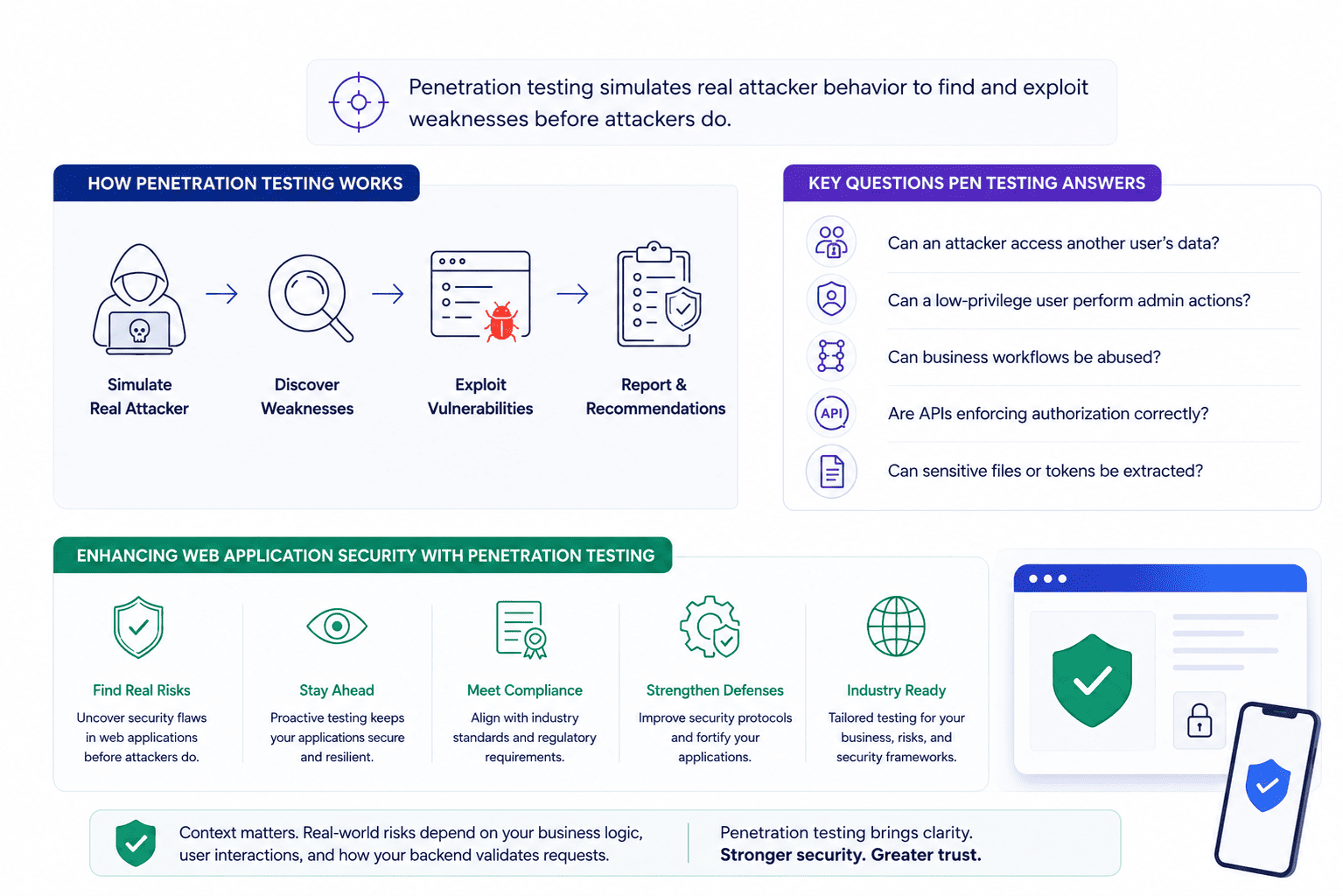 Penetration testing goes beyond automated scanning. It uses manual techniques to simulate real attacker behaviour.
During a penetration test, security testers attempt to exploit weaknesses in the application, APIs, authentication flows, business logic, roles, permissions, and deployment configuration. Penetration testing helps answer important questions:
Can an attacker access another user’s data?
Can a low-privilege user perform admin actions?
Can business workflows be abused?
Are APIs enforcing authorization correctly?
Can sensitive files or tokens be extracted?
For web and mobile applications, penetration testing is especially valuable because many real-world risks are contextual. They depend on how the business logic works, how users interact with the system, and how the backend validates requests.
Enhancing web application security testing through Penetration Testing
Summoning penetration testing aids web applications by searching them for spiritual world vulnerabilities. It assesses security measures and identifies risks long before whatever malicious actors can write on them. This retroactive surveillance ensures organisations continue and alert.
Tailoring depth testing serve for versatile industries ensures compliance with regulations, standards, aligning with what your business needs. A web application security check-up via penetration testing enhances security protocols, reinforcing your application’s defences piece aiding cybersecurity professionals in maintaining vigilance over web sprawl.
Does your industry require protection standards? Tailored incursion testing accommodates those security frameworks, allowing for adaptable, true defences that cater to security measures and vulnerabilities to your organisation's context.
Why Choose SecNinjaz?
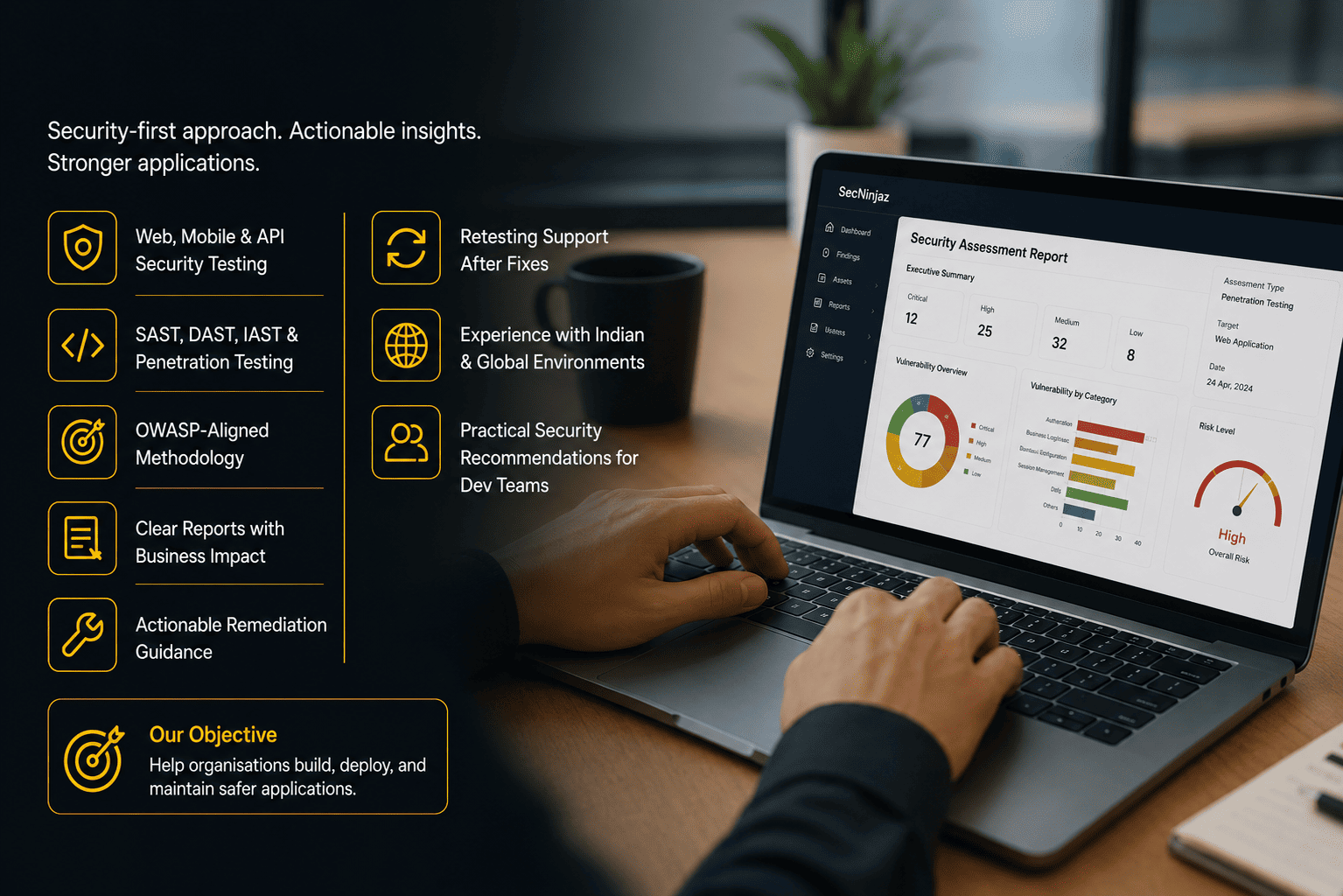 SecNinjaz brings a security-first approach to application testing. The team focuses on practical findings, clear reporting, and remediation support rather than generic scanner output.
Businesses choose SecNinjaz for:
Web, mobile, and API security testing expertise
SAST, DAST, IAST and penetration testing capabilities
OWASP-aligned testing methodology
Clear vulnerability reports with business impact
Actionable remediation guidance
Retesting support after fixes
Experience with Indian and global business environments
Practical security recommendations for development teams
The objective is simple: help organisations build, deploy, and maintain safer applications.
Wherefore Take Secninjaz for Security Testing
SecNinjaz’s expertise stems from employing methods convergent on nuances of both web and mobile application security. Their state-of-the-art methodologies are modified to craft specific security approaches, facultative your organisation to safeguard its digital assets confidently. With Secninjaz, it’s about work problems while preventing future ones—the epitome of forward-thinking security auditing.
Choosing Secninjaz means selecting partner, one that values your organisational needs, designs security solutions that come across crosswise three pillars of web application, mobile app testing, and cybersecurity services . Their faithfulness to securing digital asset goes on the far side simple checks, balances—it’s a journeying towards safeguarding entirety your digital landscape.
Expertise in Web, Mobile Application Security Testing
With Secninjaz, you’re enlisting a powerhouse in application security testing, grounded in a wealth of industry experience. Their professionalism in security testing services marks them as pioneers, especially within mechanics security environment.
Secninjaz’s track record extends crosswise diverse sectors, manifesting comprehensive understanding of challenges front by web, applications. They delve into the intricacies of to each one client’s taxonomic category needs, bolstering security measures through tailor-made testing solutions that speak to your business ethos.
By selecting Secninjaz, you choose for quality assurances that rest on bedrock expert cybersecurity know-how. Certified, revered, settled in Hyderabad, they’ve been entrusted with protect analogue landscapes, ensuring client confidence and paving toward safer application security testing india.
Summary
In summary, understanding, deploying application security testing methods - SAST, DAST, IAST—ensures your web and applications are bolted against ever-evolving cyber threats. Secninjaz, with its unmatched expertise, provides formidable concern for Indian enterprises committed to preserving integer integrity. How accoutred is your organisation to hold out today’s cybersecurity challenges? Whether you’ve got everything covered or are starting from scratch, don't leave your security to chance. Schedule an assessment with Secninjaz today to change integrity your application’s defences.
Schedule Your Application Security Assessment
Frequently Asked Questions
What is application security testing?
Application security testing is the process of identifying security vulnerabilities in web applications, mobile applications, APIs, and backend systems. It helps organisations find and fix weaknesses before attackers can exploit them.
How does Secninjaz utilise SAST, DAST, and IAST for security testing?
Secninjaz combines Static Application Security Testing (SAST), Dynamic Application Security Testing (DAST), and Interactive Application Security Testing (IAST). SAST examines source code for vulnerabilities without executing the application. DAST tests running applications to identify security risks. IAST combines elements of both, testing applications in their real environment to provide deeper insights. Together, these methods ensure thorough security assessments, catching vulnerabilities before they become real problems.
What is the difference between SAST, DAST, and IAST?
SAST analyses source code without running the application. DAST tests the application while it is running. IAST observes the running application from the inside, providing more context about vulnerabilities.
Why should businesses combine SAST, DAST, and IAST?
Combining SAST, DAST, and IAST provides broader coverage. It helps identify vulnerabilities in code, runtime behaviour, and real application flows, reducing blind spots and improving overall security.
What benefits can businesses expect from implementing Secninjaz's security testing approach?
Implementing Secninjaz's approach offers several benefits, including improved security posture, reduced risk of breaches, compliance with regulatory requirements, and stronger customer trust. Comprehensive testing detects vulnerabilities early, reducing the cost and impact of fixing them post-deployment. Businesses gain peace of mind knowing their applications are thoroughly protected, which can enhance their reputation. Ultimately, this proactive defence strategy safeguards client data, fostering customer loyalty and confidence.