

Indian enterprises are constantly searching for better ways to run leaner, faster operations. Agentic workflow automation is the latest approach promising to reshape that dynamic. It lets organisations move away from manual, effort-heavy processes toward systems that manage themselves. Basic robotic process automation (RPA) follows fixed rules. Agentic systems go further: they use AI to predict, learn, and adapt, building an automation ecosystem that acts ahead of problems instead of just reacting to them.
So how can Indian enterprises actually use agentic workflow automation to get real productivity and cost gains?
Key Takeaways
Indian enterprises gain a competitive edge through agentic AI systems that optimise operations and improve scalability
A phased rollout works better than a single big-bang deployment, tailored to the specific enterprise environment
A realistic costing model covers software, hardware, training, and expected returns
Success comes down to precise metrics — time saved, errors reduced — not vague promises
Unclear objectives and resistance to change are the two things most likely to sink a project
What Agentic Workflow Automation Means for Indian Enterprises
Agentic workflow automation is changing how Indian enterprises run processes that used to depend on someone watching over them. It isn't about swapping people for machines. It's closer to a balance: AI systems that predict, adapt, and evolve alongside the business, pushing productivity up as they go. Indian companies are already at the front of this shift, using agentic automation to move faster and respond better in a crowded market.
Bringing in agentic AI lets Indian enterprises scale without scaling their headcount at the same rate. Where RPA follows a script, agentic AI anticipates disruptions and looks for a fix before things break — that's the edge it gives in response times. Done well, the integration doesn't just automate a task; it manages it, cutting down errors and the number of times a human has to step in. For enterprises further along their transformation journey, this is a real step forward for growth and scale, not just a cost play.
The bigger advantage is in decision-making. Automation reduces human error, sure, but it also opens the door to data-driven decisions that are faster and better informed. That matters a lot in India, where multilingual operations and a patchwork of regulatory requirements can trip up older systems. A proactive AI backbone helps enterprises handle that complexity while staying compliant across very different operating conditions.
Getting agentic workflow automation right isn't really about the technology purchase. It's about understanding the shift it represents — AI, agents, and workflow logic working together to expand what a business can create. Get this right, and automation doesn't replace what people bring to the table. It amplifies it.
Finding the Right Opportunities in Existing Workflows
Before jumping into agentic automation, enterprises need to know where their current workflows actually break down. A careful audit of existing processes surfaces inefficiencies that tend to hide under layers of complexity — this isn't a box-ticking exercise, it's detailed work that uncovers where AI can make the biggest difference.
Take an enterprise weighed down by legacy processes. How well it understands its own workflow determines how well agentic AI will fit. The task is to audit the repetitive, document-heavy work first. Why? Because repetitive tasks are exactly where AI agents earn their keep, and they're usually the clearest sign of where inefficiency is hiding. Evaluate these processes properly, and you'll see exactly where the AI can do the most good.
This work shouldn't stop at a one-time audit. Regular workflow reviews keep optimisation from becoming a one-off project. It's a continuous cycle — identify, implement, adjust. Each audit builds toward a stronger automation platform, one that fits the enterprise's actual goals rather than a generic template. That's what turns "we automated something" into a real path toward AI integration.
Bringing in an AI agent builder to look at task execution and oversight often surfaces opportunities nobody had flagged. This is where AI capability actually gets used, blending with the existing workflow instead of fighting it. The point isn't to replace what's already working — it's to make it sharper.
A Phased Rollout Plan for Agentic Workflow Automation
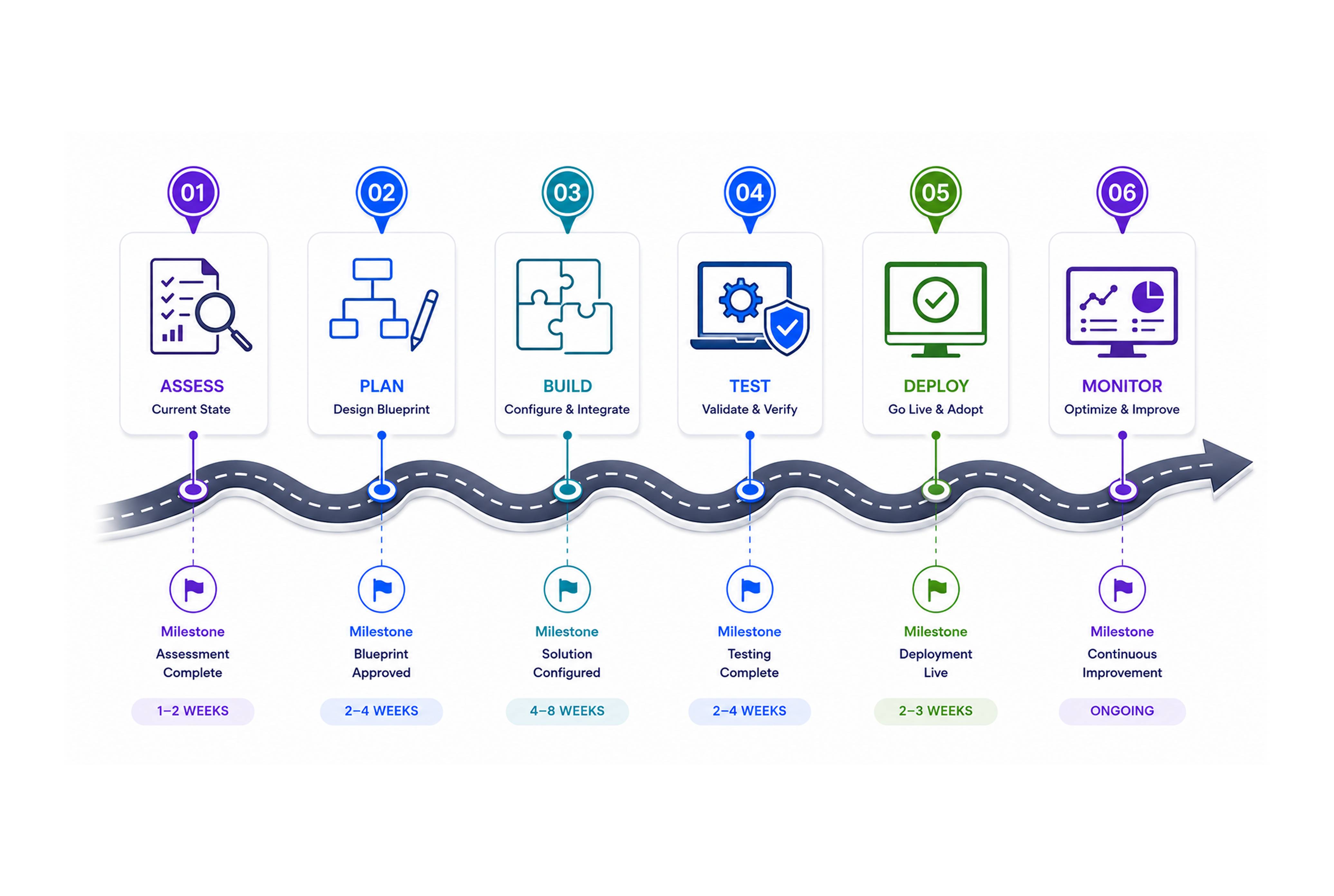 This isn't something you flip on overnight. It needs a structured, phased plan that sets a realistic course toward deployment. Everything starts with a careful assessment, which gives enterprises the insight they need into current workflows and where automation actually fits.
In the Initial Assessment Phase, operations and IT teams document each step of a workflow and mark out which phases line up with the business's real goals. This phase is what sets the roadmap — documentation and gap analysis do the groundwork, and skipping them is how businesses walk into avoidable problems later.
Once that assessment wraps up, execution starts. Pilot testing matters here: pick a department or process, run agentic automation against it, and see what happens in the real world. Feedback loops need to be solid, because this stage has to stay adaptive — the systems get tuned based on what actually happens, not what the plan assumed would happen.
Staff training is the part that's easy to underinvest in. It's not enough to hand people new tools and walk away. Real training — the kind that builds actual skill with the system — is what determines whether a rollout sticks. This is where enterprises prepare their people for the next phase of the business, not just the software.
The Technology Stack: Tools and AI Agents Behind Intelligent Automation
The technology stack is the backbone of the whole system — how well it performs and how well it integrates with everything else. A solid architecture has several moving parts, and none of them should be picked casually. Not every AI tool does the same job, so matching the right one to the actual need is the real work here.
The core decision is which AI tools to bring in. Some setups lean on APIs, others on agent development frameworks or specific AI models — each with its own strengths. Whichever combination gets chosen, integration capability matters more than almost anything else. A poorly integrated tool can sink an otherwise good automation project; a well-integrated one works quietly alongside the infrastructure that's already there.
That compatibility is what makes transitions smooth. New technology that fits the existing setup runs into far fewer hurdles than technology forced into a workflow it wasn't built for. The better move is choosing architecture that complements what's already running, not something that demands the enterprise rebuild around it.
None of this is a one-time decision, either. Technology moves fast, so the tool stack needs regular review — how well the agents are actually orchestrating processes, whether the agent design still holds up. Skipping these check-ins is how an enterprise falls behind without noticing.
Cost Model: Financial Estimates for Agentic Automation in Indian Enterprises
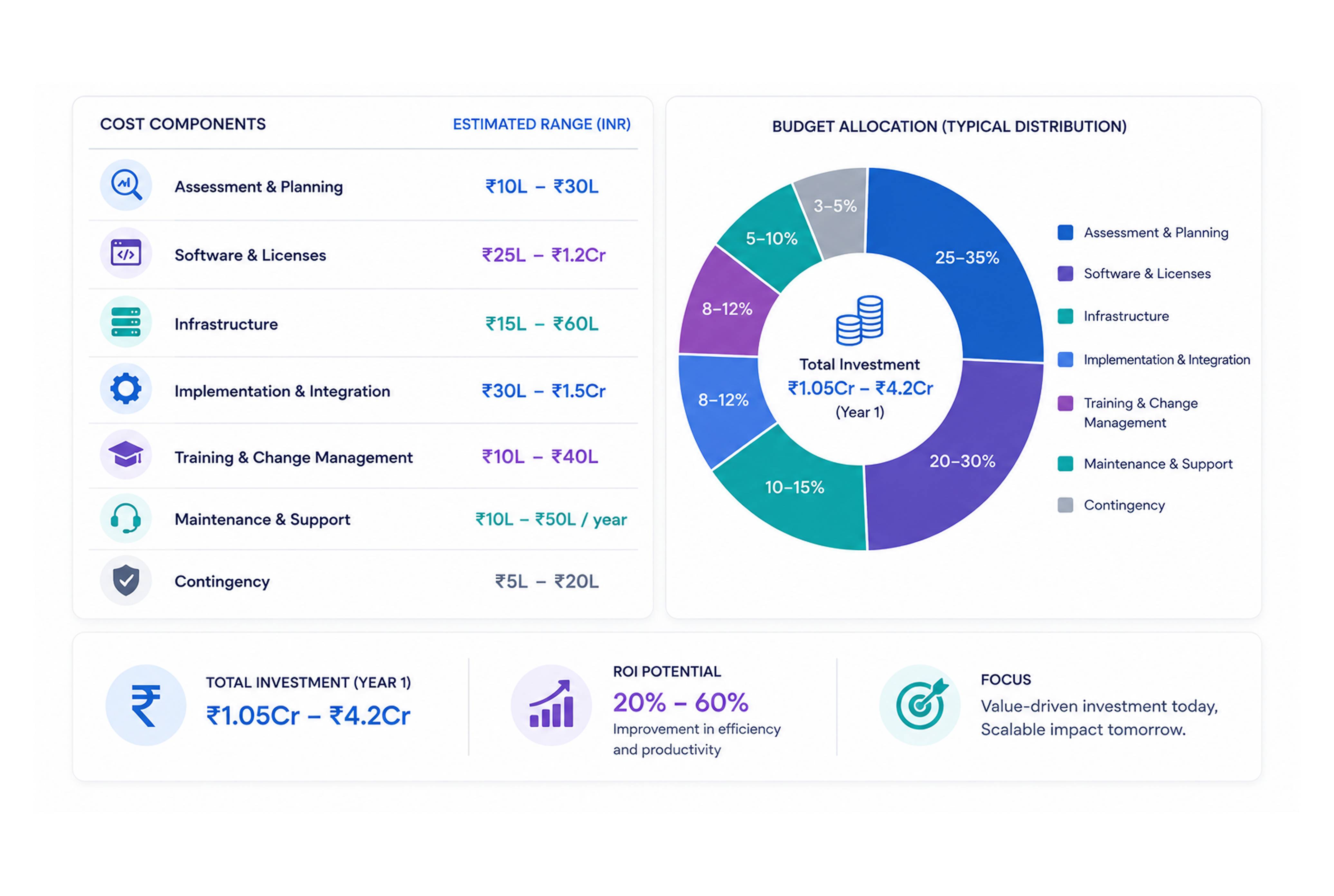 What does this actually cost? Getting a realistic number means balancing ambition against what a budget can actually support. Costs come in layers — assessment work, software procurement, hardware, and the added complexity of the specific workflows being automated.
Start with a full financial picture before setting a budget. This isn't a template exercise; it means allocating spend by department priority and by how complex the target workflows actually are. A detailed cost breakdown is what turns a vague number into something a business can actually plan around — software licences, ongoing maintenance, all of it.
One cost that gets missed constantly: training. Rolling out agentic systems means employees have a learning curve, and skimping on training resources to save money almost always costs more later. Staying realistic about costs up front also makes it easier to align expectations with stakeholders who
sit outside the automation team.
ROI needs a wider lens too. The traditional approach treats ROI as pure cost savings. In an Indian enterprise context, that misses half the picture — the strategic benefits that come with automation adoption. Scalability gained, productivity unlocked down the line: these belong in the ROI conversation just as much as the immediate numbers.
Measuring Success: ROI Metrics and Performance Indicators
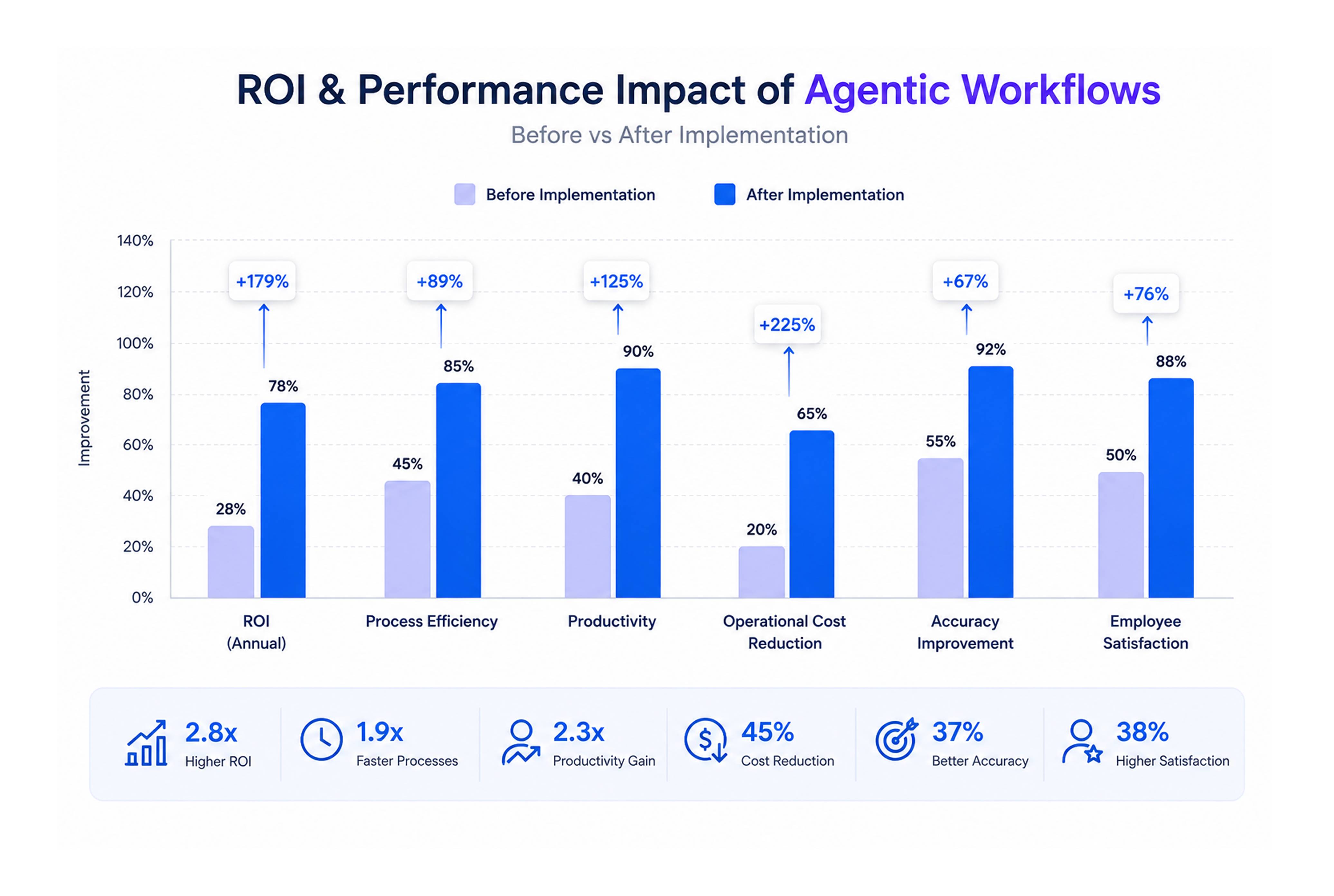 What does success actually look like here, and how do you prove it? It's not an abstract feeling — it comes down to defining KPIs that are clear, fair, and tied to the organisation's actual goals. That means real detail on both ROI and the performance indicators that show whether the automation is working.
Start with the basics: time saved from faster process handling, and productivity gains from people spending less time on repetitive work. Error reduction matters just as much — it's a direct signal of how reliable the process has become and how much manual intervention is still needed. Together, these metrics show whether the automation is actually paying off strategically, not just on paper.
This isn't something to check once and forget. Regular assessment keeps performance aligned with what the organisation actually needs, and staying close to the data is what lets a business adjust course before small issues become big ones. Think of these evaluations as a compass — they tell you when to correct direction, not just whether you're moving.
Comparing performance against industry benchmarks gives a useful outside reference point. It shows where a business stands out and where it's falling behind, and either way, that's useful information. Ongoing monitoring — data collection, feedback loops — is what keeps that comparison meaningful over time.
Common Pitfalls in Agentic Automation and How to Avoid Them
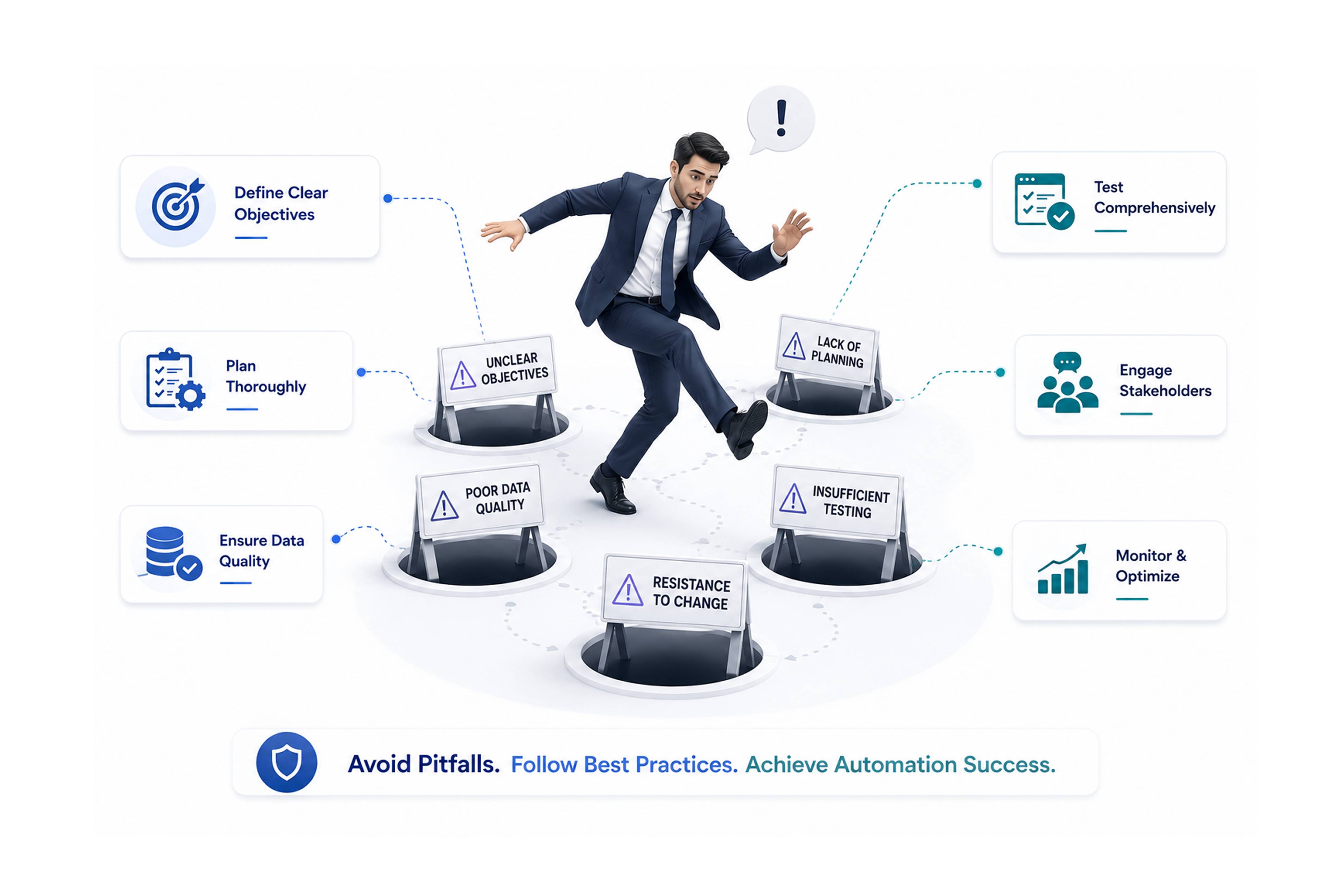 Agentic workflows look promising on paper, but the projects themselves come with real risk. Tread carefully — a lot of automation projects fail for the same avoidable reasons. The most common one is simple: no clear objective. Without direction, a project drifts, and drifting projects rarely land well.
Clinging to legacy systems is another. New technology keeps showing up, and systems that resist adapting to it end up stifling innovation instead of supporting it. Without some modernisation, enterprises end up fighting the very integrations agentic automation is supposed to make easier. Staff resistance is its own challenge too — solid change management is what turns pushback into buy-in instead of letting it derail the rollout.
Leaning too hard on the technology is its own trap. Automation isn't a replacement for human oversight — it's a helper, not a substitute. Skipping proper testing is just as damaging: rushed deployments surface their problems after launch, which is the worst possible time to find them. Solid pre-deployment testing catches most of that before it becomes a real headache.
None of this works without a real risk management plan behind it — spotting obstacles early, using resources well, and bringing in outside expertise when it's actually needed. Enterprises that do this consistently outperform the ones that skip it.
Case Studies: What Successful Agentic Rollouts Look Like in Indian Enterprises
 Real case studies are worth more than theory here — they show how businesses actually got through the rough patches and made agentic workflows work. That's the kind of detail that helps the next implementation go smoother.
Across retail, finance, and logistics, Indian enterprises have already built up a solid track record of ROI from these systems. Looking at how a comparable business in a similar industry approached deployment gives a much clearer sense of what's realistic than a generic case study would.
Some of the more interesting stories involve creative uses of agentic technology that go beyond the obvious use case — the kind of detail worth borrowing for a different situation entirely. The strongest examples show businesses that streamlined a process and saw a real efficiency jump because of a specific, deliberate decision, not luck.
These stories tend to stick with a business and shape how it thinks about future automation projects. Learn the right lessons from them, and the next rollout looks a lot less like guesswork.
What's Next for Workflow Automation
 The direction is fairly clear: hyperautomation is coming, and it's going to touch more complex processes than today's tools handle. That opens up a lot of room for further optimisation — and the horizon keeps moving.
AI is pushing workflows closer to genuine self-reliance on routine tasks. IoT networks paired with agentic automation are expected to multiply efficiency gains across industrial settings. Blockchain is drawing more interest too, for the transparency and security it can bring to business process management.
Put together, these shifts point toward more efficient systems overall — and a stronger focus on AI ethics is likely to make future readiness strategies more solid, addressing concerns that come with wider automation adoption. For Indian enterprises, tracking these trends means watching a genuinely turbulent tech landscape alongside market shifts that reward the businesses paying attention.
Recommendations for Operations Managers and Digital Function Leaders
Running agentic automation well takes real preparation from both operations managers and digital leads — this isn't something either group can do alone. Bringing stakeholders in from day one keeps everyone aligned and makes for a smoother rollout. Keep them in the strategy conversations, and keep checking that each step still matches the bigger operational goals.
None of this works without ongoing learning. Technology doesn't sit still, and leaders who keep learning are the ones who can guide these projects with actual confidence rather than guesswork.
Change management deserves real thought, not an afterthought — it's what keeps resistance from derailing a project outright. Enterprises bringing in agentic AI should get ahead of this by training staff properly and building a workforce that's actually ready, not just informed.
Strategic planning needs both a long-term view and the right expert partnerships when building agent-driven systems. Outside expertise adds real value here, especially during the messier parts of transformation. And expectations matter — set them at a level the organisation can actually hit, not an aspirational one that sets the project up to disappoint.
Agentic workflow automation opens up real opportunity for Indian enterprises willing to approach it properly: realistic financial planning, precise ROI metrics, and a rollout plan that respects how much change is actually involved. As the technology keeps evolving, so does the work of adapting to it — blending human judgment with what AI can now do.
What would it take for your enterprise to make this shift? Worth thinking through.
Frequently Asked Questions
What is Agentic Workflow Automation for Indian enterprises?
Agentic workflow automation uses AI-powered software agents to automate, optimize, and manage business workflows with minimal human intervention. Unlike traditional rule-based automation, agentic systems can learn from data, adapt to changing conditions, and make autonomous decisions to improve operational efficiency.
How does the implementation blueprint work?
The implementation begins with assessing existing workflows to identify automation opportunities, followed by solution design, technology selection, pilot deployments, integration with existing systems, staff training, and a phased rollout. Continuous monitoring and optimization ensure the solution delivers long-term business value.
What benefits can Indian enterprises expect from agentic workflow automation?
Organizations can improve operational efficiency, reduce manual effort, minimize errors, accelerate decision-making, increase scalability, and lower operating costs. Agentic AI also enables businesses to respond more quickly to changing market conditions while improving productivity across departments.
What factors influence the cost of implementing agentic workflow automation?
Implementation costs depend on workflow complexity, customization requirements, deployment scale, software licensing, infrastructure, system integrations, employee training, and ongoing maintenance. A detailed assessment helps organizations develop a realistic implementation budget and ROI model.
How can enterprises ensure a successful implementation?
Successful implementations require clear business objectives, stakeholder involvement, phased deployment, comprehensive employee training, effective change management, continuous performance monitoring, and collaboration between business, IT, and AI implementation teams. Regular reviews help optimize workflows and maximize long-term value.