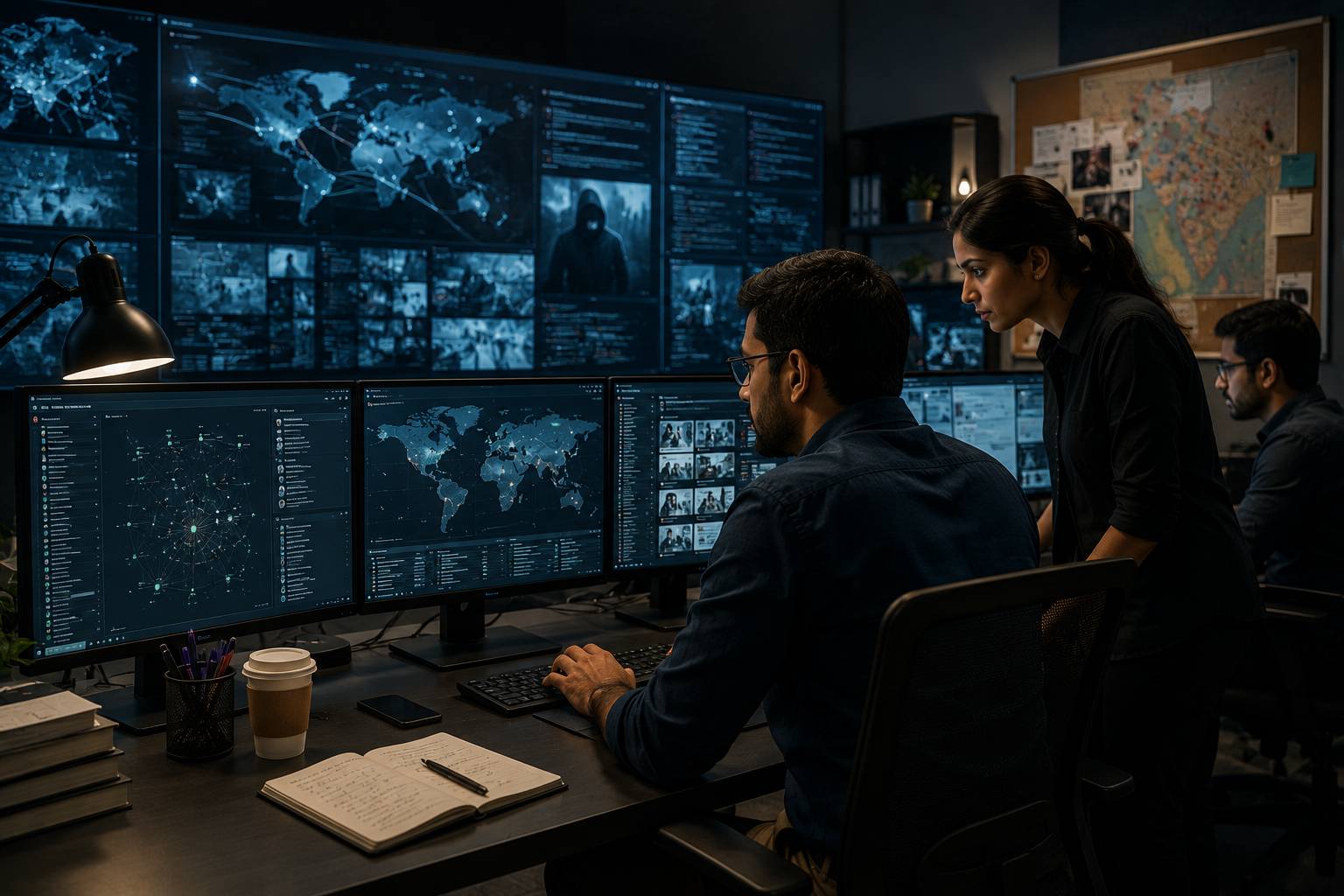
On 8 March 2026, the Narcotics Control Bureau announced it had dismantled a pan-India drug network operating under the name Team Kalki. The accused had built their operation on the darknet forum Dread, where their vendor account carried a four-star rating built on a long run of completed orders, then moved order fulfilment onto the encrypted Session messaging app once a buyer made contact. NCB's own account of the case says the network sourced LSD and MDMA from vendors in the Netherlands, Poland, and Germany, and had dispatched more than a thousand consignments since January 2025 before the seizure that finally stopped it.
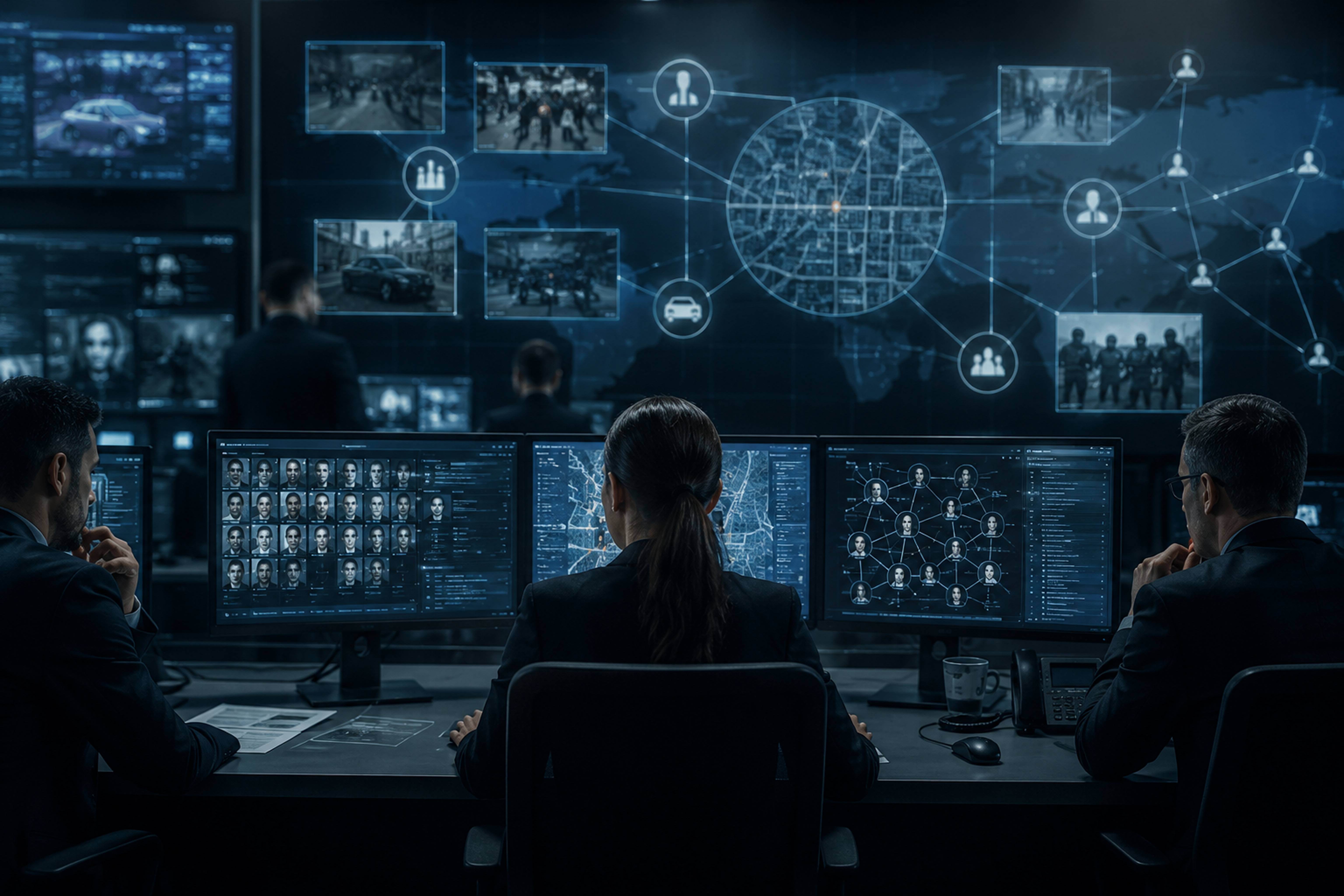
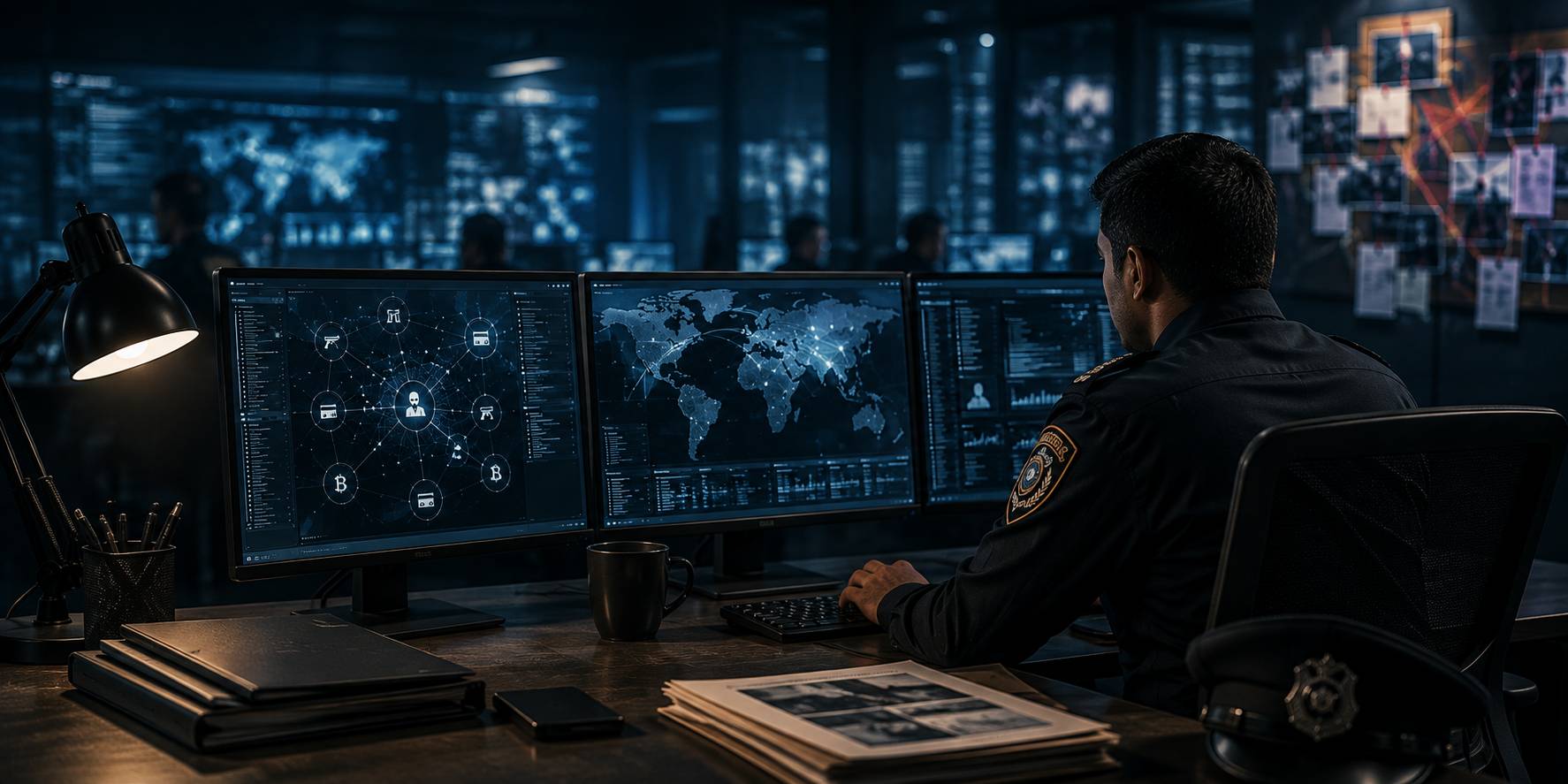
That case is a useful illustration of what a real dark web investigation actually looks like, and it is rarely a single website. It is a reputation-based vendor profile on a forum, order fulfilment on a separate encrypted channel the forum does not control, a courier and postal logistics chain, and an international sourcing network, all running in parallel and all needing to be tied together before a case file means anything. A dark web intelligence platform for law enforcement exists to do exactly that tying-together, at a scale and speed no analyst can manage by switching between browser tabs.
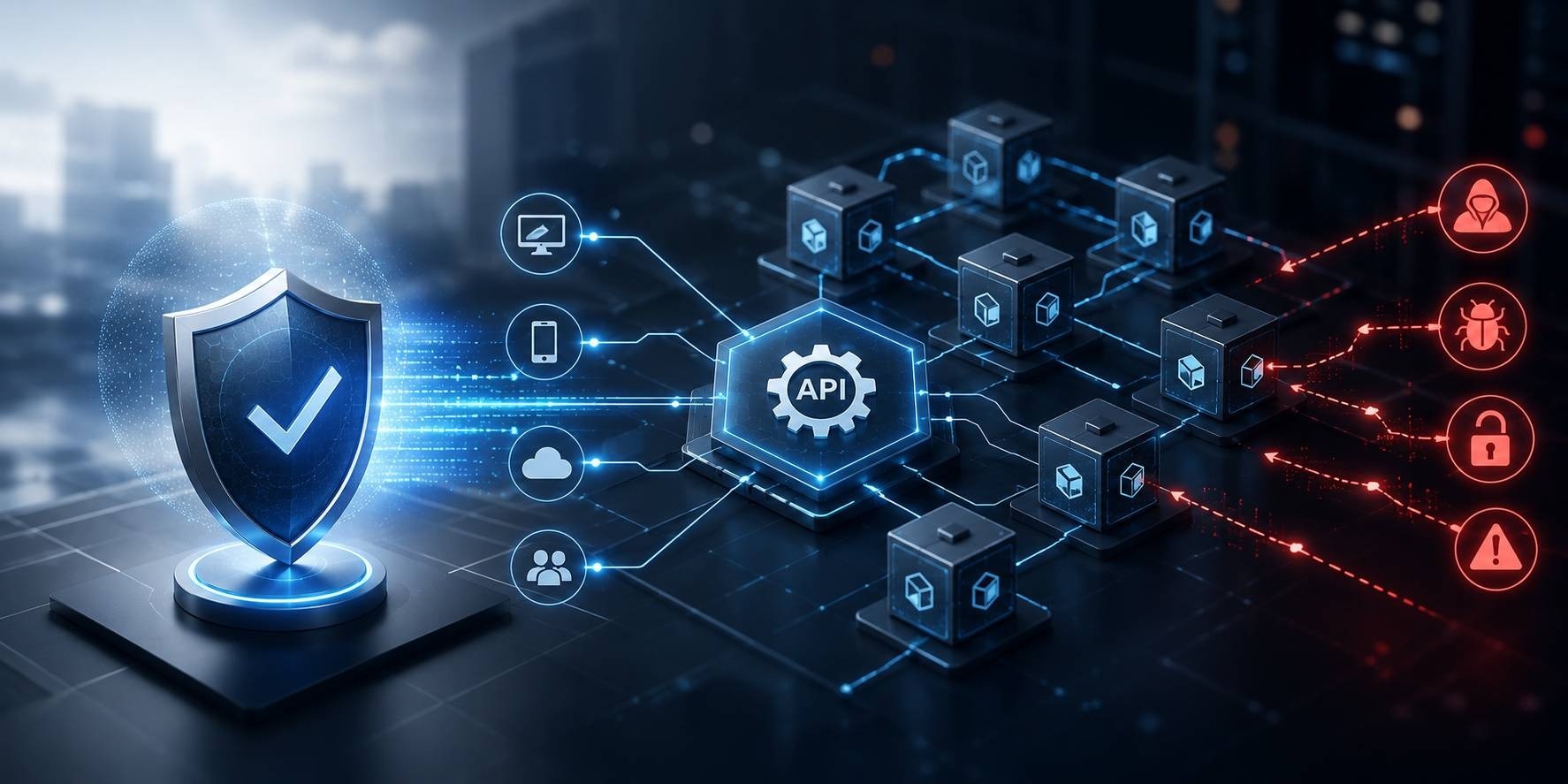
Here is where most coverage of this topic stops short. A platform that just returns a list of forum hits is not the hard part anymore; several tools can do that. What actually determines whether an investigation holds up is the architecture behind it: how sources get collected and normalized, how a raw hit becomes a scored, corroborated finding, and how that finding turns into a report a court will accept rather than a screenshot a defence lawyer can dismiss in five minutes. Get that architecture wrong and speed does not help; it just produces more unverified material faster.
This guide walks through what a dark web intelligence platform actually has to do, how SecNinjaz's WebMine is architected across collection, correlation, and reporting layers, what the investigative workflow looks like from an authorized request to a finished case file, how findings get scored, and what tends to go wrong when a layer is missing. It is written for cyber cell heads, state police IT units, and the officers who have to make the output of a platform like this survive contact with a courtroom.
Talk to Our Security Experts →
What a Dark Web Intelligence Platform Actually Has to Do
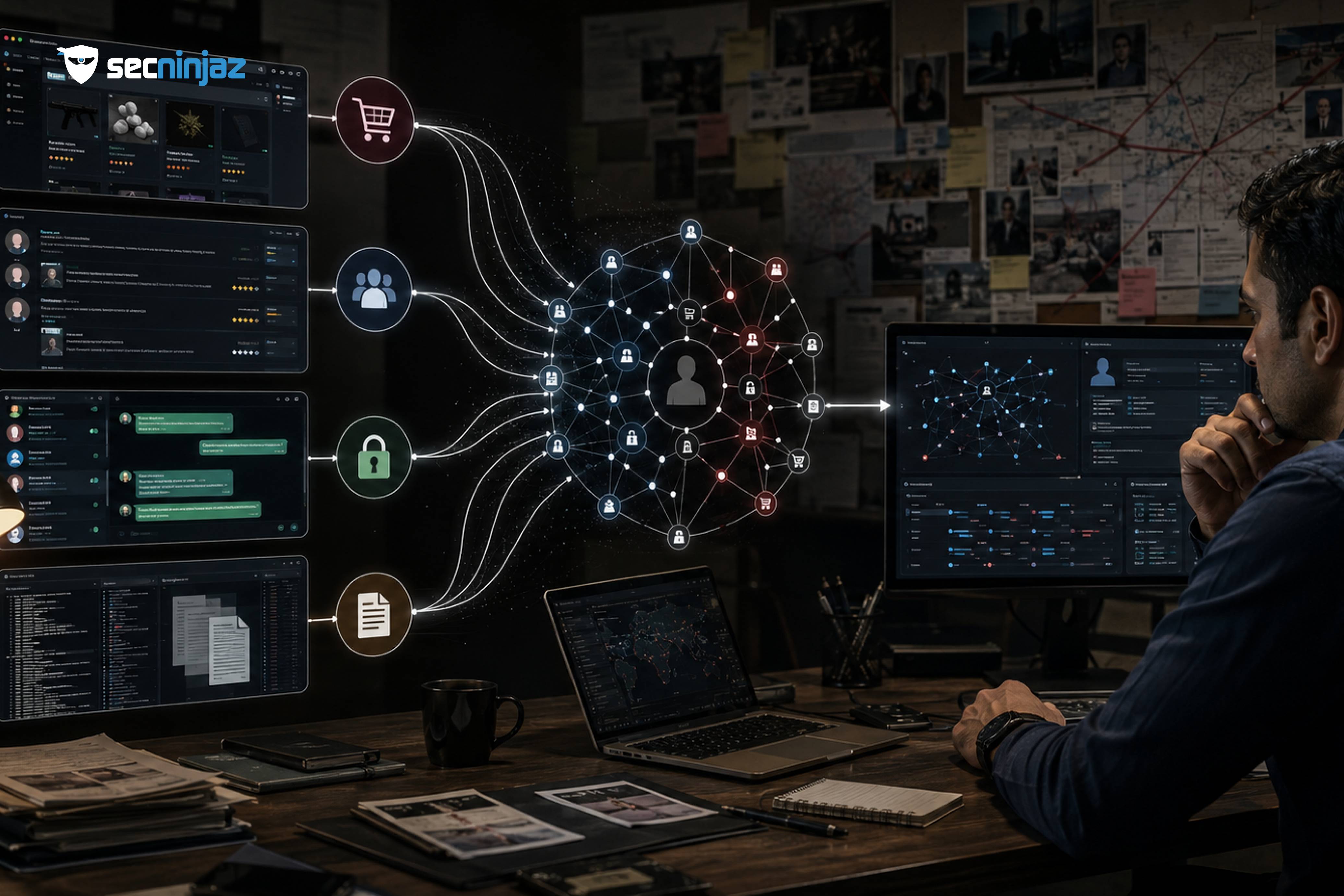 The dark web, in practical terms, is the set of services reachable through Tor or similar anonymity networks using .onion or comparable addresses, layered on top of forums, marketplaces, paste sites, and leak repositories that do not show up in a standard search engine. Tor Project metrics put the network at roughly 8,000 active relays as of mid-2025, serving an estimated 2.5 million daily users worldwide, of whom close to 7% reach hidden services rather than using Tor purely for anonymous browsing of the ordinary web. That works out to something in the range of 150,000 to 170,000 people touching hidden services on a typical day, a population large enough that manual, one-analyst-at-a-time browsing was never going to scale against it.
The Team Kalki case shows why coverage of the forum layer alone is not enough. A vendor's reputation and listing history live on the forum. Order fulfilment happened somewhere else entirely, on an encrypted messaging app the forum has no visibility into. A platform built only to crawl marketplaces would have seen the listing and missed the fulfilment pattern; one built only to flag encrypted-app usage would have had no lead to start from in the first place. Real cases move across layers, and a platform's architecture has to move with them.
Market sizing gives a rough sense of how fast this space is growing regardless. Independent market research put the global dark web intelligence market at somewhere between $760 million and $920 million in 2026, expanding at close to 21% a year as both enterprises and government agencies increase spending to catch stolen data and criminal activity before it does more damage.
The Four Architectural Layers Behind a Dark Web Intelligence Platform
| Layer | What it does | Why it matters for an investigation |
|---|---|---|
| Collection and ingestion | Continuously crawls forums, marketplaces, leak sites, and paste repositories across the open, deep, and dark web | Coverage breadth determines whether a case like Team Kalki's forum presence is ever seen in the first place |
| Processing and normalization | Extracts entities, deduplicates records, and translates non-English content into a consistent structure | Raw posts, listings, and leaked records arrive in incompatible formats and cannot be compared without this step |
| Correlation and risk scoring | Matches entities across sources and assigns a confidence score to each candidate finding | Turns a pile of individually meaningless hits into a small number of prioritized, connected leads |
| Case workflow and reporting | Logs authorization, tracks corroboration status, and generates a structured, source-attributed report | Determines whether a finding can move from an analyst's screen into a case file that holds up later |
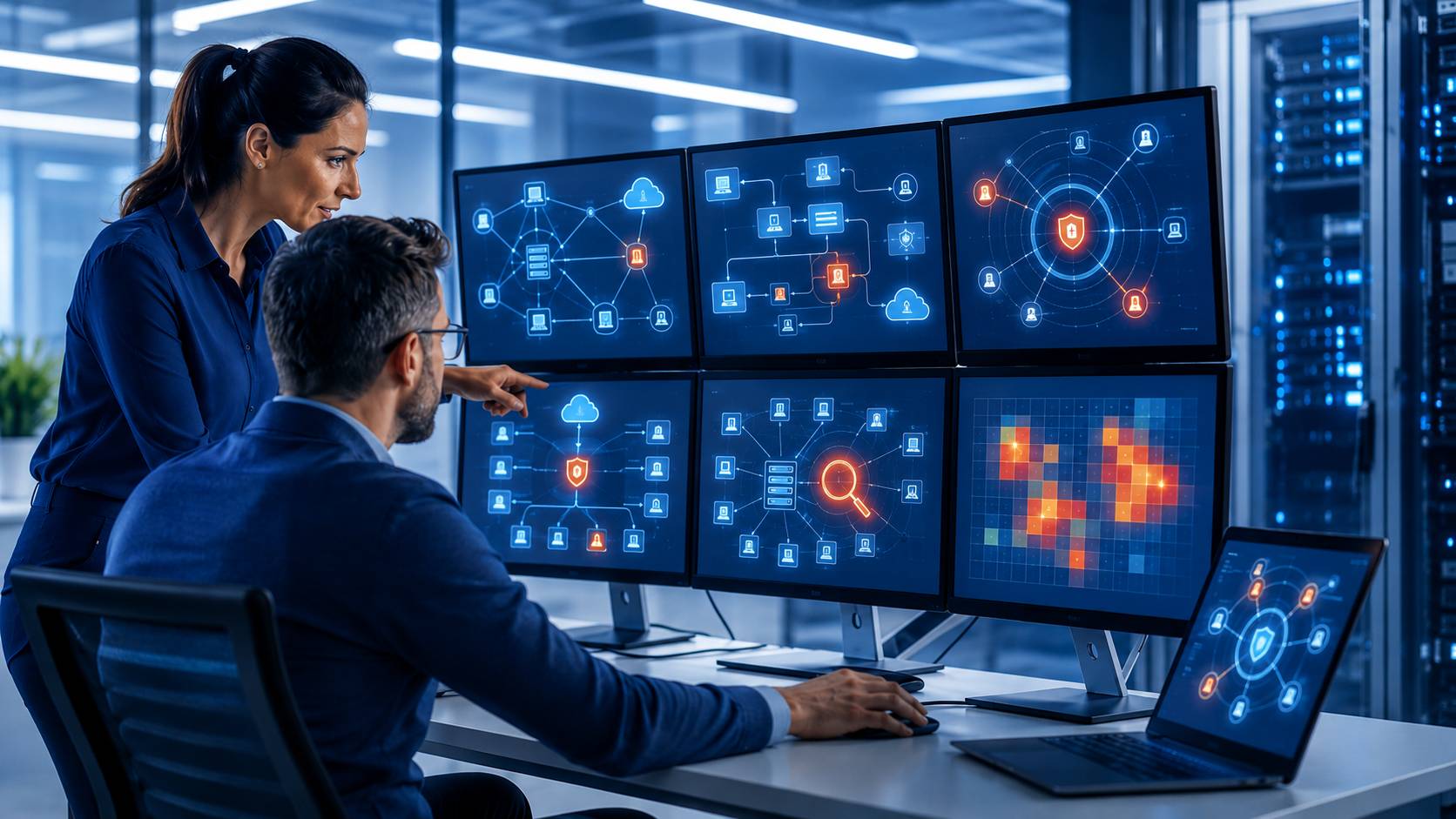
WebMine provides the architecture for all four layers, with production-ready evidence preservation, case workflow and broad OSINT integration, while dark-web source coverage and agency-specific evidentiary templates are configured per deployment. It draws from more than 250 sources spanning the open web and the dark web, runs real-time monitoring so new activity surfaces as it happens on active cases, applies AI-driven investigation tools for the entity matching and cross-referencing that the correlation layer depends on, and supports 41+ languages, which matters directly for a network like Team Kalki's that sourced product from three different European countries and distributed across Indian states with different regional languages in play.
The Investigative Workflow: From Authorized Intake to Case File
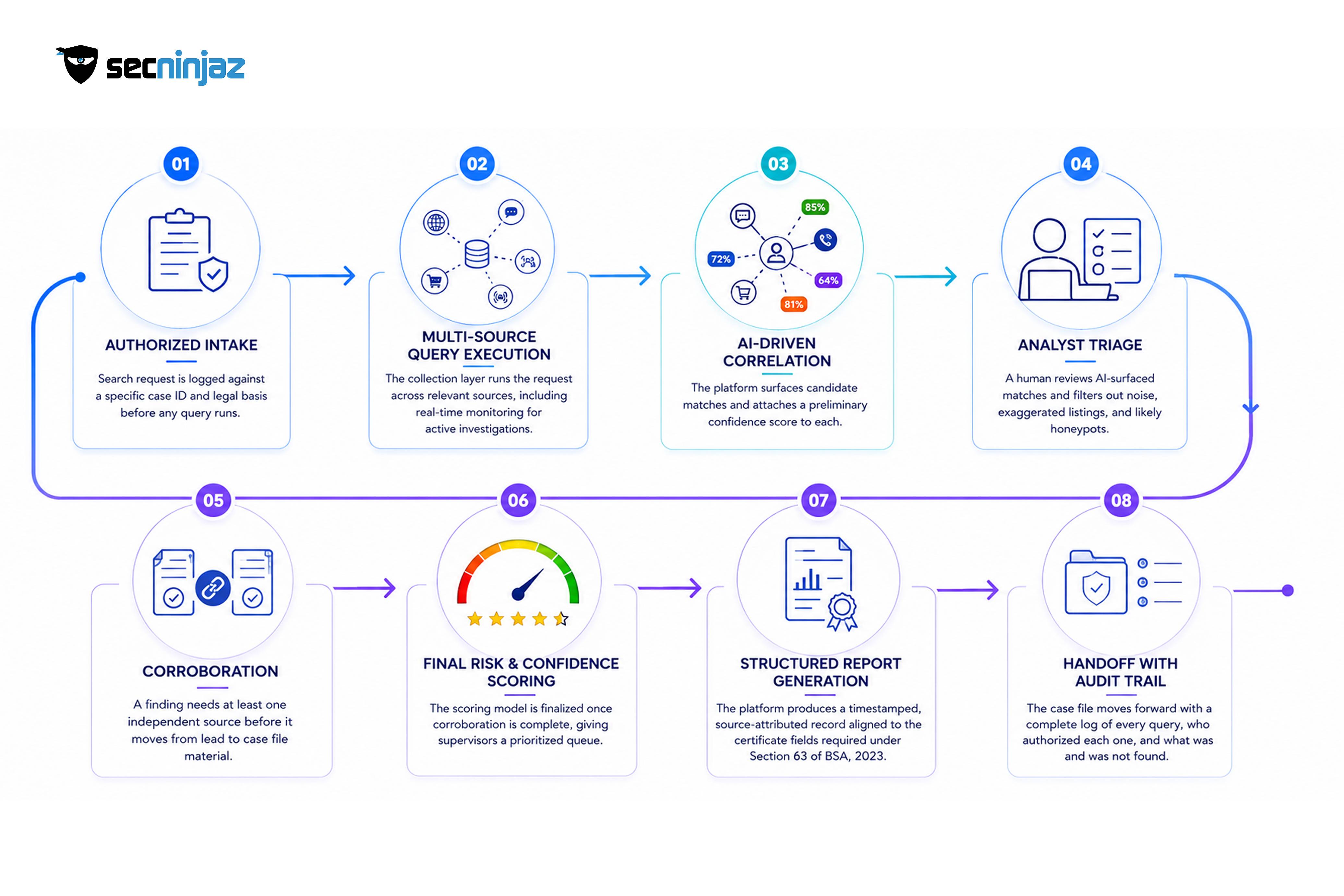 A platform's value shows up in how a search actually moves through an investigation, not in the search box itself.
- Authorized intake. A search request is logged against a specific case ID and legal basis before any query runs. This step exists independently of the platform and cannot be skipped just because the tool makes searching easier.
- Multi-source query execution. The collection layer runs the request across the relevant source tiers, open web, forums, marketplaces, and, where the case justifies it, real-time monitoring for an active investigation rather than a single sweep.
- AI-driven correlation. The platform surfaces candidate matches, an alias reused across a forum and a messaging app, a phone number tied to two unrelated listings, and attaches a preliminary confidence score to each.
- Analyst triage. A human reviews the AI-surfaced matches and filters out noise, exaggerated listings, and likely honeypots before anything advances further.
- Corroboration. A finding needs at least one independent source before it moves from lead to case file material. A single hit, however confident the score, stays a lead.
- Final risk and confidence scoring. The scoring model, covered in detail below, is finalized once corroboration is complete, giving supervisors a prioritized queue rather than an undifferentiated list.
- Structured report generation. The platform produces a timestamped, source-attributed record built around the certificate fields the Bharatiya Sakshya Adhiniyam, 2023 requires for electronic evidence under Section 63.
- Handoff with audit trail. The case file moves forward with a complete log of every query run against it, who authorized each one, and what was and was not found.
How Findings Get Scored
Not every hit deserves the same amount of analyst attention, and a scoring model is what keeps a high volume of source coverage from turning into noise.
| Scoring dimension | What it measures | Why it moves the score |
|---|---|---|
| Source reliability tier | Whether the source is an open public record, a marketplace vendor with transaction history, or an unverified forum post | A vendor account with a sustained rating history carries more weight than a single anonymous post |
| Corroboration count | How many independent sources support the same finding | A single-source hit is a lead; two or more independent sources start to look like a finding |
| Recency | Whether the activity is current or an old, possibly stale listing | Fresh activity on an active case matters more than an archived reference from years earlier |
| Cross-source consistency | Whether the same identifier, alias, phone number, or wallet address appears consistently across sources | Consistency across unrelated sources is harder to fake than a single claim |
| Translation and context confidence | How reliable the automated translation and context extraction is for non-English source material | A low-confidence translation should route to a language-qualified analyst rather than get scored as a straight match |
This is what lets a supervisor look at a queue of a few hundred raw hits from a 250-source sweep and know which handful need attention today, rather than treating every result as equally urgent.
Reporting: What Actually Comes Out the Other End
There is a real difference between an intelligence product, used to prioritize where an investigation should look next, and an evidentiary product, built to survive a defence challenge in court. A dark web intelligence platform's reporting layer has to support both without confusing one for the other.
The intelligence product is typically a dashboard view for a case supervisor: prioritized findings, confidence scores, and a running picture of an active network, useful for deciding where to direct the next round of investigation. The evidentiary product is a structured export, tied to a specific finding, with the source, the timestamp, the corroboration status, and the certificate fields needed under BSA Section 63, including the dual signature from the person in charge of the system and, where required, a technical expert. Treating the dashboard view as if it were already court-ready is one of the more common ways a genuinely strong lead gets weakened later.
What Happens When a Layer Is Missing
| Missing layer or step | Consequence |
|---|---|
| No corroboration step | A single uncorroborated hit gets treated as fact and the case built on it collapses under cross-examination |
| No structured reporting layer | Findings exist as screenshots with no certification, risking exclusion under BSA Section 63 |
| No risk scoring | Analysts face an undifferentiated pile of hits and genuine leads get buried in noise |
| No real-time monitoring on active cases | A network can scale, as Team Kalki did to more than a thousand consignments, before its pattern is caught |
| No multi-language coverage | Vendor or buyer communication in a regional language is missed entirely |
| No authorization and audit trail | Exposure under IT Act Section 66 if any search strayed into unauthorized access, and difficulty defending the investigation's integrity later |
A Maturity Model for Dark Web Intelligence Capability
Level 1: Manual browsing of known forums by an individual analyst, no documented process ↓ Level 2: Written SOPs and basic keyword alerts, correlation still done by hand ↓ Level 3: Platform-assisted collection across sources, correlation still largely manual ↓ Level 4: AI-assisted correlation and risk scoring, with mandatory human sign-off ↓ Level 5: Continuous, cross-case monitoring integrated directly with structured, evidentiary-grade reporting
Most units jump from Level 1 straight to a platform purchase and skip Level 2's authorization discipline entirely, which is the single most common reason a rollout underperforms its own capability.
A Readiness Playbook for Standing This Up
- Write the intake and authorization SOP before selecting a platform. The tool should fit the process, not the other way around.
- Match source tiers to the case types the unit actually handles, rather than running every search against every tier by default.
- Pilot the collection and correlation layer against a closed case to calibrate what a realistic confidence score looks like before relying on it live.
- Set the corroboration threshold in writing before go-live, so analysts are not deciding case by case what counts as sufficient.
- Train analysts to read the risk score as a triage aid, not a verdict. A high score means look here first, not confirmed true.
- Build the reporting template around BSA Section 63's certificate fields from day one, rather than retrofitting it after the first evidentiary challenge.
- Turn on real-time monitoring only for cases marked active, and switch it off when a case closes.
- Audit query logs monthly against authorization records to confirm every search still maps back to a documented, legitimate basis.
Common Mistakes and Edge Cases
Treating the AI confidence score as a verdict rather than a triage aid. A high score means a finding deserves attention first, not that it is already confirmed.
Skipping intake authorization because the platform makes searching easy. Ease of use is not a substitute for the documented basis a search needs before it runs.
Having no plan for a source going offline mid-investigation. Forums structured like Dread rotate, get seized, or simply disappear, and a case built entirely around one source's continued availability is fragile by design.
Reporting only the hits and not the misses. A negative or no-result search is still part of the record, and failing to log it can matter for disclosure obligations later in a case.
Assuming the platform can read encrypted message content. OSINT tools work from what is externally visible, marketplace presence, metadata, usage patterns, not from decrypting a private conversation on an app like Session. Confusing the two overstates what any lawful platform can actually deliver.
Leaving real-time monitoring running after a case closes. Continuous monitoring has a real cost in noise and resourcing, and it belongs on active cases specifically, not as a default left switched on indefinitely.
When to Use What: A Few Decision Points
Build correlation in-house versus rely on the platform's AI-driven investigation tools. A unit with a small analyst team and a high case volume gets more out of AI-assisted correlation doing the first pass. A unit with deep in-house expertise and lower volume may prefer to keep more of that matching work manual and platform-assisted rather than platform-led.
Continuous monitoring versus a single sweep. An active, still-developing network justifies the resourcing that continuous monitoring requires. A closed case or a one-time background check does not, and running monitoring on it anyway just adds noise to the queue.
Centralized cyber cell access versus distributed access across units. Centralizing platform access through a cyber cell keeps chain-of-custody practice consistent across cases. Distributing access more broadly can speed up smaller, routine checks but makes consistent authorization and logging harder to enforce.
How SecNinjaz Fits Into This
The pattern running through this guide is that a dark web intelligence platform's real value sits in its architecture, not its search box, and that architecture has to support an investigation all the way through to a report that holds up in court. WebMine is built around that full path: collection across 250+ open and dark web sources, real-time monitoring for active cases, AI-driven investigation tools for entity matching and correlation, and support for 41+ languages, feeding into a workflow designed to produce corroborated, scored findings rather than an undifferentiated list of hits.
The evidentiary and compliance side of that workflow connects to SecNinjaz's broader GRC and DPDP practice, Regulatory Compliance, Risk Management, and Audit and Gap Assessment, which is where the authorization SOPs, audit trails, and BSA Section 63 reporting templates get documented in a form that holds up to review. SecNinjaz holds ISO/IEC 27001:2022 for information security and ISO/IEC 27701:2025 for privacy information management, the certifications most directly relevant to handling the kind of sensitive investigative data a dark web intelligence programme necessarily touches. For state cyber cells and agencies building this capability rather than assembling it forum by forum, that combination of source coverage and evidentiary discipline is the pairing worth looking for, whether the agency works with SecNinjaz or anyone else.
Talk to Our Security Experts →
Frequently Asked Questions
What is a dark web intelligence platform for law enforcement?
It is a system that collects, correlates, and scores information from forums, marketplaces, and other dark web sources reachable without a login or an exploit, then structures the findings into reports an investigating agency can use. WebMine covers more than 250 sources across the open and dark web, with real-time monitoring, AI-driven correlation, and support for 41+ languages.
Can a dark web intelligence platform read encrypted messages?
No. OSINT platforms work from what is externally visible, such as a marketplace listing, a forum profile, or usage metadata, not from decrypting private message content on an app such as Session. Cases that involve encrypted fulfilment channels typically require a separate, legally authorized process to access message content itself.
How does risk or confidence scoring work in a dark web investigation?
A finding is scored on factors including the reliability of its source, how many independent sources corroborate it, how recent the activity is, whether an identifier appears consistently across sources, and, for non-English material, how confident the translation is. The score sets the order in which analysts review findings; it is a triage tool, not proof on its own.
How does a dark web finding become admissible evidence in an Indian court?
It generally needs independent corroboration and a certificate meeting Section 63 of the Bharatiya Sakshya Adhiniyam, 2023, which requires a description of how the electronic record was produced and, in most cases, a dual signature from the person in charge of the system and a technical expert. A single, uncorroborated finding is treated as an investigative lead rather than evidence until that process is complete.
Why did the Team Kalki case need more than one type of source coverage?
The network's vendor reputation and order listings lived on the darknet forum Dread, while actual order fulfilment moved to the encrypted Session app once a buyer made contact. A platform covering only marketplaces would have seen the listing but missed the fulfilment pattern, and one built only around messaging-app signals would have had no initial lead. Coverage across both layers, plus the courier and financial trail, is what let investigators build the full picture.
What is the difference between an intelligence report and an evidentiary report?
An intelligence report is a prioritized, dashboard-style view used to decide where an active investigation should look next. An evidentiary report is a structured, certified export tied to a specific finding, built to satisfy BSA Section 63's requirements for electronic evidence. Treating the first as if it were already the second is a common way a strong lead gets weakened before trial.
How many sources does WebMine cover, and why does language support matter?
WebMine draws from more than 250 sources across the open web and the dark web, with real-time monitoring and AI-driven investigation tools for entity matching and cross-referencing. Support for 41+ languages matters because Indian cases regularly involve regional-language communication alongside international vendor sourcing, as in networks that bring in product from multiple countries while distributing across several Indian states at once.
Where should a cyber cell start when adopting a dark web intelligence platform?
Start by writing the intake and authorization SOP before selecting a platform, then pilot the collection and correlation layer against a closed case to calibrate what a realistic confidence score looks like. Building the reporting template around BSA Section 63's certificate fields from the outset avoids having to retrofit evidentiary discipline after the first challenge in court.