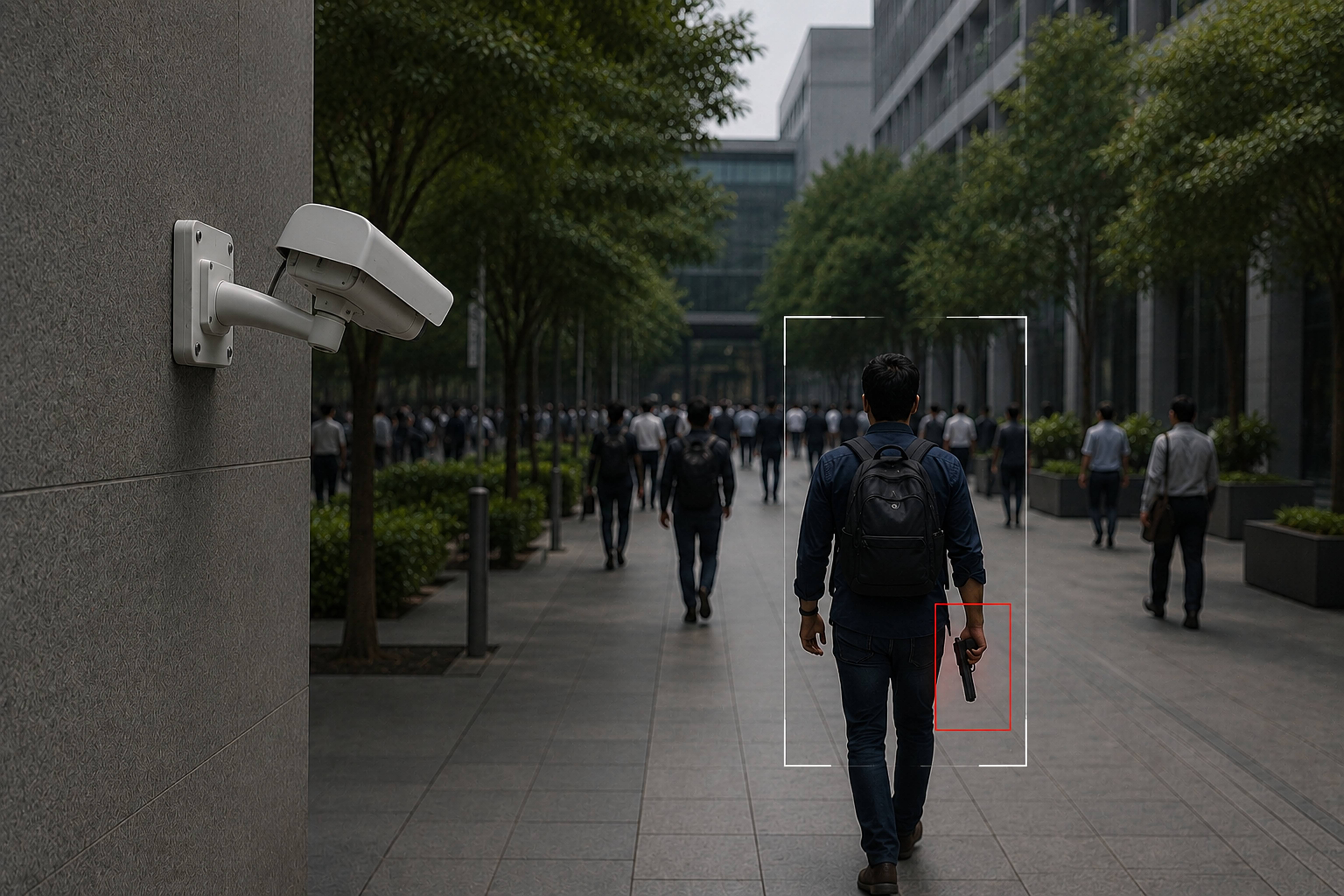

Protecting Sensitive Data, Strengthening AI Governance, and Enabling Responsible Innovation
Introduction
In todays changing world Artificial Intelligence is changing the workplace quicker than most companies can control.
Employees are using tools like ChatGPT, Claude, Gemini, Microsoft Copilot and other AI assistants to write emails, explain documents, create code check spreadsheets, handle tasks and even cut down their work time with the help of the AI Agents. Even though these tools help people work better they also bring a growing and hard-to-see danger—Shadow AI.
This is similar to Shadow IT, which happened when workers used cloud programs. Shadow AI happens when AI tools are used without permission, rules or checks, from the company.
The problem isn't that workers are using AI. The problem is that companies often don't know which AI tools are being used what information is being sent or what dangers are being created.
This article explains what Shadow AI is, why it is important the risks it brings and how companies can create an AI governance plan.
Why Shadow AI Matters
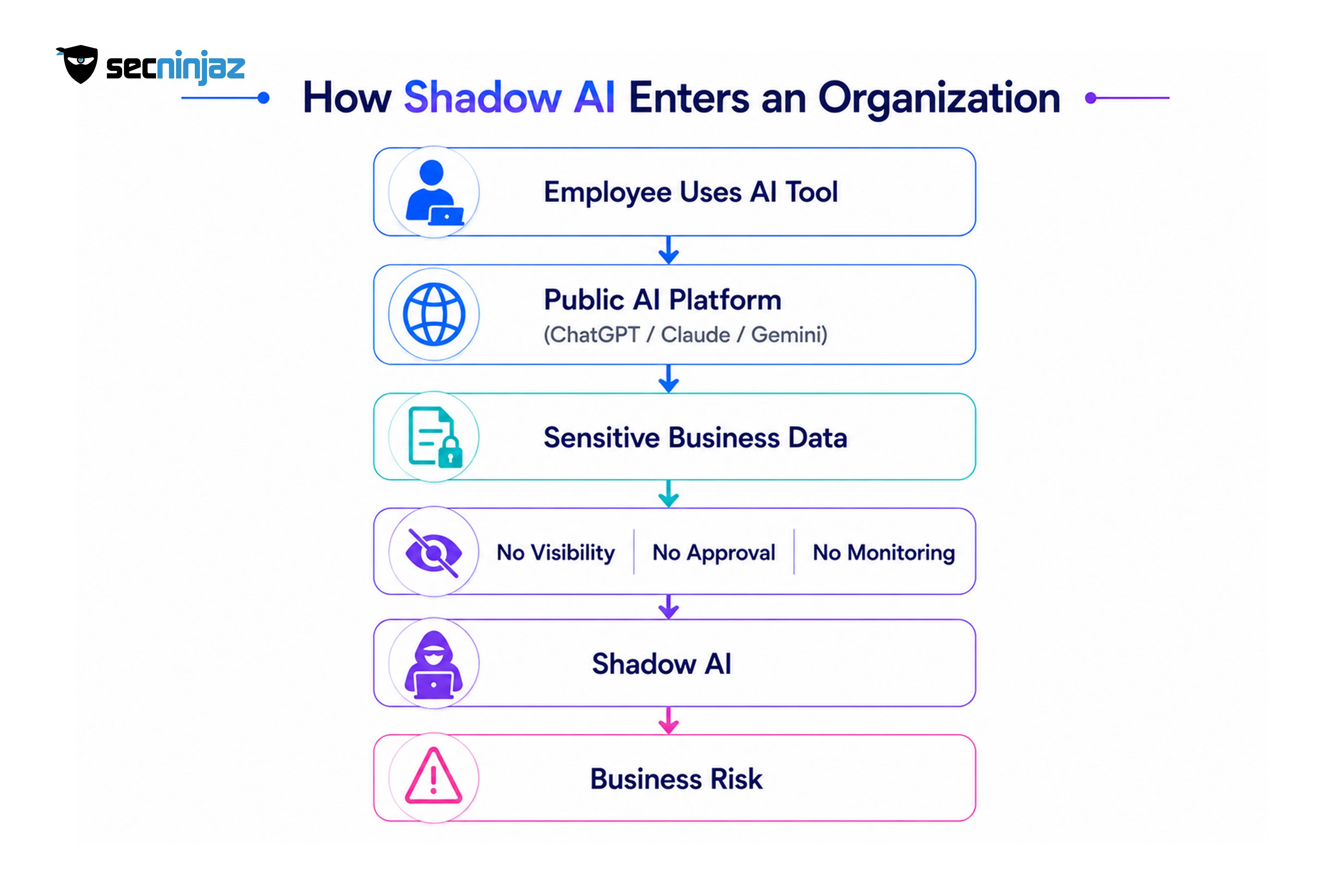
AI adoption is increasing quickly compared to governance.
If there are no rules and controls employees might accidentally put private company information, customer details, code, financial data or ideas into open AI platforms.
This can lead to:
Data being leaked
Not following rules
Ideas being exposed
Decisions made by AI that're wrong
Trusting customers losing confidence
Shadow AI is not just an IT problem anymore - it is a problem, for governance, cybersecurity, privacy and the business.
| AI Adoption | Governance Maturity | Shadow AI Risk | Regulatory Landscape |
|---|---|---|---|
| Nearly 9 in 10 organizations (≈88%) now regularly use AI in at least one business function, making AI one of the fastest-adopted enterprise technologies in recent history. | McKinsey's 2026 AI Trust Maturity Survey found that while AI adoption is accelerating, many organizations still have persistent gaps in AI strategy, governance, risk management, and oversight, indicating that governance maturity is lagging behind AI deployment. | 84% of organizations discover more AI tools than expected during internal audits, while 83% report Shadow AI adoption is growing faster than IT can effectively monitor, demonstrating the rapid expansion of unmanaged AI usage. | Organizations are increasingly expected to govern AI under frameworks such as the EU AI Act, ISO/IEC 42001:2023, and the NIST AI Risk Management Framework (AI RMF), shifting AI governance from a best practice to a business expectation. |
What is Shadow AI?
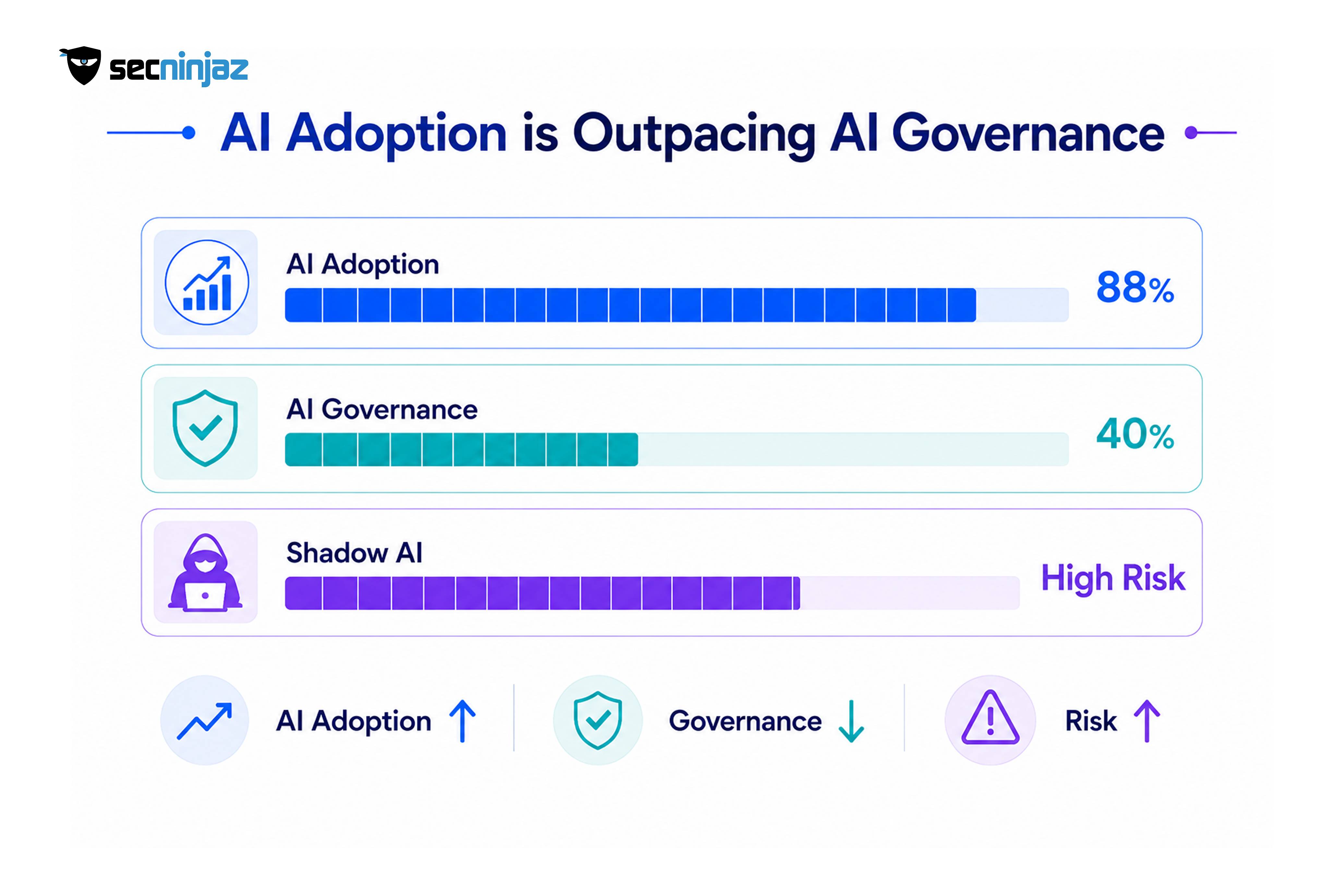
Shadow AI is when people use intelligence tools in a company without permission.
This is different, from the intelligence tools that the company says are okay to use.
Shadow AI does things that the company does not know about so it is hard for the company to understand what is going on with the intelligence.
The company does not know what the artificial intelligence is doing or what information it is looking at.
Common things that people do with Shadow AI include:
* Putting company documents into artificial intelligence chatbots that anyone can use.
* Using intelligence to make software without checking it first.
* Giving customer information to intelligence assistants.
* Buying intelligence tools with their own money and using them for company work.
* Connecting intelligence services to the companys data without asking permission.
Shadow AI is a problem because it uses intelligence in ways that the company does not know about.
The company needs to be aware of what Shadow AI's how it is using artificial intelligence.
Why Employees Use Shadow AI
Most employees are not trying to get around security rules—they just want to do their jobs better.
Common reasons include:
Faster creation of documents, Writing emails, Summarizing meetings, Help with coding, Analyzing data, Making presentations, Support, with research
When companies do not offer AI tools employees usually find their own ways.
The Business Risks of Shadow AI
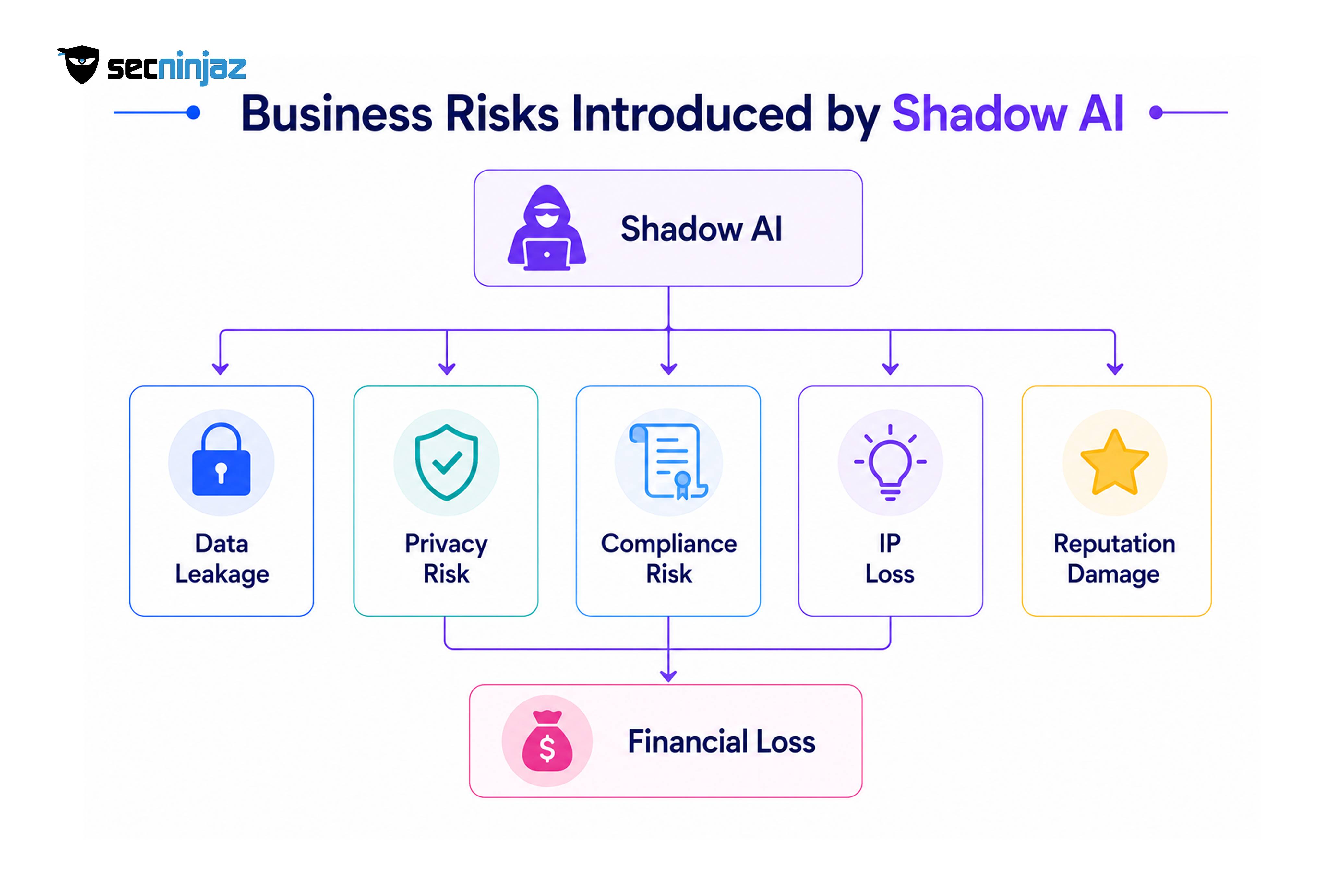
Shadow AI introduces risks across multiple domains.
Risk Area | Business Impact |
Data Privacy | Exposure of personal and sensitive data |
Cybersecurity | Leakage of confidential information |
Compliance | Violations of privacy and industry regulations |
Intellectual Property | Loss of proprietary knowledge and source code |
AI Reliability | Inaccurate or biased outputs influencing decisions |
Reputation | Reduced customer and stakeholder trust |
How to Manage Shadow AI
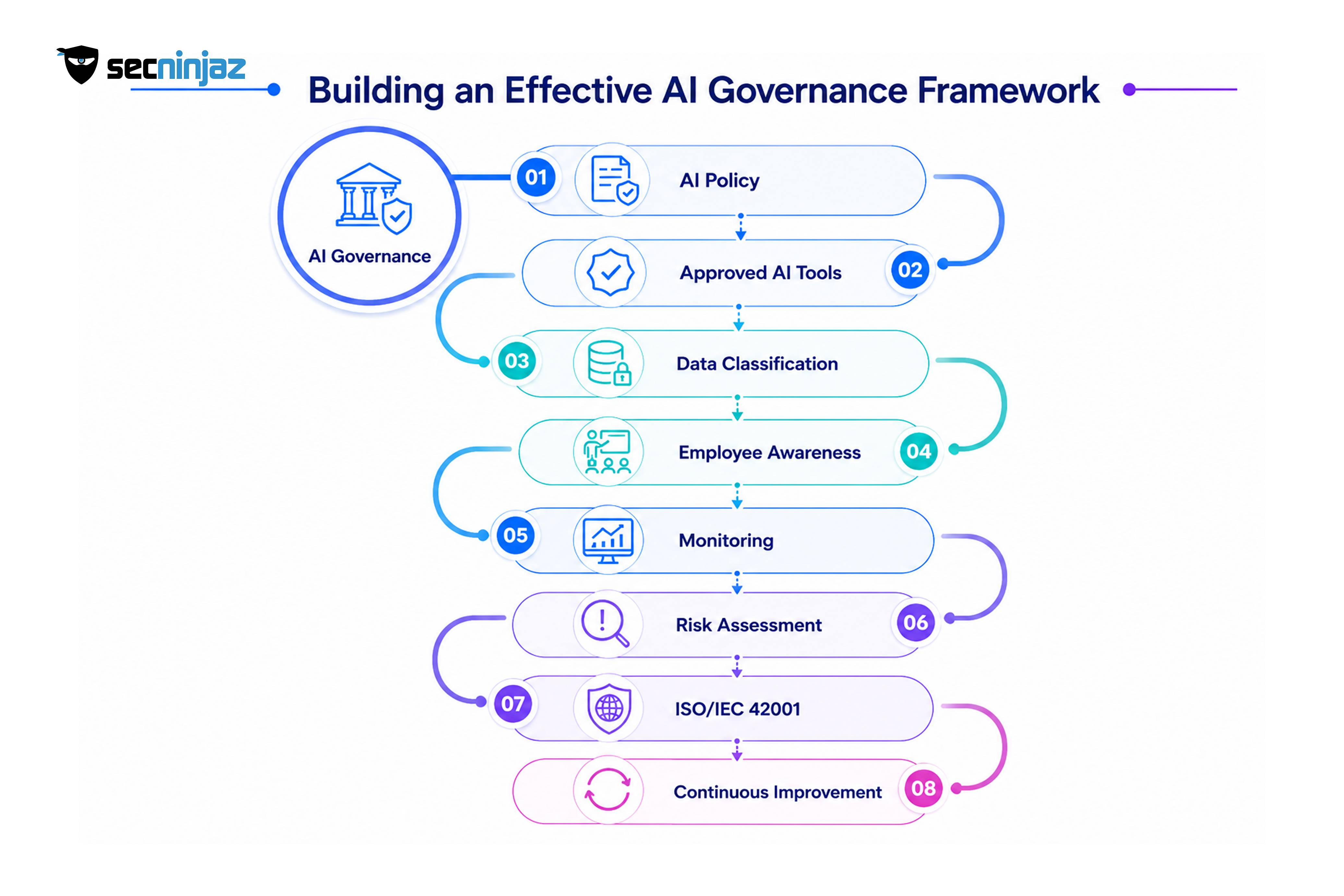
Organizations should focus on enabling Artificial Intelligence use rather than banning Artificial Intelligence altogether.
This is a way to do things.
A practical approach to governing Artificial Intelligence includes a simple steps:
1. Establish an Artificial Intelligence Governance Policy
Define which Artificial Intelligence tools are approved what is an acceptable use of Artificial Intelligence what activities are prohibited and who is accountable for Artificial Intelligence.
2. Classify Data
Figure out which information can be shared with Artificial Intelligence systems and which information cannot be shared with Artificial Intelligence systems.
3. Approve Enterprise Artificial Intelligence Platforms
Provide employees with Artificial Intelligence solutions that are approved by the organization.
4. Train Employees
Teach employees about the risks of Artificial Intelligence the importance of privacy and how to use Artificial Intelligence in a way.
5. Monitor Artificial Intelligence Usage
Keep an eye out for Artificial Intelligence tools that are not authorized and assess the risks that come with using these Artificial Intelligence tools.
6. Align with Standards
Implement governance frameworks such, as:
* ISO/IEC 42001
* ISO/IEC 23894
* NIST Artificial Intelligence Risk Management Framework
This will help organizations create Artificial Intelligence policies for managing Artificial Intelligence.
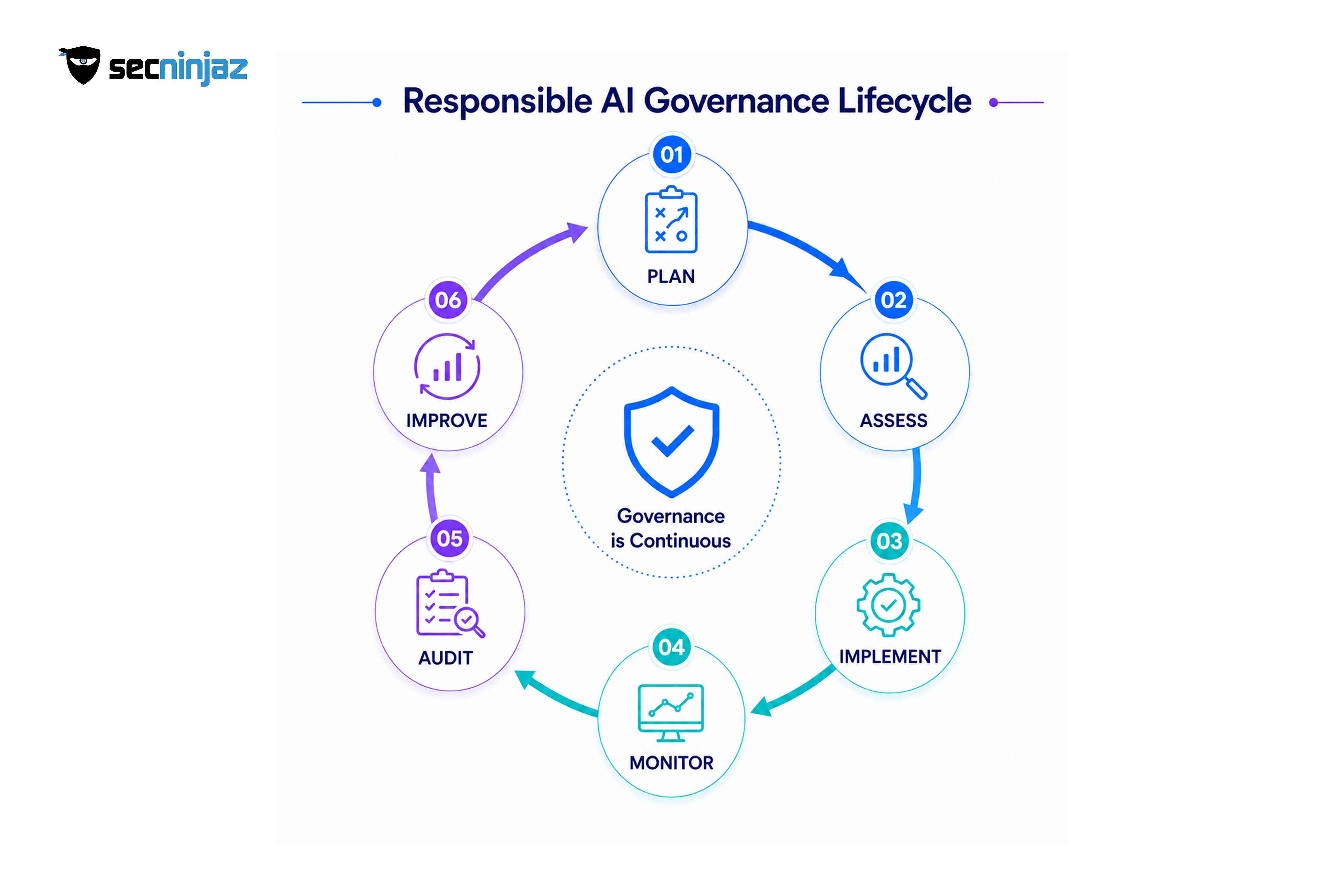
SecNinjaz Insight
Companies should not try to stop using Artificial Intelligence. They should control it instead.
Artificial Intelligence is really helpful for Employees because it makes their work easier and they can do things.
The main goal of controlling Artificial Intelligence is to make sure it is used in a way safely and it fits with what the company wants to achieve what the law says and what the company believes in.
Companies that find a good balance between trying new things with Artificial Intelligence and controlling it are more likely to get the good things from Artificial Intelligence while avoiding problems that can happen when things go wrong problems with peoples private information and problems, with keeping the companys information safe.
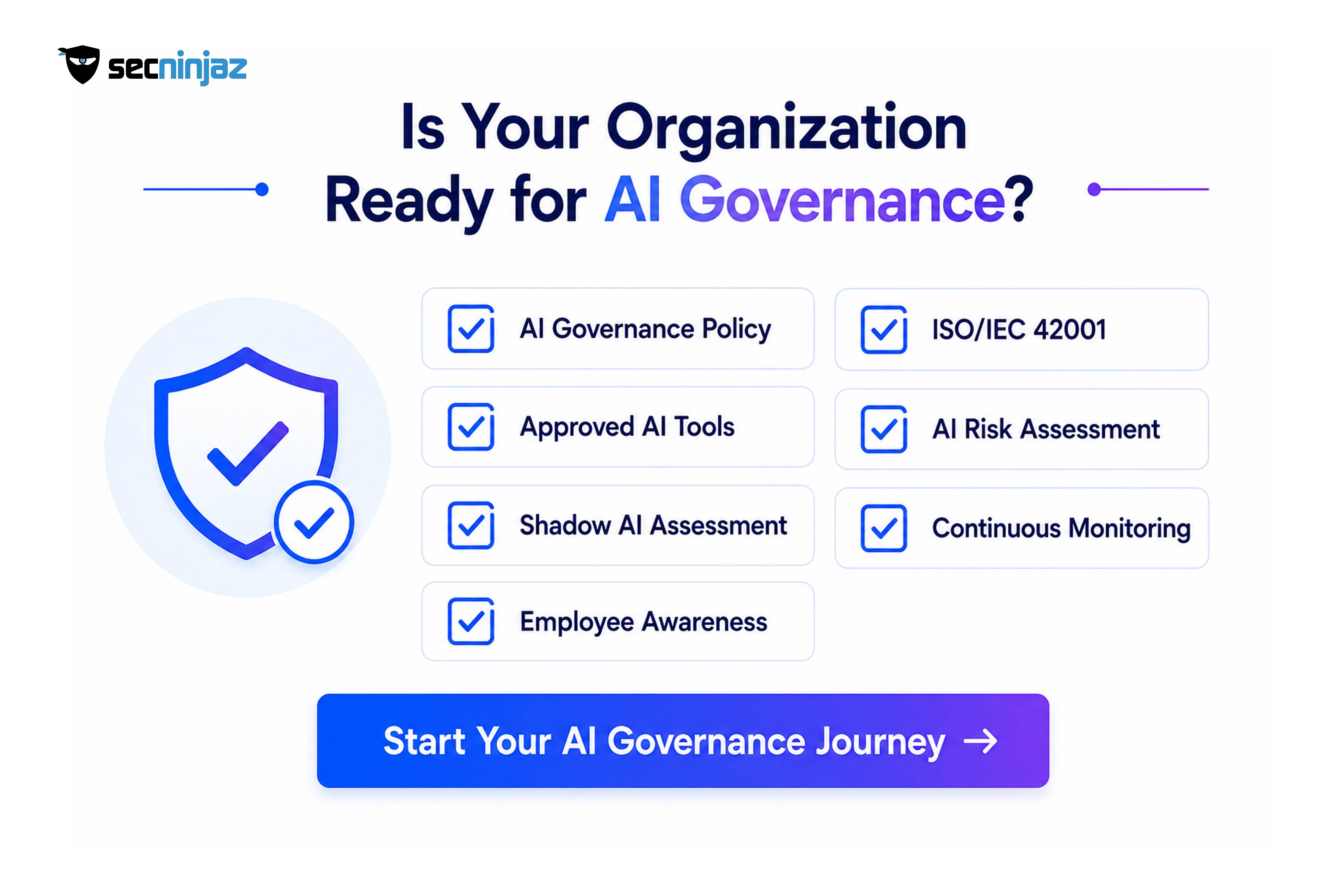
How SecNinjaz Can Help
SecNinjaz helps companies make sure they are using intelligence in a good way. They do this by:
* AI Governance Assessments
* Shadow AI Risk Assessments
* Putting in place the ISO/IEC 42001 rules
* Managing the risks that come with using intelligence
* Creating rules and procedures for intelligence
* Teaching people about intelligence and making them aware of it
* Checking to make sure the artificial intelligence rules are being followed
* Designing a plan to make sure artificial intelligence is used in a way
SecNinjaz experts are here to help your company use artificial intelligence with confidence whether you are just starting out or already using it. They want to make sure you can use intelligence while keeping everything safe and following the rules. SecNinjaz is, about helping companies use artificial intelligence in a good way so they can feel safe and secure when they use it.
Conclusion
Shadow AI is something that we have to deal with now. It is already a part of organizations.
The question is not if people who work for these organizations are using Shadow AI. The question is if the organization can manage Shadow AI in a way.
Organizations that work on Shadow AI now will be able to keep information safe. These organizations will also be able to do what they are supposed to do to meet rules and laws.. They will be able to build trust in a world where Shadow AI is used more and more.
Frequently Asked Questions
What is Shadow AI?
Shadow AI refers to the use of artificial intelligence tools, assistants, or AI-powered applications by employees without formal approval or oversight from their organization. This can expose businesses to cybersecurity, privacy, compliance, and governance risks.
How is Shadow AI different from Shadow IT?
Shadow IT includes any unauthorized software, cloud service, or technology used within an organization. Shadow AI is a subset of Shadow IT that specifically involves unauthorized AI tools, such as generative AI assistants, AI coding platforms, and AI automation services.
Why is Shadow AI a cybersecurity risk?
Employees may unintentionally upload confidential documents, source code, customer information, financial data, or intellectual property into public AI platforms. Without governance and monitoring, organizations risk data leakage, regulatory violations, and unauthorized disclosure of sensitive information.
Can organizations completely eliminate Shadow AI?
No. Instead of attempting to ban AI, organizations should establish AI governance policies, provide approved enterprise AI platforms, classify sensitive data, educate employees, and continuously monitor AI usage to reduce business risk.
Which AI governance standards help manage Shadow AI?
Organizations commonly align with frameworks such as ISO/IEC 42001 for AI management systems, ISO/IEC 23894 for AI risk management, the NIST AI Risk Management Framework (AI RMF), and, where applicable, the EU AI Act to establish responsible AI governance.
What is the first step in managing Shadow AI?
The first step is discovering where AI is already being used across the organization. This includes identifying AI tools, evaluating associated risks, classifying sensitive data, and establishing governance before expanding enterprise AI adoption.
How can SecNinjaz help organizations manage Shadow AI?
SecNinjaz helps organizations assess Shadow AI risks, implement AI governance frameworks, align with ISO/IEC 42001, develop AI policies, conduct AI risk assessments, train employees, and establish ongoing governance to enable secure and responsible AI adoption.