

Organizations do not work alone these days.
Cloud providers take care of applications for the organizations. SaaS platforms handle business information for the organizations. Consultants get access to the systems of the organizations. Payment providers deal with transactions for the organizations. Managed service providers help with the technology environments of the organizations and AI platforms and APIs are becoming a part of how organizations do business every day.
These Third-Party companies help organizations work faster and grow efficiently.. When organizations work with other companies it can also bring some problems.
If something goes wrong with security at a vendor it can affect the operations of the organizations. If a service provider makes a mistake with privacy it can put data at risk. If a cloud service is not available it can disrupt the business processes of the organizations. An AI vendor may handle the information of the organizations in ways that the teams of the organizations do not fully understand.
The question is not just "Do we trust this vendor?" anymore.
A better question to ask is:
"Do we understand the risk that this Third-Party company brings and are we doing something about it throughout our relationship with the Third-Party company?"
This is where Third-Party Risk Management or TPRM becomes very important, for the organizations.
What Is Third-Party Risk Management?
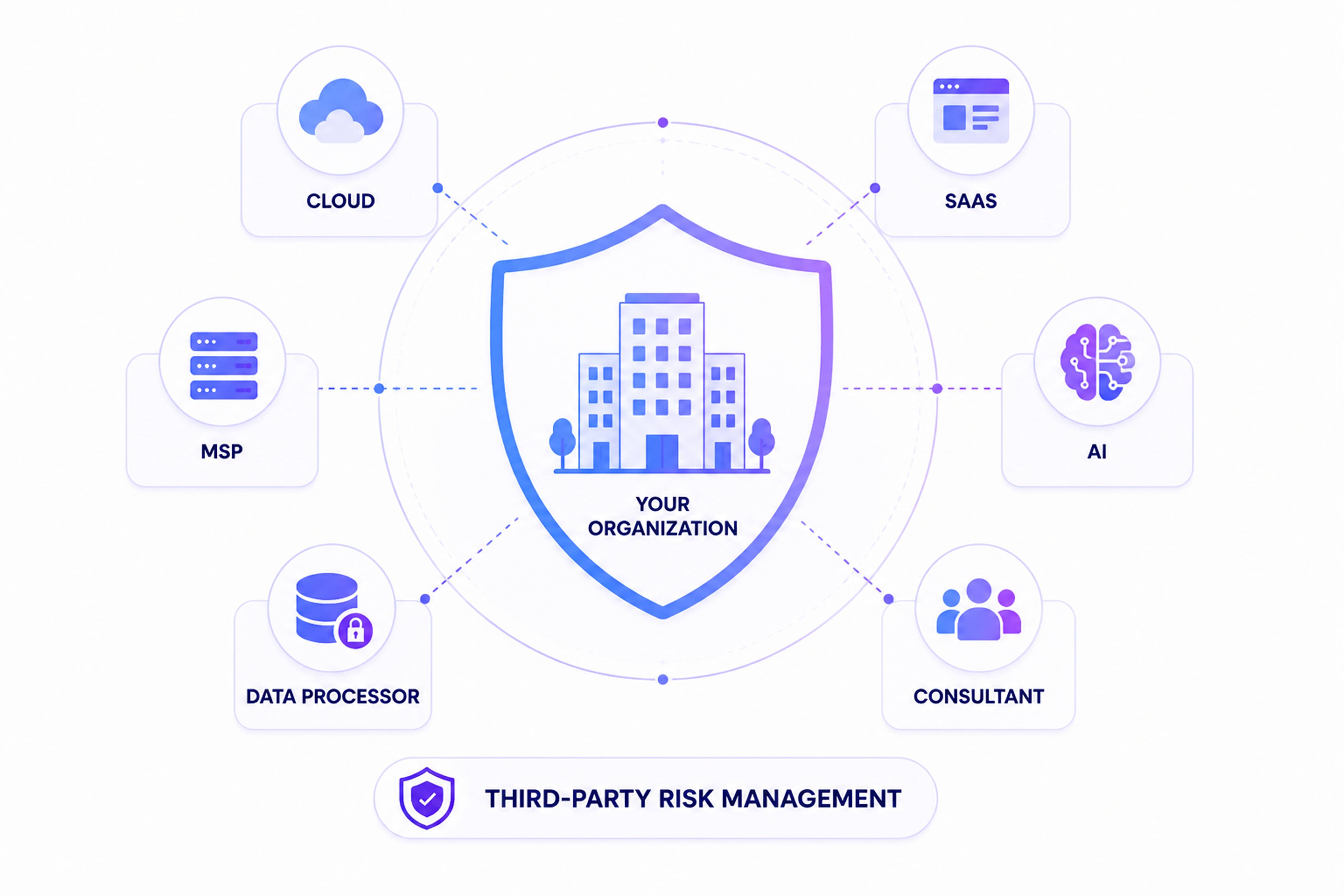
Managing risks from companies is a big part of doing business.
When other companies provide products or services to your business they can bring in risks.
These other companies can be the ones that provide cloud services, software, technology, consulting and other things.
They can also be the people you hire to do work for you the companies that handle your data the people who manage your services the companies that handle your payments and the companies that provide intelligence services.
Sometimes people think that managing these risks is about asking the other companies some questions.
It is a lot more than that.
A good program to manage these risks will look at the risks before you start working with the company.
It will make sure that the contract with the company includes the right security requirements.
It will keep an eye on the company and make sure they are not doing anything that will increase the risks.
When you are done working with the other company it will make sure that any risks they brought in are taken care of.
So Third-Party Risk Management helps your business answer some questions.
Who are the companies that we are working with?
Which of these companies are really important, to our business?
What kind of risks do they bring in?
Why Third-Party Risk Is a Business Risk
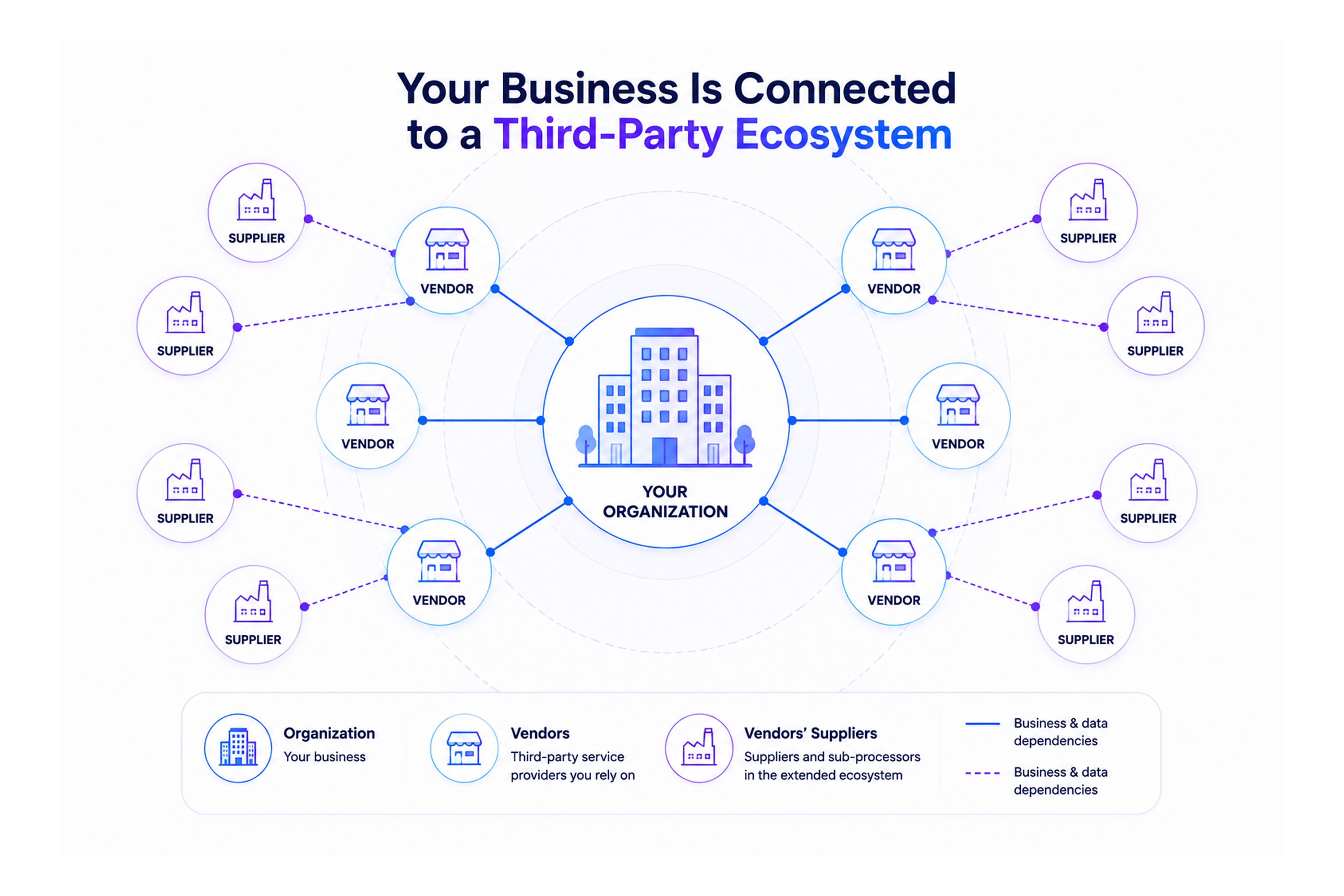
Organizations can outsource some services. They can't always outsource the problems that come with failure.
If a key technology provider suddenly stops working your customers may face disruptions.
If a vendor with access gets hacked attackers might find a way into your system.
If a data processor handles info poorly your organization could face regulatory issues breach contracts and damage its reputation.
This is why third-party risk shouldn't just be handled by the procurement or IT security teams.
It's actually an enterprise- risk issue.
Modern cybersecurity guidelines are starting to agree on this.
The NIST guidelines on supply-chain risk management focus on finding, evaluating and reducing cybersecurity risks along the supply chain.
The CSF 2.0 guidelines talk about setting up a supply-chain risk management system and telling suppliers what is expected of them.
The ISO also has guidance on managing cybersecurity risks with suppliers.
For organizations in industries supplier risk can have serious compliance consequences.
The DORA rules address the risks of third-party suppliers in the sector.
The NIS2 rules include expectations, for managing cybersecurity risks related to supply chains and suppliers.
The bottom line is clear: organizations need to keep track of and manage the dependencies that support their business.
They need visibility and governance over these dependencies.
Common Third-Party Risks Organizations Face
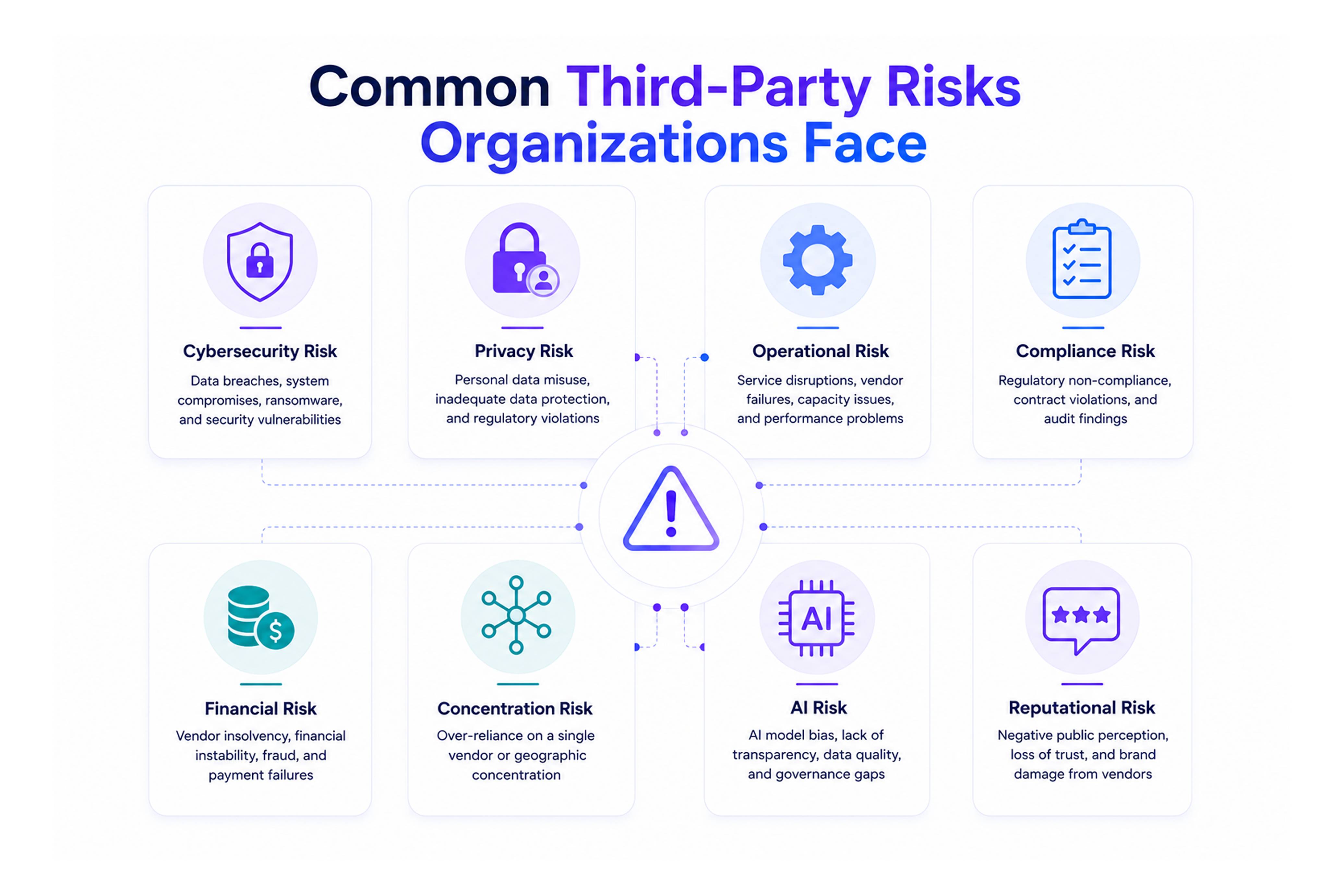
Not every company we work with is the same when it comes to risk.
A local office supplier and a cloud provider that hosts an important business application should not have to go through the same process to check for risk.
There are kinds of risk that can come from working with other companies, including cybersecurity risk, information security risk, privacy risk, operational risk, compliance risk, financial risk, concentration risk, geopolitical risk, business continuity risk and reputational risk.
Now we have intelligence services, which are making things even more complicated.
Our employees might use intelligence tools from outside the company to summarize documents generate code analyze information or automate workflows.
If we do not identify and assess these intelligence services we may not know what information is being shared, retained or used by the artificial intelligence service.
The problem is not just that we work with a lot of companies.
The real challenge is figuring out which relationships, with companies are the most important and making sure we are watching them closely enough.
How Well Do You Know Your Third Parties?
When you work with a vendor they might help you with one part of your business. They can also bring in problems, with cybersecurity, privacy and other things that you have to follow.
You can use the SecNinjaz Third-Party Risk Management Toolkit to look at vendors see what kind of risks they have keep track of the work you do to check them out deal with any problems you find and keep an eye on these vendors for long as you work with them.
You can get the “Free Third-Party Risk Management Toolkit.”
Step 1: Build a Complete Third-Party Inventory
You can't manage risks from parties if you don't know who they are.
This seems obvious. Many companies keep track of vendor information in different places like procurement systems, finance records, spreadsheets, IT tools, legal contracts and department records.
The first thing to do is make a list of all third-party vendors.
This list should include the vendors name, the service they provide who inside the company's in charge the contract period what data they can access what systems they can access, how important they are to the business, where they are located and the status of their risk assessment.
Companies should also note if a third-party vendor handles data uses other vendors provides services that use artificial intelligence or supports a crucial business process.
They should keep track of all this information, about third-party vendors.
This list becomes the basis of a third-party risk management program.
Without it risk assessments will always be incomplete. Won't cover all third-party vendors.
Step 2: Classify Third Parties Based on Criticality
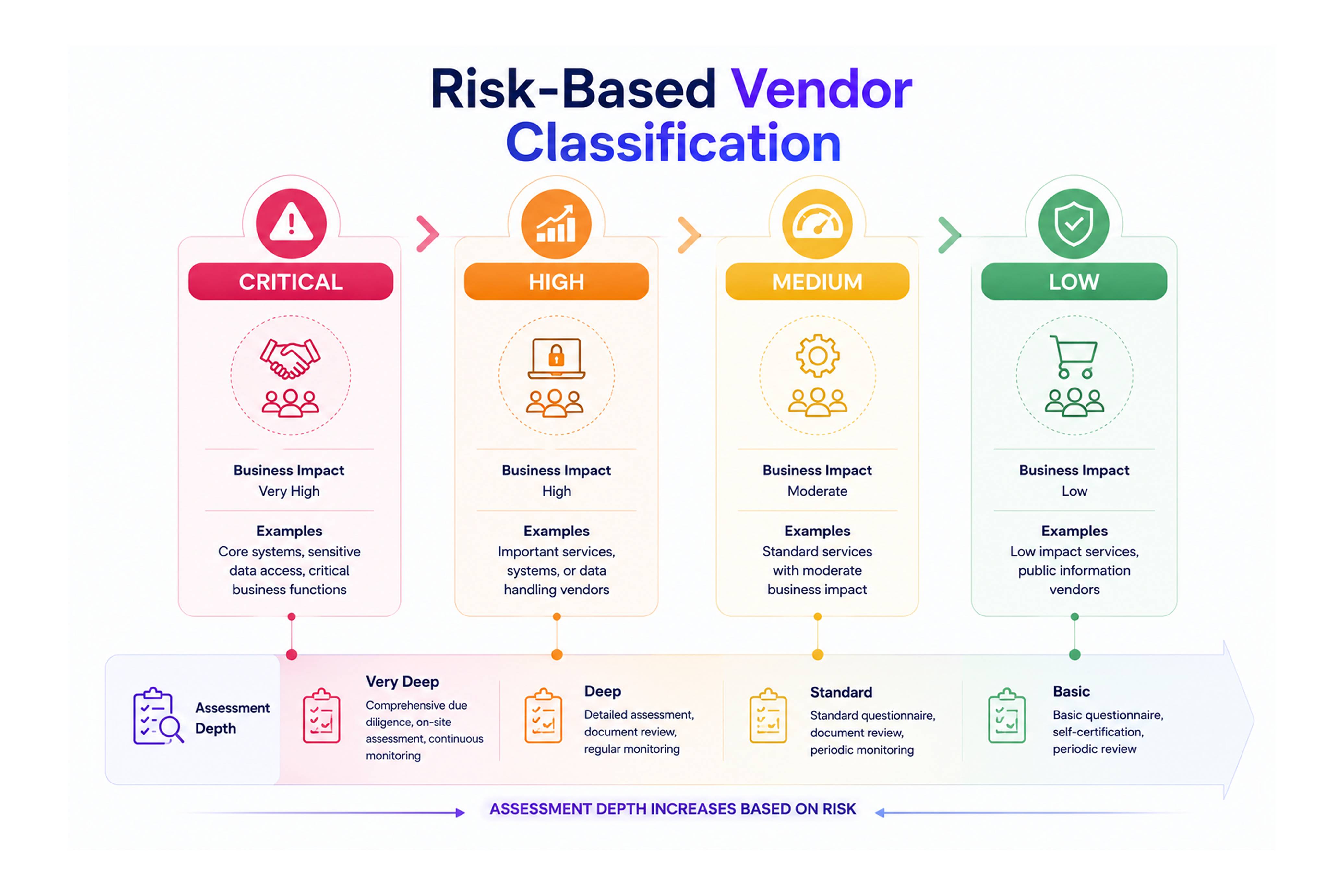
Evaluating every vendor with a list of security questions is not the way to manage risk.
It is too much work for everyone involved.
Companies should start by looking at the vendors they work with and figuring out how much of a problem it would be if something went wrong with the service they provide like a security issue or a data breach.
You have to think about things like this:
Would it be a deal if the service was not available for a while?
Does the vendor have access to information about the company?
Does the vendor handle data?
Can the vendor get into the companys systems easily?
Would it be hard to find another vendor to do the job?
Is the vendor involved in a process that has to follow rules?
Does the vendor use intelligence to work with the companys data?
When you look at all these things you can put the vendors into groups like Critical, High, Medium or Low.
Then you can decide how much you need to check on each vendor based on how risk they pose and how important they are to the company.
If you focus on the vendors that could cause the problems you can use your time more wisely and make sure the company is really protected.
The risk-based approach is about looking at the vendors and figuring out which ones are the most important, like the Critical vendors and which ones are less important, like the Low vendors.
This way you can make sure you are paying attention to the vendors that really matter like the Medium vendors and not wasting time on the ones that do not pose as much risk.
Step 3: Conduct Risk-Based Due Diligence
Due diligence is important, before approving a vendor.
It should check risks related to the service they provide.
* For a cloud provider evaluate how secure their information is, how they protect data, control access, handle business continuity manage incidents and ensure service resilience.
* For a software development partner focus on coding practices and code security.
* For an AI provider understand how they use data, train models manage output risks govern AI use subprocessors and involve oversight.
Using a questionnaire can help ensure consistency but don't rely on it too much.
Ask questions that fit the vendor relationship.
The aim is to understand risks not to get a lot of answers.
Step 4: Review Evidence, Not Just Answers
When a vendor says "Yes" to a security question it does not mean that a control is really working.
The organization needs to look at information if the risk is high.
This information can include things like security policies and test results that show how secure the system is.
They may also want to look at reports that say how well the vendor can recover from disasters how they handle incidents and how they protect privacy.
When they look at all this information they need to think about what it really means.
For example having an ISO/IEC 27001 certificate is a thing but the organization should make sure it covers what they are buying.
They should also look at reports from companies to see if they cover the right time period and if there are any exceptions.
The point of getting assurance from a party is to help make good decisions about risk.
It should not just be, about checking boxes on a list.
Step 5: Identify and Assess Third-Party Risks
When we do our research on a vendor we need to make sure we understand the problems we might face.
For example let us say we find out that the vendor does not support -factor authentication for administrative accounts.
The problem is not just that the vendor does not have -factor authentication.
A better way to say this is that if someone gets into the vendors accounts without the right authentication our organizations information could be, at risk because the vendor does not have multi-factor authentication.
We need to look at these problems using the way our organization likes to assess risks.
We should think about how likely it's that something bad will happen, how it will affect our business what we are already doing to control the problem and what risk is still left.
The result should help the people who make decisions understand if we can work with the vendor if the vendor needs to fix some things if we need to add some rules to our contract or if working with the vendor is just too risky.
Step 6: Define Risk Treatment and Vendor Remediation
When we find something with a third-party vendor it does not always mean we have to say no to them.
Sometimes the company will ask the vendor to fix the problem.
We might also keep an eye on them.
The rules of the contract can be made stronger.
We can also set limits on what the vendor can do to reduce the risk of something going wrong.
If the risk is still there the business can officially say it is okay to move
For each problem that is found we should have a plan to fix it someone in charge a deadline and a way to make sure it is really fixed.
If the vendor is supposed to fix the problem we should check on their progress.
Just because we signed a contract, with the vendor it does not mean we forget about the problems we found with them.
Step 7: Include Security and Risk Requirements in Contracts
The contract is a deal when it comes to managing risks with other companies.
When we do our research on a company we should make sure the contract says what we expect from them in terms of security.
This can include things like keeping our secrets safe protecting our information telling us if something goes wrong controlling who has access, to our stuff and making sure they can keep working even if something bad happens.
We also want to make sure they handle our data correctly delete it securely when they are done and work with us if there are any issues.
For services that use intelligence the contract should also say what they can and cannot do with our data how they will train their models and who owns the intellectual property.
The contract should be based on the risks of the service.
Just copying a security clause into every contract does not really help keep us safe.
Step 8: Approve Vendors Based on Risk
When we are talking about vendor approval it should be based on decision criteria that're easy to understand.
For vendors that're not very risky we can use a simpler approval process.
For vendors that are critical or have a high risk we need to get input from people who handle information security, privacy, legal matters, compliance, risk or senior management.
If there are still some risks that we cannot fix we should write down our decision so it is clear.
There are a few things that can happen when we make a decision about a vendor.
These are:
Approved
Approved. The vendor has to meet some conditions
The vendor has to fix some problems before we can approve them
We have to accept that there is some risk involved with the vendor
Rejected.
The main goal of all this is to make sure that we can see the decisions we make about vendors and that these decisions are okay with the people in charge especially when it comes to vendors that have an impact, on our business and may have some risks.
Vendor approval and vendor decisions are very important. We need to make sure we are doing the right thing when it comes to vendor approval and vendor risk.
Step 9: Continuously Monitor Critical Third Parties
Third-party risk is not something that stops being a problem after you have onboarded a vendor.
The vendors situation can change a lot.
Their certifications will run out after a while.
The services they offer will change over time.
Companies get bought by companies.
New subprocessors are added to the system.
There are security incidents that happen.
The places where they process data can change.
You should keep an eye on the vendors that are critical to your business and the ones that are high risk.
You should do this because of the risk they pose.
When you monitor them you might need to check on them from time to time to see if anything has changed.
This can include looking at their certifications reading their assurance reports keeping an eye on any security incidents reviewing how well they are doing their job looking at their contracts and keeping track of anything they need to fix.
You should also decide what would make you need to check on them outside of the scheduled times.
If something big happens, like a security incident or the vendor makes a big change to their service or they get bought by another company or there is a problem with regulations or they make a big change to how they process data you might need to review them right away.
Checking on vendors all the time does not mean you have to look at every vendor every day.
It means you need to have a way to see when there are changes, in the risk that vendors pose to your business.
Step 10: Manage Fourth-Party and Concentration Risk
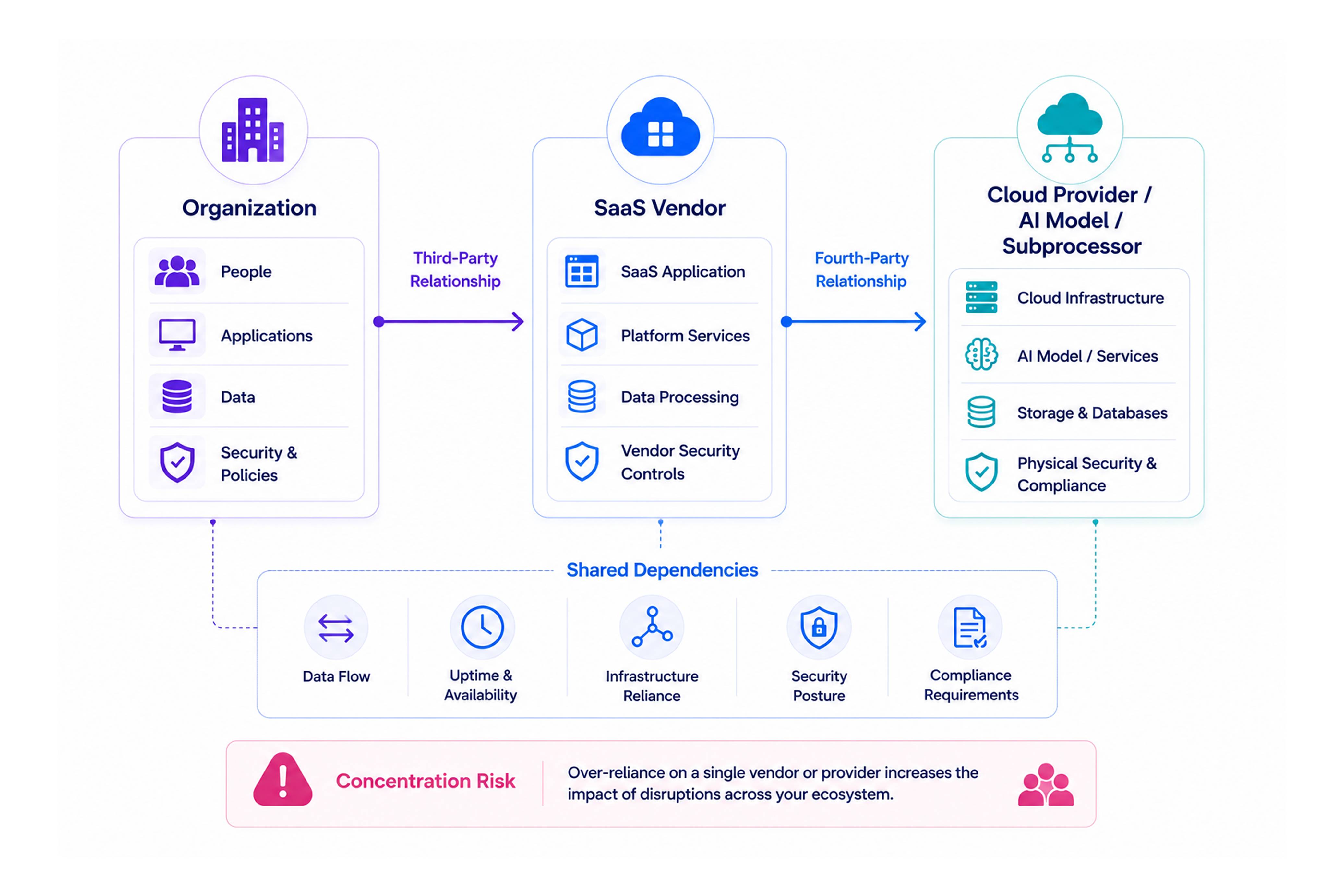
Your vendor may work with vendors to get things done.
These other vendors that your vendor works with are sometimes called parties or subcontractors.
For example a company that provides software over the internet may depend on a company that provides cloud infrastructure.
A company that manages services for you may use different security tools.
An artificial intelligence service may rely on a company that provides models from outside.
Your organization should know about the subcontracting dependencies that your vendor has because they can affect how well the service is delivered how secure it is and if it complies with rules.
It is also very important to think about concentration risk.
If many critical business services depend on the cloud provider, the same software platform, the same geographic region or the same technology vendor then one disruption can affect many operations at the same time.
The DORA rules specifically talk about the risk of depending on an information and communication technology third parties in the financial sector, which shows that regulators are paying more attention to the risk of depending on others.
A good program, for managing third party risk should look at the picture of dependencies not just assess each vendor one by one.
Step 11: Integrate Third-Party Risk with Enterprise GRC
Third party risk should not be something that we deal with on its own in a spreadsheet.
It is very important that significant vendor risks are linked to the way we manage risk for the company.
We need to make sure that privacy risks are connected to our privacy program.
Cybersecurity findings should be connected to the way we govern security.
The things that our business relies on from vendors should help us plan for business continuity and operational resilience.
We have to make sure that we are meeting all the rules we have to follow and that these rules are connected to the controls that our vendors have in place.
When we do all of these things together the people in charge can see clearly how third parties affect the overall risk that our organization faces.
A critical vendor risk can be more important to our business, than some small issues that our internal audit finds.
The reports that we get from our GRC system should show us this reality.
Step 12: Establish a Secure Vendor Offboarding Process
Third-party risk is still a problem until the relationship is completely finished.
When we are done with a vendor we need to do a things.
We should take away the access that users and systems have turn off accounts get rid of integrations take away API keys change secrets that're important get back things that belong to the organization and make sure we follow the rules for giving back or deleting data.
The person in charge of the business should make sure we do not need the service anymore.
The legal and compliance teams might need to check if we have to keep some information for an amount of time.
If we were working with information it is a good idea to have proof that we deleted it securely.
If we do not do a job of ending the relationship with a vendor it can leave accounts that are not being used integrations that are still active or data that we should not have anymore even after the contract is over.
Just because we are not paying a vendor anymore it does not mean they should be removed from our third-party risk management program.
The vendor relationship, with the third-party risk management program should be properly. The third-party risk should be reviewed to make sure everything is okay.
Building a Third-Party Risk Management Lifecycle
A good Third Party Risk Management program should have a process that it follows.
This process is made up of steps:
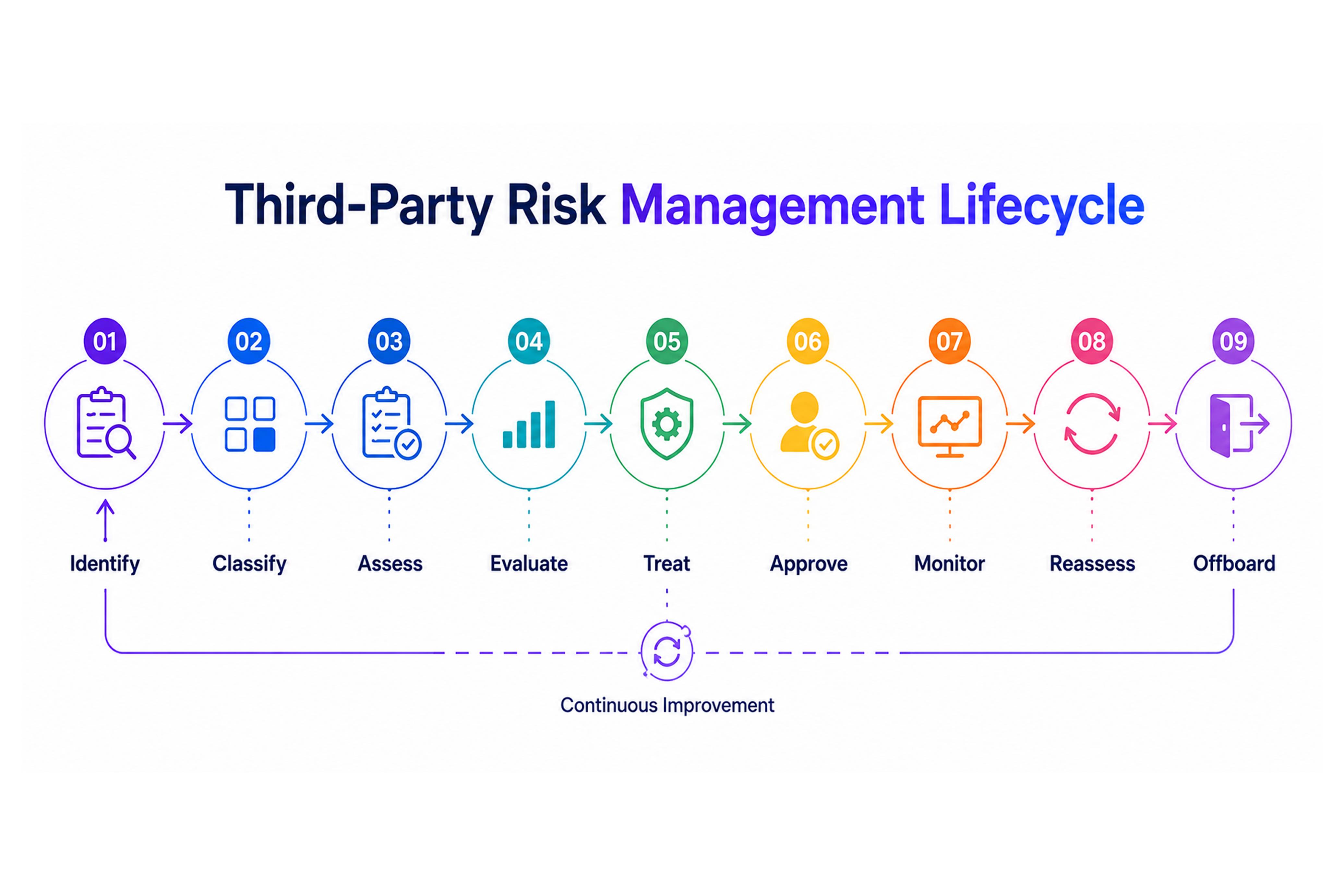
Identify → Classify → Assess → Evaluate → Treat → Approve → Contract → Monitor → Reassess → Offboard.
Each of these steps should have an idea of who is responsible for what and how they make decisions.
The people who buy things for the company may help get new Third Party Risk Management programs started.
The people who run the business should know how the company depends on these Third Party Risk Management programs.
The people who take care of information security should look at the risks that come with computers and the internet.
The teams that take care of privacy should see if personal information is at risk.
The lawyers should check the contracts.
The people who take care of risk and compliance should make sure everything is done correctly. According to the rules.
Each company is different so the Third Party Risk Management program will be different too.
What is important is that everyone knows what they are supposed to do and that big risks are not missed because they fall between departments, in the company.
The Third Party Risk Management program is important. It should be taken care of.
Common TPRM Mistakes Organizations Should Avoid
One common mistake is assessing every vendor in exactly the same way.
Another is sending questionnaires but never reviewing evidence.
Organizations may also collect security certificates without checking their scope, approve vendors with unresolved high-risk findings, or fail to reassess critical suppliers after onboarding.
A growing challenge is shadow procurement.
Business teams can subscribe to SaaS and AI services using corporate cards without involving IT, security, procurement, or compliance.
This creates invisible third-party risk.
Organizations should therefore make the approved vendor process practical. If governance is excessively slow or difficult, teams may find ways around it.
Good TPRM creates oversight without unnecessarily blocking the business.
SecNinjaz Insight
Third-party risk management is not about making sure every vendor is completely secure.
It's, about knowing how much you rely on parties finding out the risks they bring and deciding how to handle those risks.
The best third-party risk management programs do not judge success by how questionnaires they complete.
They care about seeing, owning, fixing and watching risks from third parties.
They make sure these risks are visible someone is responsible they are dealt with and checked regularly.
How SecNinjaz Supports Third-Party Risk Management
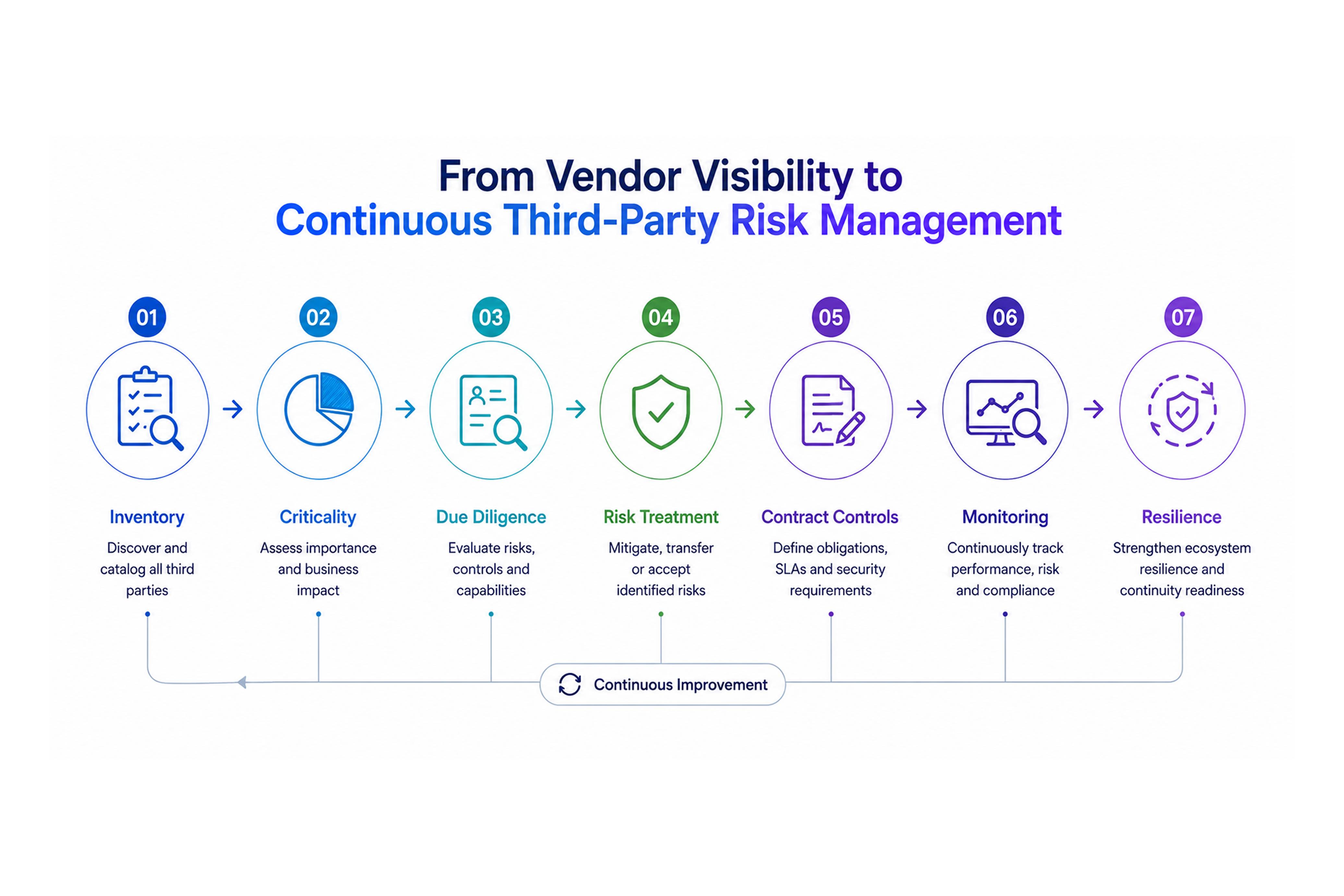
Organizations often know they need stronger vendor governance but struggle with fragmented inventories, lengthy questionnaires, inconsistent risk scoring, and limited ongoing monitoring.
SecNinjaz helps organizations establish practical, risk-based third-party risk management programs aligned with their business environment and wider GRC objectives.
Our approach can support third-party inventory development, vendor criticality classification, risk assessment methodologies, due diligence questionnaires, security and privacy assessments, third-party risk registers, remediation tracking, contractual control reviews, monitoring frameworks, and TPRM maturity assessments.
We also help organizations connect third-party risk with information security, privacy, AI governance, business continuity, compliance, and enterprise risk management.
The objective is not to create another vendor spreadsheet.
It is to establish visibility and accountability over the external dependencies that support your business.
Frequently Asked Questions
What is Third-Party Risk Management (TPRM)?
Third-Party Risk Management (TPRM) is the process of identifying, assessing, monitoring, and mitigating risks associated with vendors, suppliers, contractors, cloud providers, and other external organizations. It helps organizations manage cybersecurity, privacy, operational, compliance, and business continuity risks throughout the vendor lifecycle.
What is the difference between Vendor Risk Management and Third-Party Risk Management?
Vendor Risk Management is often used interchangeably with Third-Party Risk Management. However, TPRM has a broader scope that includes vendors, suppliers, consultants, contractors, business partners, managed service providers, and other third parties that interact with the organization.
Should every vendor undergo a security assessment?
Not every vendor requires the same level of assessment. Organizations should classify vendors based on their criticality and risk profile, then perform security assessments that are proportionate to the vendor's access, services, and potential business impact.
How often should third parties be reassessed?
Reassessment frequency should be based on vendor criticality, risk level, contractual obligations, and regulatory requirements. Critical and high-risk vendors should be reviewed more frequently, particularly after significant changes such as security incidents, acquisitions, or major service modifications.
What should a vendor risk assessment include?
A vendor risk assessment should evaluate cybersecurity controls, privacy practices, access management, regulatory compliance, business continuity capabilities, incident response, operational resilience, subcontractor dependencies, and the vendor's overall security posture.
Is an ISO/IEC 27001 certification enough to approve a vendor?
No. While ISO/IEC 27001 certification provides confidence that a vendor has implemented an Information Security Management System (ISMS), organizations should also review the certification scope, supporting evidence, contractual controls, and risks specific to the services being procured.
What is fourth-party risk?
Fourth-party risk refers to the risks introduced by a vendor's own suppliers, subcontractors, cloud providers, or technology partners. Organizations should understand these dependencies because disruptions or security incidents affecting fourth parties can indirectly impact their business.
How should organizations assess AI vendors?
AI vendor assessments should evaluate data handling practices, model governance, privacy protections, security controls, output risks, subprocessors, regulatory compliance, and how AI models are trained, monitored, and governed throughout their lifecycle.
Do organizations of all sizes need a Third-Party Risk Management program?
Yes. Every organization depends on external providers to some extent. The size and complexity of the TPRM program should be proportional to the organization's business operations, regulatory obligations, and vendor risk exposure.
Can Third-Party Risk Management integrate with ISO/IEC 27001 and enterprise GRC?
Yes. TPRM can be integrated with ISO/IEC 27001, enterprise GRC, privacy management, business continuity, cybersecurity governance, and compliance programs to provide a unified approach for managing organizational risk across internal operations and third-party relationships.
Know Your Vendors. Understand Your Risk. Strengthen Your Resilience.
When we work with companies it helps our business grow and do new things.
We can also get skills that we do not have.
If we rely on these other companies and do not know what they are doing it can be a problem.
A good way to manage this is to have a program that helps us figure out which other companies are very important what kind of problems they might cause what rules we should have for them and how to keep an eye on them all the time.
We should start by looking at what kind of risks we have with these companies.
The SecNinjaz Third-Party Risk Management Toolkit can help us do this.
We can talk to the GRC team to see how our program, for managing third-party risk is doing and how we can make it better.